The Maddox Winners: Promoting Good Science Can Be a Contact Sport
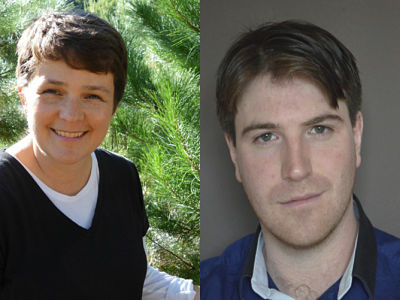
Science writer Emily Willingham and physicist David Robert Grimes have won the 2014 Maddox Prize.
The 3rd annual John Maddox Prize has been awarded to Emily Willingham, a science writer in the U.S., and David Robert Grimes, a physicist at the University of Oxford, in recognition of their work in the face of public hostility.
This year’s winners are both science writers, passionate about the discussion of complex scientific topics including those often ambushed by an anti-science contingent. Both have faced direct abuse following publication of their articles – which have addressed contentious issues. Undeterred, both have fought on and continue to publish on challenging topics. Their efforts are helping keep discussion based on the facts prominent in the public domain.

This article by Lydia Le Page originally appeared at The Conversation, a Social Science Space partner site, under the title “Joint winners of Maddox Prize spoke out about science despite abuse and legal threats”
Willingham is a freelance science journalist whose evidence-based article: “Blame Wakefield for missed autism-gut connection” drew intense criticism and a lawsuit from Andrew Wakefield, the discredited scientist known for his now-retracted 1998 Lancet paper on the alleged link between vaccines and autism. She criticized the “red herring and the subsequent noxious cloud that his fraud left over any research examining autism and the gut.”
Willingham’s self-declared passion is “presenting accurate, evidence-based information”. She says:
Standing up for science and public health in the face of not only unyielding but also sometimes threatening opposition can be tiring and demoralizing.
Grimes is a post-doctoral researcher at the University of Oxford in the UK, working on modelling oxygen distribution in tumors. He has been awarded the Maddox Prize for reaching out to the public through his writing on a range of challenging and controversial issues, including nuclear power and climate change.
Grimes continues to present the evidence, despite receiving threats, particularly surrounding discussion on abortion in Ireland. Following his article on six myths about cancer, in which he addressed the “dubious and outlandish” information that can be found on the internet, he received physical and digital hate-mail.
Often, when it comes to divisive or emotive issues such as these, fringe voices are the loudest and can often drown out or bully others out of the argument. In talking about climate change, genetic modification, vaccinations and reproductive rights, the winners of the 2014 John Maddox Prize have made it their responsibility to ensure evidence-based arguments are making their way into the public domain, to influence and empower the silent majority.
Standing up for science
Science writing is continually improving. A recent editorial in the journal Nature recognizes this:
Too many scientists dismiss the media and journalists as sloppy and unwilling to engage in both detail and ambiguity. In fact, there can be no branch of journalism as self-scrutinizing and anxious about its performance as that which covers science.
And yet there remains public confusion on key scientific issues. One of the problems is that as scientists discover more and more about the world, the evidence base changes and experts are forced to change their minds and challenge what had previously been accepted as facts.
Strong anti-science voices not only muddy the waters, but also cause the scientific community to be reticent to engage. This can only hamper the public’s understanding of science – so it’s very important that those who are determined to stand up for science and evidence are given support and recognition.
The John Maddox Prize is a joint venture between the science-communication charity Sense about Science [a Social Science Space partner], Nature and the Kohn Foundation. Established in 2012, it is awarded to those who stand up for science, often in the face of adversity, on matters that are important to the public.
Sir John Maddox was the editor of Nature for 22 years and was a passionate scientist and writer who encouraged public debates based on sound science and evidence.
The prize is open to nominations for any kind of public activity, including all forms of writing, speaking and public engagement, which addresses misleading information about scientific or medical issues in any forum, brings sound evidence to bear in a public or policy debate or helps people to make sense of a complex scientific issue.
Winners of the prize are those who go above and beyond their obligation in standing up for science, and show strength and resolve in dealing with negative repercussions.
The 2013 winner was David Nutt, who was sacked from the UK government’s Advisory Council on the Misuse of Drugs. His alleged mistake was to publish a paper that claimed that horse-riding was riskier than consuming ecstasy.
***
Lydia Le Page is member of the Voice of Young Science, which is run by Sense About Science.