
Diego Gambetta on Signaling Theory
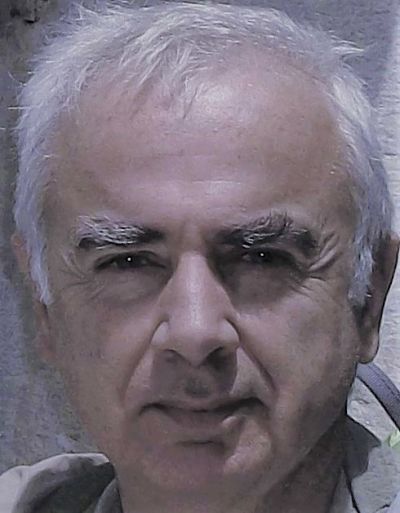
What we tell people about ourselves is not exclusively, or often not even majorly, what comes out of our mouths. A host of nonverbal messages emanate from us, many of them intentionally sent to create or reinforce a narrative for a recipient who is left trying to judge the veracity of the sum total of the information. The study of this signaling in the content of an asymmetry of information is known as ‘signalling theory.’
In this Social Science Bites podcast, Diego Gambetta, a professor of social theory at the European University Institute in Florence, discussing his research around signaling theory and the applications of his work, whether addressing courtship, organized crime of hailing a cab.
“The theory,” he tessl interview Dave Edmonds, “has to do with the unobservable qualities of interest. The question is, how much scope do we have to con each other, to cheat each other. … What I would like to know about you is more than is what is apparent. The things that we are interested in are not written on our foreheads.”
Signaling theory’s value, he continues, comes in “trying to establish when truth can be communicated even in conditions that are difficult, in which we expect the interests of the parties communicating to diverge, or to not completely overlap.”
This gives the theory a wide range of applications, which is reflected in its own birthing. Initially formalized by economists, particularly Nobel Prize winner Michael Spence. Who used it to show how can an employer can determine if a job applicant in likely to be highly productive or not. At roughly the same time, Gambetta explains, there was a “an intuitive expression of the theory” by an animal behaviorist, Amotz Zahavi.
In the social and behavioral realm where Gambetta works, signally theory shows in utility whether the parties are in conflict – hence his work examining the Italian mafia — or cooperation – studying taxi drivers in Belfast and in New York City.
“In a conflict,” Gambetta details, “I may want to persuade you that I am really, really tough. If this is true, and you believe me, then we may sort the conflict out cheaply for both of us because we don’t enter into a damaging fight.” And in cooperation, how do you accept the accuracy of someone’s representations (or convince someone of your own honest representation) that they do indeed possess the qualities they feel, or say, they have.
Given the current mass trial of alleged members of the ‘Ndrangheta crime syndicate in Italy, perhaps Gambetta’s work among the mafiosos is is most salient at the moment. “I was alerted to the importance of symbolic communication in the mafia by the way they communicated with each other, and also, on a couple of occasions, with how they communicated with a researcher, myself included. They display a subtlety in communication that surprised me. We tend to expect an organized criminal to excel at brutality and intimidation, but we can’t really expect them to be a lot subtler than we are in communicating.”
He gives the example of a Canadian researcher who announced plans to research the mafia. The researcher’s car was burglarized, his dirty laundry stolen, and a few days later the laundry came back, cleaned and ironed, with a note that said, “Goodbye.” It was, Gambetta noted, “a more enthusiastic rendition of ‘I know where you live.’”
“Violence,” he adds, “is known to us because it leaves a body on the ground, it attracts attention. But there is a subtlety in threatening.” And in Palermo, for instance, there is “an obsessive search for meaning” – the workaday side of the signaling theory coin.
Another workaday aspect revolved around his work studying taxi drivers, who had to determine which passengers they would pick up based on the drivers’ perception of the person hailing them being a fare that was safe and trustworthy. These instant assessments can rely, however, on short-cuts that reek of racial profiling. In New York, for example, Gambetta that even Black drivers wouldn’t pick up young Black people. This essentially removes the service from that population – “the cost of proving your bona fides, that you are a real passenger despite your age and color, is too costly, is too complicated.”
In addition to his professorship at the European University Institute, Gambetta is the Carlo Alberto Chair at the Collegio Carlo Alberto in Turin, and an official fellow at Nuffield College, University of Oxford. Among his books are 2016’s Engineers of Jihad, Codes of the Underworld: How Criminals Communicate from 2009, and 1993’s The Sicilian Mafia. The Business of Private Protection.
To download an MP3 of this podcast, right-click HERE and save.
For a complete listing of past Social Science Bites podcasts, click HERE. You can follow Bites on Twitter @socialscibites and David Edmonds @DavidEdmonds100.