Cuéllar Leaving Newly Begun Post at CASBS for Global Policy Role at Anthropic
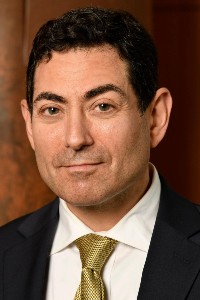
Mariano-Florentino (Tino) Cuéllar, who just last month took the reins of the Center for Advanced Study in the Behavioral Sciences at Stanford University, has taken a new job with artificial intelligence heavyweight Anthropic. He will exit CASBS and a similar role for the Knight-Hennessy Scholars effective August 10 and take on the newly created role of chief global affairs officer at Anthropic.
According to a release from Anthropic, Cuéllar will lead “the company’s work on policy, strategic international engagement, and government relationships worldwide.” Anthropic has been in the news for several reason lately, including release of its new Mythos platform, fights with the Trump administration over military and security uses of AI, and revelations that its Claude AI models gained unauthorized internet and system access
“This change comes as a surprise to all of us,” Abby Smith Rumsey, chair of the CASBS Board of Directors, was quoted in a release, “especially given the very short tenure as CASBS director. I hope you will join us in wishing Tino well. He has long been a close friend of and major contributor to CASBS, and I expect that will continue.”
Rumsey said an effort is underway to replace Cuéllar, who is also taking a leave from his role at the Stanford Law School. “The CASBS board, Stanford University’s vice provost and dean of research, and Stanford’s provost are committed to ensuring a smooth transition,” he was quoted.
It’s been a topsy-turvey few years at the top of CASBS. Longtime director Margaret Levi left in August of 2022, and saw Walter W. “Woody” Powell step in as interim leader until the hiring of Sarah Soule, who started in September 2023. Soule then left to head the Stanford Graduate School of business in June 2025. Lara Tiedens stepped in as interim director and served until Cuéllar started his term in July.
Cuéllar is no stranger to the world of AI. In 2024 he was named to the Joint California Policy Working Group on AI Frontier Models, and is a senior fellow at Stanford’s Institute for Human-Centered Artificial Intelligence., and actually started serving as a trustee on Anthropic’s Long-Term Benefit Trust in January. (He has stepped down from the trust now that he’s joined the company.)
He offers an unusually broad porfolio of experiences, including having been a justice on the California Supreme Court from 2015-21. After earning degrees from Harvard and Yale, he completed a doctorate in political science at Stanford in 2000 and joined the faculty the following year. Over the next decade and a half, he held a series of leadership roles at Stanford, including serving as the Stanley Morrison Professor of Law and directing major international and security studies initiatives. He had left the court in 2021 to lead the Carnegie Endowment for International Peace, which headed until taking the CASBS job.
In the Anthropic release, Cuéllar reflected on his new role and its context. “Policymakers in the US and around the world are increasingly realizing that we are at a critical inflection point when it comes to how we govern and develop artificial intelligence. The choices we make today will determine whether humanity can harness extraordinary possibilities to advance science and improve lives across the world or face enormous risk and growing inequality. Democracies must set the terms on which this technology advances, and there is no more consequential place to be shaping that work right now than Anthropic.”