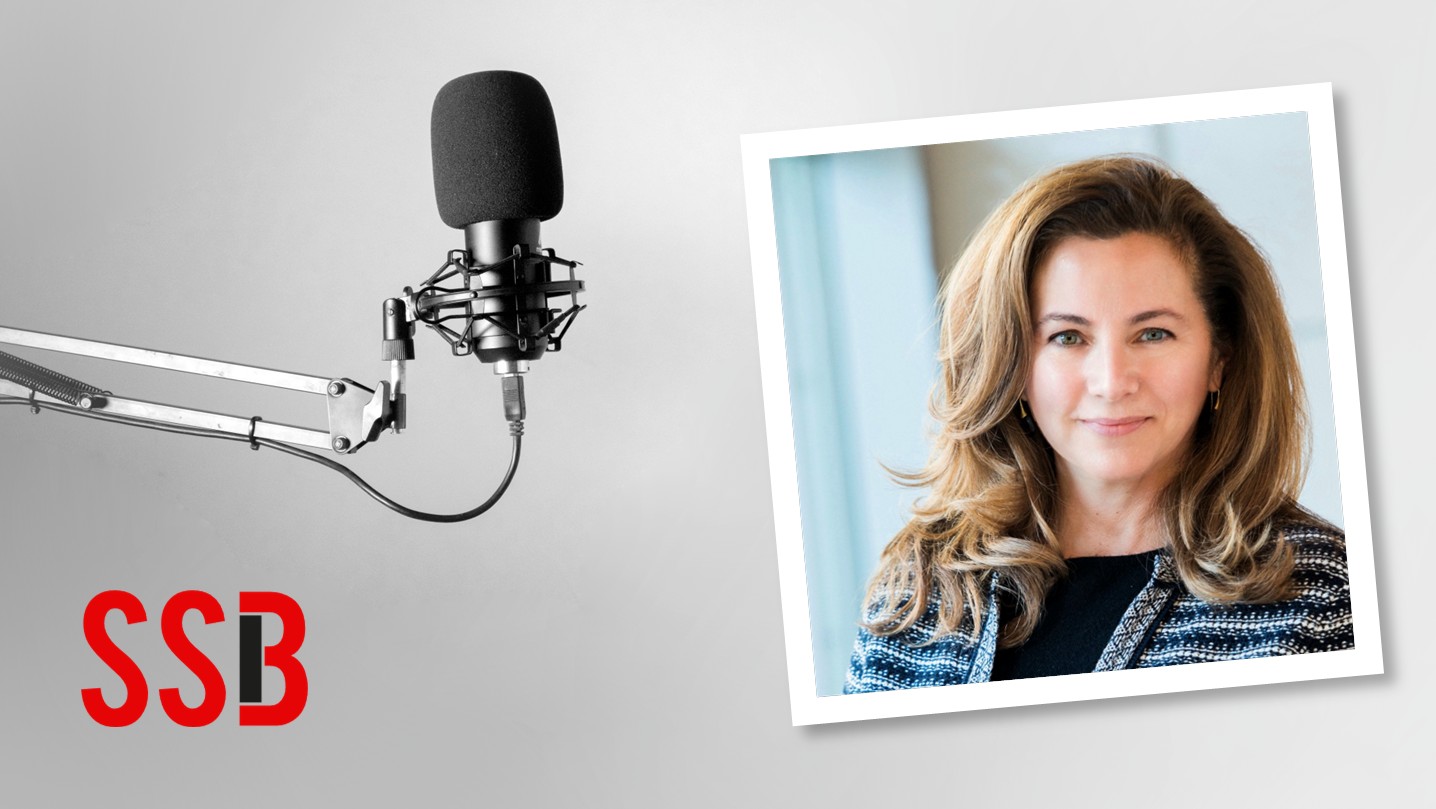
Ariel Kalil on Parents’ Role in Child Development
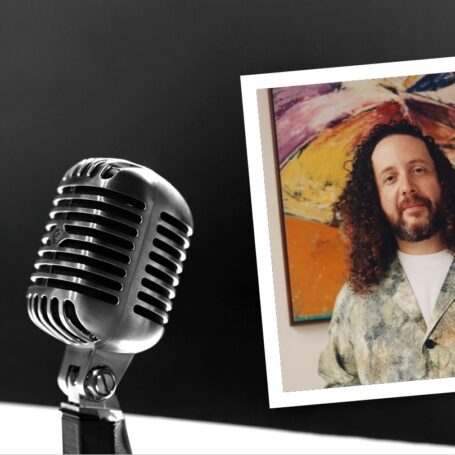
When discussing youngsters’ life outcomes, school is often the first place someone starts investigating. And yet school time is dwarfed by the amount of time kids spend with their parents or other adult caregivers. Recognizing this, developmental psychologist Ariel Kalil, the Daniel Levin Professor at the University of Chicago Harris School of Public Policy, focuses her child development research on parenting.
“My argument, in a nutshell,” she tells interviewer David Edmonds in this Social Science Bites podcast, “is that we spend a lot of time investigating what happens to kids during the school hours and thinking of school as the site for child skill development, when in fact, it’s the out-of-school time that dwarfs the amount of time that children will spend in school.’
And the academic kicker, she adds, is “we know much less about how to understand that time.”
Kalil has been looking at questions around economic conditions, parents and child development for a long time. In 2003, for example, she was the first-ever recipient of the Society for Research in Child Development Award for Early Research Contributions, one of several awards or research opportunities centering on her work she has received. Kalil also directs the Center for Human Potential and Public Policy and co-directs the Behavioral Insights and Parenting Lab at Chicago.
You can download the episode by right clicking here or read the transcript below.
David Edmonds: How important is the role of parents in the educational success of their kids and what does it have to do with the attainment gap between children from advantaged and disadvantaged families? This is the research area of Ariel Kalil, a professor of public policy at the University of Chicago.
Ariel Kalil, welcome to Social Science Bites.
Ariel Kalil: Thank you for inviting me. It’s a pleasure to be here.
David Edmonds: We’re talking today about parents and child development.
Before we get into the details of that, is it fair to summarize the focus of your research as being the link between parents and children and how this affects child development, the interaction between parents and children?
Ariel Kalil: Yes, that is totally fair to say that. I study what parents do, how it matters and why different parents do different things.
David Edmonds: And are you interested in health outcomes, emotional outcomes, income outcomes? What are you measuring?
Ariel Kalil: I’m an equal opportunity outcome measurement kind of person because I’m mostly interested in the parents’ role.
So I have most recently been studying children’s language and math skill development in the years before formal schooling begins, which in the US is age 5 in kindergarten. But I’m interested in a range of outcomes. And it’s important to imagine that a specific thing that a parent might do can affect multiple outcomes at once.
David Edmonds: Now, parents are obviously hugely important in child development, but they’re not the only ones involved in bringing up children. There’s schooling, there’s universities. To what extent does the influence of parents matter compared to the influence of educational establishments?
Ariel Kalil: My answer to that is, overwhelmingly, parents are more influential.
Two things I should say. One is that when I say parents, I also mean caregivers. I mean, the range of adults who care for children.
I don’t just mean biological mothers and fathers, for example. But the distinction that I make in my research is the distinction between children’s exposure to those parents and caregivers in the time they’re not in school, versus the time that they are in school, where the latter is much less than the former.
My argument, in a nutshell, is that we spend a lot of time investigating what happens to kids during the school hours and thinking of school as the site for child skill development, when in fact, it’s the out-of-school time that dwarfs the amount of time that children will spend in school.
And we know much less about how to understand that time.
David Edmonds: Right. Now, I know the gap that most interests you is that between what one might call middle-class parents and working-class parents, or I guess the gap between parents with college education and parents without a college education. How big is that gap?
Ariel Kalil: So pick any skill. As I said, I spend a lot of time studying language and literacy development. So we’ll just take that.
The gap before children even set foot in a classroom at school between a child whose parent, as you said, has a college degree, has finished college, and the child whose parent, say, has no more than a high school education, again — I’m using American terms for education here — is in statistical terms, a full standard deviation. So I don’t know if that’s familiar to your listeners, but that’s enormous.
It’s present before children even go to school. And most importantly, the magnitude of that gap is more or less the same as children progress through school.
So if you were hoping that school on its own would close the gaps, would reduce the inequalities between children, I’ll just use advantaged and disadvantaged as a shorthand for that education divide we just established. If you were hoping that schools would close that gap, you’re going to be disappointed.
The gap is already set before kids arrive at school, and schools alone cannot close it.
David Edmonds: And your data comes from where?
Ariel Kalil: OK, so I use a variety of kinds of data. For the kinds of descriptive statistics that we just laid out, I might use a large, nationally representative dataset collected by the U.S. Department of Education, for example. That would be very useful to me because I can have good, reliable outcome measures. I can have good measures of the kinds of families kids come from, and I can follow kids over time as they move through the school years. So that’s a dataset that I use a lot.
To answer the other kind of question that I’m interested in — why do parents do what they do? — I need to collect my own data because most researchers have not examined sufficiently fully the range of reasons that help explain why parents do what they do. So that would be an example. I might collect my own original survey data to ask parents things that one doesn’t find on a typical survey.
And then the final kind of data that I produce come from experiments that I run. In health, we would call this a randomized control trial. And this is where I’m interested in, can I change parent behavior? And if I were to change the parent behavior, can I see a change in a child development outcome? So those are the three kinds of data that I use and that I generate myself.
Davvid Edmonds: I want to get to the latter eventually, because I want to know what might work to change the problem. But let’s try and identify problem first. Am I right in thinking that your major explanation for what’s going on is that middle-class parents, parents with higher education, parents with degrees, spend more time with their kids, more time reading, more time chatting to them about politics and what they’re studying at school and so on, that it’s time that’s the crucial ingredient?
Ariel Kalil: That is correct. It’s both the quantity of time, it’s the composition of the time that is spent, and it’s the quality of the time that is spent.
There’s multiple features of time. In a large national data set, I can get at the first two. I can measure the quantity and the composition. So I can say you did 10 minutes and you did 20 minutes, but the 10 minutes you spent were X and the 20 minutes you spent were Y. Now, armed with some theory about what matters for child skill development, I can look at those metrics in a dataset and I can draw some inferences about how families differ.
The quality is a little harder to measure. Those are sort of ephemeral things that go on when parents and children are together that are hard to measure in a survey dataset. I will also add that I do want to describe this time. I want to be able to tell people who read my research or people who care about this problem, how do different families differ. And as you say, I generally am thinking about time.
Time is nice because everyone only has 24 hours in a day, and I find it very interesting just to look at the data and see how people choose to spend those 24 hours. But then I want to know, and maybe we can get to this, so you chose to do X, Y, or Z in the 30 minutes that you spent not sleeping or eating or things you really have to do. And what were the motivations? What were your beliefs? What were the factors, the forces that shape the decision for how you allocate that time?
David Edmonds: Let me try a few explanations and see if they work. I mean, an obvious one is that by definition, less advantaged people have less money. That might mean they have less time and they’ve got less money to buy books. So one explanation, one obvious explanation is that it’s financial.
Ariel Kalil: So we generally rule that out. But let me be very clear. We rule out material circumstances as the barrier or bottleneck that gets in the way of reading. Now, it’s very important for families to be able to meet their material needs. It’s a first-order moral condition that families have enough food to eat and to heat or cool their home and have a roof over their head. But it’s become pretty clear that giving families money doesn’t change how much parents read to their kids.
So even on your question of books, sure, there are differences in the number of books that a household with college educated parents and a household with high school educated parents has. Rich families have hundreds of books and less advantaged families have fewer books. But there’s very few families that have no books. And also there are libraries and books are available for free.
So it’s something I say a lot because it is an obvious question. Some families are rich, some families are poor. The reason they make different choices must have to do with the fact that one has money and the other doesn’t. And ergo, the right policy solution is to give the one who has less money, more money. Now, again, there might be extremely good reasons to give a low-income family more money. But if your goal is getting that parent to read more with the child, that is not what I would propose.
David Edmonds: OK, so it’s not at its core about money. Let me try another obvious explanation. I’m from a middle-class family. My parents expected me to go to university. It wasn’t even in doubt that I would go to university. It’s a question of expectations.
Ariel Kalil: This one I’m more sympathetic to as an explanation. I think it’s very interesting. I think that the research suggests that much of what you do as a parent very much shapes the way you were raised.
Sociologists might call this family culture. Economists are interested in the intergenerational transmission of a whole variety of things, including values and expectations. So there is a difference in family habits and family routines. There’s a difference in peer groups. This is a question I’m quite interested in. In the U.S., people are segregated residentially. So people live among others who are like them economically. And if it’s not a habit of the group in which you’re embedded to read to your kid every night, to talk with your child at every possible opportunity in a way that fosters child vocabulary, to hope and expect for your child’s future educational attainment…
Now, I will say just as a sidebar, all parents have very high aspirations for their children. So well over 90% of rich and poor parents alike hope that their child will go to college. That’s obviously a wildly over-optimistic aspiration. The difference in expectations, there’s a larger representing a more realistic gap between rich and poor parents. Again, I’m just using rich and poor as a shorthand. But in general, expectations and aspirations always exceed the eventual reality.
So one interesting question is how do people turn those aspirations and expectations into something real? And again, that in my research world comes down to what are decisions and habits and choices that parents are making every day to lay the path for such an outcome?
David Edmonds: You rejected the idea it was about money. So is that the answer then? Is it about habits?
Ariel Kalil: I do believe that if called to provide one answer that I’m willing to stand by forever, I’m going to say habits. Let me give you another statistic. Let’s return to that time diary data for just a minute. If we compare a parent by whether or not they have a college degree versus fewer years of education. And I want to compare how much they read with their kids, their young kids. The difference between those two groups is significant, but the answer is not that the one reads to their kid three hours every night and the other reads to their kid 30 minutes every night. The difference arises from the fact that the one reads 13 minutes a night, maybe two, three kids, children’s books, most nights. And the other has many more days or nights in which zero minutes of reading occurs.
David Edmonds: Why?
Ariel Kalil: Yeah. Why? That’s the answer. And to me, that’s helps me explain habit because it’s not again about money, as we ruled out. Just imagine their access to books is more or less the same.
And by the way, if you ask parents, do you like spending time with your kids? Do you enjoy engaging with your kids in reading and playing and the kinds of things we think stimulate child skills — everyone rates enjoyment very highly. So it’s not like one hates it, finds it onerous, rejects the idea of building child skills. That’s similar across families.
So yeah, the question is why, why are you in the habit of doing this thing a little bit every day? Like brushing your teeth or something that needs to happen routinely where you don’t even think about it. A college-educated parent doesn’t say, “Aha, I remember tonight I must do that thing.” Generally, it’s a behavior that you just replicate as I say, because that’s how you were raised, because that’s what the people in your social network do, because you’ve done it enough to get a sense that it is yielding something, that you’ve done it enough so that your child asks to be read to. But you didn’t get so distracted that you weren’t able to follow through on your good intention, that you somehow were able not to let the day get away from you and end up saying, “Ah, you know, I had this good idea that we should read, but I’m kind of distracted. I think tomorrow, we’ll just do it tomorrow.” Some families do that and others don’t. And that’s the interesting question, why?
So I would say that you put all those things together and together they make a force, which doesn’t even operate at the real level of consciousness, I think, among many parents, which makes a distinction between these kinds of behaviors.
David Edmonds: So the crucial intervention presumably is to change habits. And you mentioned your randomized control trials, and I assume that those are designed as ways of testing which interventions do change habits. So what can you tell us about what works and what doesn’t work?
Ariel Kalil: Reminding people to do the thing they set out to do is a great way to help them do it. So getting people to think a little bit about the future, setting a goal for a behavior that might be novel or about which you are not currently in the habit is a great way to turn an intention into an action.
Getting feedback along the way that what you’re doing is a good use of your time, is making a difference, is a great virtuous circle. Sometimes even having a little competition between you and somebody else who’s trying to do a new thing works to make a new thing happen. A little bit of how many times do you think you want to read in the weeks ahead? And I give you a digital device that is recording how much you read. I give you a digital library that has capabilities of monitoring what you’re doing and presenting you with the information about what you did. And you can say, “Oh, I surprised myself. I did it. Maybe I could do even a little bit more next week.”
David Edmonds: So just picking on one of those, you said reminding people to read to their kids or whatever is very effective. Just describe how that experiment works. Do you send a text?
Ariel Kalil: That’s exactly what we do. We do as simple and as inexpensive an intervention as we can imagine. We’re committed to cheap and not onerous and not complicated.
We commit to that at the outset because we think that everything else is destined to be an interesting research study, but not a scaled-up policy.
David Edmonds: So how big is the effect?
Ariel Kalil: About 25 to 30% of a standard deviation. That’s pretty big. You can’t totally compare the effect size of what we do to a very different kind of approach. Like what’s the effect size of sending a child to preschool for a year? But our results are meaningful. They’re economically significant.
We haven’t followed these 4-year-olds to whose parents we’ve randomly assigned to get a text message intervention until the kids are college age. So I can’t tell you if my intervention is going to make these kids have higher wages or graduate from college. I can’t do that yet.
But I can tell you that if I randomly enroll their parents in an intervention like the one that has the features of the one I just described, their parents will do the thing I asked them to do. And the kids’ language and math skills will go up by a magnitude that we can pay attention to.
David Edmonds: I wonder if the intervention will drop off the effect after a time because people just get sick of it or they learn to ignore it or whatever. So it might have a short-term effect, but in the long-term, the effect might be very small.
Ariel Kalil: That’s a legitimate concern, and I don’t really have the answer yet. Some of our interventions rely not just on text messages but on apps. So we’ve been interested in math skill development as well. There’s some very high-quality math apps. Math is slightly different because one of the things you can imagine about parents and math is that parents don’t know quite what to do, or they might have grown up thinking they weren’t good at math, or they didn’t like math class, and so there’s some anxiety and avoidance. So in this case, actually finding and curating the high-quality math apps is an interesting approach.
So we do that, and we randomly assign parents, and we download the apps on their phone for them, and then we send them reminders to use them. So we can see that usage of these technologies diminishes over time because, like everything else, there’s a novelty effect, and you’re excited about something initially, and then your attention goes elsewhere.
But technology has the special feature of being able to constantly refresh itself. It can these days learn what people like.
David Edmonds: So I was going to ask you exactly that because AI these days can personalize a reminder, and that must be very helpful.
Ariel Kalil: It’s very helpful, and we’ve just begun work that’s using AI for exactly that purpose, to help parents learn what they like to do, what they’re comfortable doing, to help parents learn what their kids like. So we have a tool we developed that is a conversation tool designed to prompt open-ended conversation between parents and children to foster children’s language and literacy, and also their curiosity, and supporting parents to have a conversation with their child that goes beyond, “What did you have for lunch today?” And the tool is dynamic. It has an AI capability that, should parents want to use it, can help exactly with going deeper into a topic, generating a new conversation topic, if you’ve grown bored of the first one, and so forth.
So AI and technology together, again, as supports and complements to what parents do, not as substitutes for them. But it has these new features, which is making our work more interesting, and I hope more effective.
David Edmonds: You’re based in Chicago. I’m assuming that the data that you yourself are generating is Chicago-based. So I have to ask the replication question. To what extent is this likely to be replicable across America, let alone across the world?
Ariel Kalil: So we work in Chicago for obvious reasons. We have a lot of relationships with practitioners here who are eager to work with us. But in fact, we work all over the U.S. We are partnering right now for this new project, which I referred to, it’s called Chat2Learn, with school districts in North Carolina and Louisiana, for example. Mostly we cold call institutions around the country and introduce ourselves and tell people who we are and see if they want to partner with us. So in fact, we’ve been in various places in the U.S.
Now we have brought our work just this year to Latin America. We have a big project in Lima, Peru, and we have just launched a project in Delhi, India. These are obviously very different contexts, and so the content of our messages needs to be culturally accurate, and one needs to understand cultural differences in expectations for how parents interact with their kids. But it turns out that in most places in the world, parents do and can talk with their kids, and there’s a way of supporting that that makes our approach, I think, more universal rather than less.
David Edmonds: Final question. This is all fascinating research. To what extent do you feel an obligation to ensure that this very interesting and potentially life-changing research actually finds its way into policy?
Ariel Kalil: I am very strongly motivated by that goal. As an academic researcher, I don’t have to that goal, but I am motivated to improve people’s lives, and I am motivated to spend the federal and philanthropic dollars that support my research on making a difference.
Now, the path from an academic randomized controlled trial to a policy that is written into a bill that gets government funding eventually is long and winding, and I can’t claim that I’ve had success in getting a country or a municipality to just say, “OK, we’re going to take what you do and we’re going to give it to everybody. This is amazing. This is what we’re going to do.” But that’s my goal, and that’s going to take the rest of my career to make that happen, but I surely hope that I can make that happen one day.
David Edmonds: Ariel Khalil, thank you very much indeed.
Ariel Kalil: Thank you so much.