
Why Sociology Should Not Be Liquidated
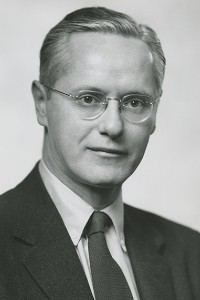
“Once again the season of the anti-sociologists is upon us…[a]curious admixture of illogic and sentiment…makes up the creed and canons of anti-sociology.” Those words come from Robert K Merton, writing in the New York Times in July 1961. They are a timely reminder that some bad ideas never die. They simply find new sponsors and come around again. This year, the prime US vehicle is the Wall Street Journal asking whether sociology should be liquidated.
As Merton observed, many of these attacks seem to have been written by amateur sociologists who might have benefitted from a professional training. The WSJ piece, for example, emphasises the place of WEB DuBois as a founder. DuBois certainly represents scholar-activism, much as Jane Addams has done for many feminists. He was the only sociologist that Max Weber positively wanted to meet during his 1904 visit to the United States. His pioneering empirical work in The Philadelphia Negro is deservedly celebrated. But he was not a discipline-builder.
U.S. sociology was created by the organizational work of people like Albion Small in Chicago and Franklin Giddings at Columbia. They carved sociology out of political economy, redirecting attention to the parts of that agenda abandoned by economics and its narrow view of rationality. Markets depended upon cultural and institutional foundations that they could not generate for themselves. What were the consequences for the creation of order in society? A pre-MAGA generation of conservatives cared about this question just as much as did liberals or socialists. Small wrote of his ambition to educate future business leaders with a moral sensibility, who would not see social problems as the unavoidable consequence of free markets.
In investigating the creation of order, Merton observes, sociologists necessarily ask “is it really so?” By the 1930s, they were asking who got to define what counted as a social problem and how this generated actions. A classic example is a study of taxi-dance halls in Chicago. These were places where single working-class men, often immigrants, could go and buy tickets to exchange for dances with single working-class women. Civic-minded business leaders defined this as low-level prostitution. From participant observation and interviewing, the researchers established that the men simply did not earn enough to support a family and the women were not paid sufficient to cover their living costs. A few cents bought a moment of companionship and an essential top-up to low wages.
The “problem” did not lie with the morals of the dancers but with the share of profits going to labour, especially women’s labor, determined by the very business leaders who had funded the research.
As one of my mentors observed, sociology is very good at explaining why things don’t work the way they are supposed to. This is not a recipe for being loved by those with a strong vested interest in the status quo or convictions that are not grounded in the realities of everyday life, whether in the streets, in workplaces, in homes or in boardrooms. But you might think it is rather important for a democratic society to hear bad news about itself from time to time. As Merton commented: “the anti-sociologists…join forces with the anti-intellectuals and totalitarian regimenters of thought they ostensibly combat. They would declare themselves guardians of us all, alone able to distinguish dangerous from un-dangerous knowledge.” Some sociologists could certainly do better at resisting the temptation to join the ranks of the guardians. The American Sociological Association is not a substitute for the relative failure of parties of the left in the United States.
In Merton’s day, sociology was charged with becoming excessively quantitative at the expense of the interpretive understanding favoured by the humanities. Today, this has flipped, with the charge that qualitative methods have been adopted because sociologists find math too difficult and can more easily manipulate them to produce desired results.
Unlike some other social sciences, however, sociologists think it essential to question how numbers are being produced. We can compare pandemic mortality rates in different countries, but unless we know how those rates are generated by the decisions of those defining the cause of death, registering it and coding it, the exercise is meaningless. All quantitative data begin with a qualitative decision that an event is an example of this rather than that.
Some questions require quantitative methods, especially when data are already presented in numerical form, but others, particularly about processes, require qualitative methods. We can compare the school outcomes of students from different social groups, but if we want to know how these came about, we need to look at what is happening in classrooms, in interactions between teachers and parents and in relationships between schools and communities. Otherwise a society only has stories from participants and armchair commentators with no systematic and disinterested way of evaluating them.
Are qualitative methods scientific? It depends what you mean by “scientific.” Some critics echo the 19th century physicist, Lord Kelvin, who declared that only learning expressed in numbers counted as Science with a capital S. Kelvin also dismissed heavier-than-air flying machines, wireless communication and X-rays as impossible, useless or fraudulent. Qualitative methods are more like work in chemistry or some life sciences, where case studies cumulate and are tested in critical experiments to explore the limits of generalizability. This may not lead to certainty, but it shifts the odds of being correct. If we are trying to understand the nature of order as it is, it is always possible to imagine ways of doing things differently. As British cycling discovered, the accumulation of marginal gains can have a dramatic effect on outcomes.
There is good and bad work in all sciences. Certainly, it is time to question the kind of study where the author reports 15 interviews with people who all happened to agree with them or draws sweeping conclusions from interactions with their cat while watching TV.
As Merton noted, though, sociology would be a poor science if we all agreed on everything. Equally, it would be a poor democracy that chose to make itself ignorant by liquidating sociology.