
Paths from a PhD to the Private Sector
The impact of the pandemic on all sectors is only beginning to emerge and given the need for greater flexibility, adaptability and innovation within both academia and the private sector, PhD students and Early Career Researchers (ECRs) have much to gain by acquiring the tools and skills that will enable them to navigate both.
Organized by LSE Generate and the PhD Academy, the ABC (Accelerating Business Collaboration) Sofa Sessions bring together PhDs, ECRs and industry bods to discuss key topics relating to the relationship between academia and the commercial sector.
The second ABC Sofa Session was co-hosted by Anthea Kolitsas, entrepreneur and former Executive Director to the Canada-UK Foundation, and LJ Silverman, Head of LSE Generate. Invited speakers were: Armando Marozzi, LSE PhD Candidate and PhD Trainee at the Central European Bank, Dana Kanze, Assistant Professor of Organizational Behavior at London Business School, and Sean Farran, Global Innovation Lead, LSE. Together with the audience, they discussed pathways connecting the PhD and the commercial sector. Below, you can read about the key topics that emerged from their conversation.
Knowing the value of your PhD and your skills
For those of you interested in engaging with the private sector, the value of your PhD experience may not be immediately obvious. Arguably, the imaginative leap required is easier for PhD researchers versed in quantitative skills or those coming with methodological expertise that is much in demand by corporate giants and heavy-weights in the tech world. However, the speakers stressed that it’s not simply your method skills that matter most but the specific “twist” that your unique research expertise offers. It is your unique perspective and standpoint that you bring to a certain topic, your particular portfolio of interests, skills and experience which makes you an interesting candidate for private sector organizations. The fit may not be obvious immediately and you may well need to pro-actively learn how to communicate your expertise to non-academic stakeholders but the good news is that the private sector is increasingly becoming aware of the value of social science expertise as a source for innovation.
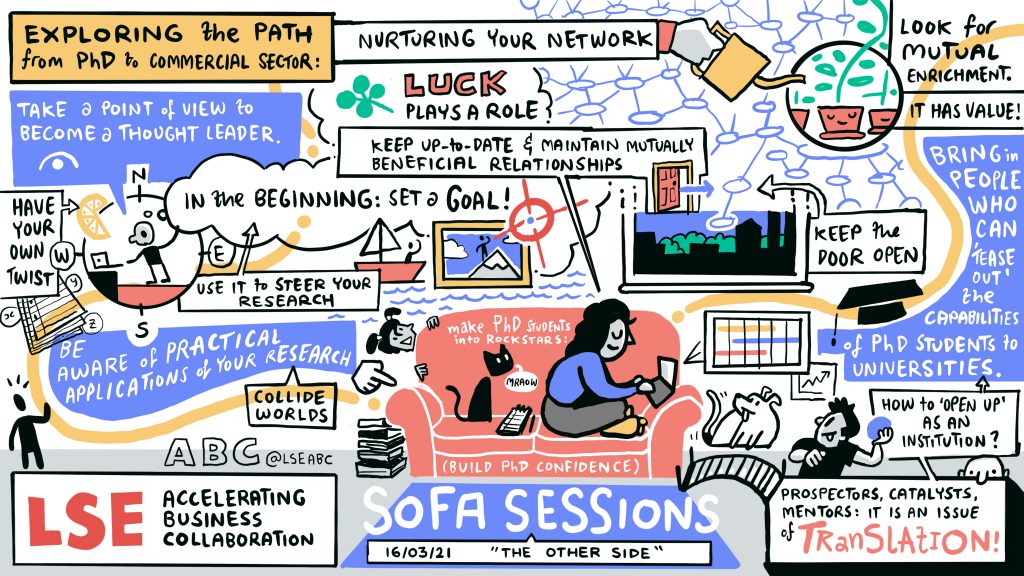
PhD students’ “safe landing” after the PhD starts with a shift in institutional mind-sets
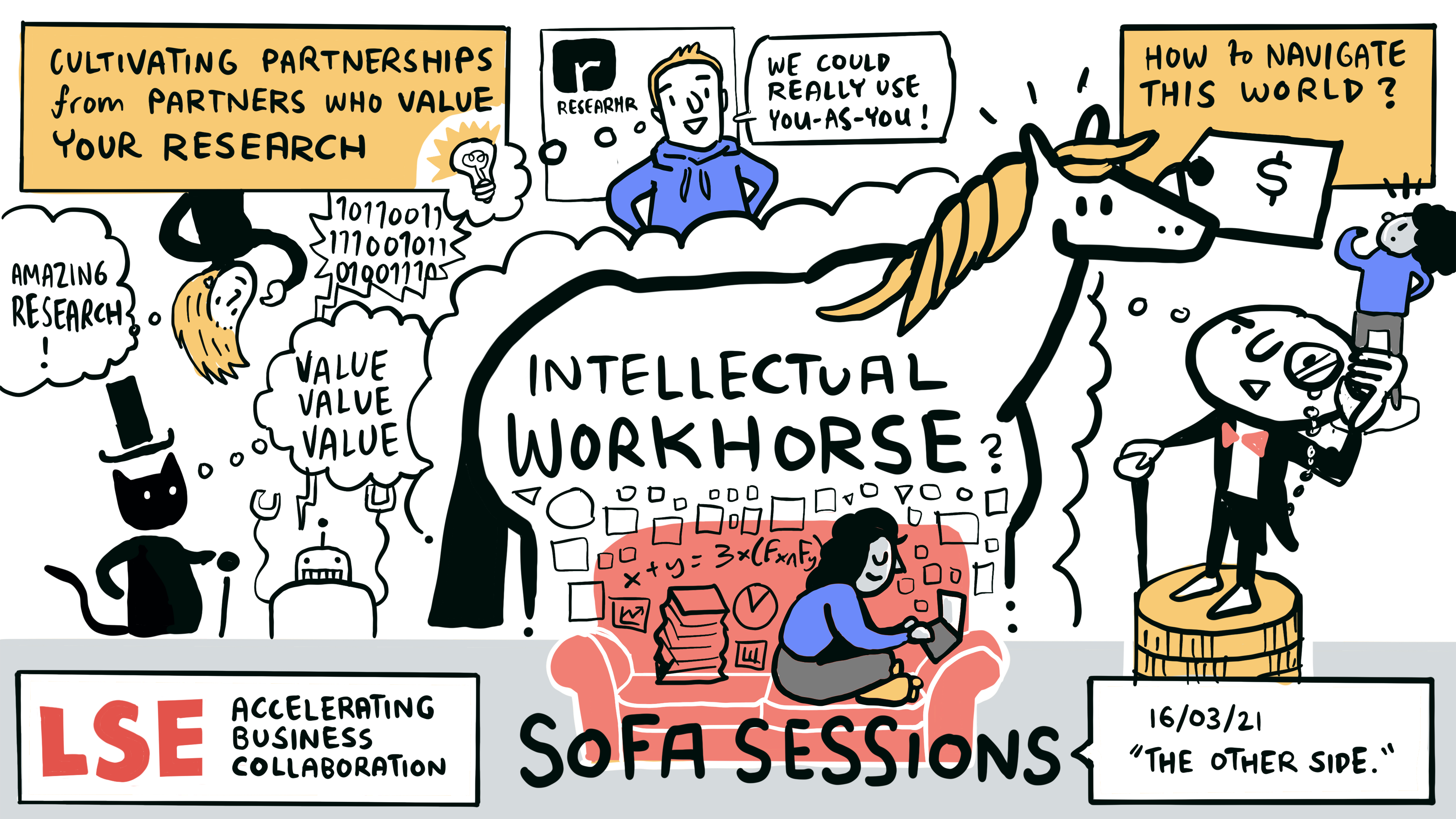
If you have embarked on the PhD journey with the desire to pursue an academic career, you are definitely not alone. While some people start a PhD with the clear objective of a non-academic career, the prevalent understanding of a PhD as communicated by universities and academics is that it should lead to a future career in research and teaching at a higher education or research institution. The speakers argued that a shift in institutional thinking is required here which reflects the reality that post-PhD trajectories are diverse. Fixed and permanent academic positions are limited, a trend which has been further exacerbated by the COVID-19 pandemic, and PhDs equip graduates with a whole range of wider life skills. This is where a space opens up for new possibilities beyond the classic academic trajectory and institutional support is needed to help PhD students navigate these possibilities and experience a “safe landing” on the post-PhD labor market. The speakers agreed that there is definite scope for further developing such support infrastructures. Suggestions ranged from bringing in more people who can help PhD students in “teasing out their capabilities” to better training academics and research students in how to communicate their research (value) to diverse audiences. Ultimately, what is needed is encouragement and facilitation of mutual learning and enrichment not only across academic disciplines but also academic and non-academic boundaries.

Post-PhD transitions come in many shapes, forms and lengths. Not all of them end up being smooth. Having a clear goal at the beginning of the PhD can surely ease the process and help you hit the ground running. But doctoral research thrives on openness and flexibility; it is often messy in character and does not always lend itself to a clear notion of where one’s expertise lies and what one’s post-PhD goals are. LSE has a wide range of resources already available to help you prepare for the time after the PhD. It may be useful to look beyond your department to places like LSE Careers or the PhD Academy to access training, information and advice on how to build a professional identity and successfully communicate that identity to external stakeholders. Make use of opportunities to develop your thought leadership by seeking out diverse avenues to disseminate your research findings – academic journals are only one such avenue and one which comes with a lengthy review process. By writing review articles, opinion pieces or blogposts, you can hone your communication skills and build a diverse audience. Public impact activities offer another pathway to shape your identity as an expert in your respective research field. Do not forget to nurture your network and cultivate relations with people who can assist you in making the leap beyond the PhD. Last but not least, luck is often involved in landing especially the first post-PhD position but by surrounding yourself with supportive people and initiating relationships with partners who value your research, you can give the lucky opportunity you are waiting for a decisive nudge. Most importantly, be confident about your achievement in carrying through and finishing a PhD project! You most likely have gained more experience and skills in the process than you may be aware of! Exploration of your future options starts with developing an awareness of where your expertise, skills and strengths are – they can facilitate a multiplicity of future pathways, be they in academia or the private sector.