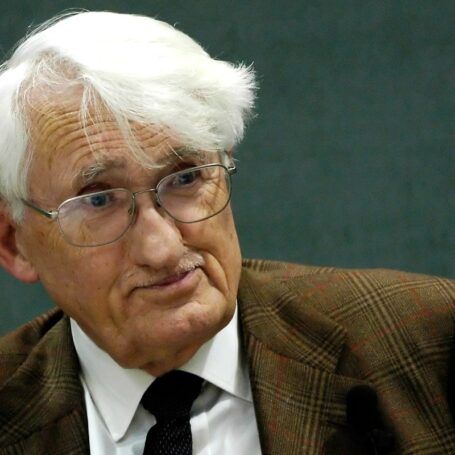
Geert Hofstede: A Paradigm’s Paternity

Youth
I was born in 1956. My father was a young engineer in the metal and textile industries. He made things. For his children, he made a wooden stool with their initials and date of birth burned in. Mine is still beside my bed: original, sturdy and useful. He was special: other men had hair and beards, but ours did not. That was how it should be, considering cuddling. The best thing was when my parents sang or read to us, which was most evenings.
Prehistory
In the 60s, Geert became head of personnel at the textile spinnery, and started wondering about the “internal productivity” of the workers. He embarked on an original PhD in social psychology: The Game of Budget Control. These were turbulent times. At the closure of the sixties, I had three younger brothers, and we had lost one little sister. Geert worked and worked.
Making of
In the late 60s, his experience as a personnel researcher got Geert a job at IBM international. There, he did the gargantuan study that would become famous much later. He travelled the world for his opinion surveys. I loved the gramophone records with exotic music that he brought home. In 1971 we all moved to Lausanne, where Geert would teach and work his data. We boys learned French, and I left a part of my heart.
Impact
1980 is the publication year of Culture’s Consequences. It saw most of us in Brussels. Geert was a fellow at EIASM, the European Institute for Advanced Studies in Management, after milling on his data for a decade. I was a biology student in Wageningen, the Netherlands, firmly decided to have nothing to do with the world of management. Actually, I did work for EIASM for a while when their receptionist suddenly left. I spoke Dutch, French, German and English, and had curly blond hair; a good skill set.
Evolution
I started as a researcher in Information Systems in the mid-80s. Soon, people began to confuse me with Geert; at conferences I could hear whispers behind my back “I didn’t know he was so young!” It told me that my dad was becoming famous. In 1986, he joined academia for good, as a professor in Maastricht.
Being famous was not always easy for Geert. There was a lot of veneration, as well as many misguided attacks; both took a lot of his emotion and attention. Finally, it was time to let go, and he turned to his close circle. Geert passed away in 2020, at 91 years old. He died a happy man, surrounded by his family.
Future
In the 40 years since publication, Culture’s Consequences went through a Kuhnian cycle: anathema – revelation – normal science. It’s not over yet. New people are discovering the work and go through the same steps. The work has been declared obsolete, but as far as I am a judge, not yet for the right reasons. There is still nothing better. Geert made things that are original, sturdy and useful.
References
Would you like to know more?
- For Geert’s life and work, check out the online exhibition at https://exhibition.geerthofstede.com. It has lots of stories, pictures, and videos with Geert talking.
- To get a quick overview of Geert’s work, check https://geerthofstede.com.
- To see culture dimension data in cool and flexible ways, check https://geerthofstede.com/country-comparison-graphs/ and https://geerthofstede.com/hofstedes-globe/.
- For discussions about the state of the art in research on culture and sociality, and to “hear” my voice, see my blog at https://geerthofstede.com/news/.