Quick Insight: Ted Knight on the Secret Sauce for an Academic Conference
A lot of academic conferences, built around venerable societies and organizations, advertise their legacy by listing iteration number — the 112th or the 92nd — in the title of their annual conferences. But how do you stand up a new academic conference. Ted Knight was one of the people behind doing just that for the Mpact Conference on Understanding Regional Opportunities and Partnerships to Drive American Competitiveness held in March 2026. Here he describes some of the behind-the-scenes skills useful in repeating that feat in your own domain.
The transcript of his Quick Insight appears below the video.
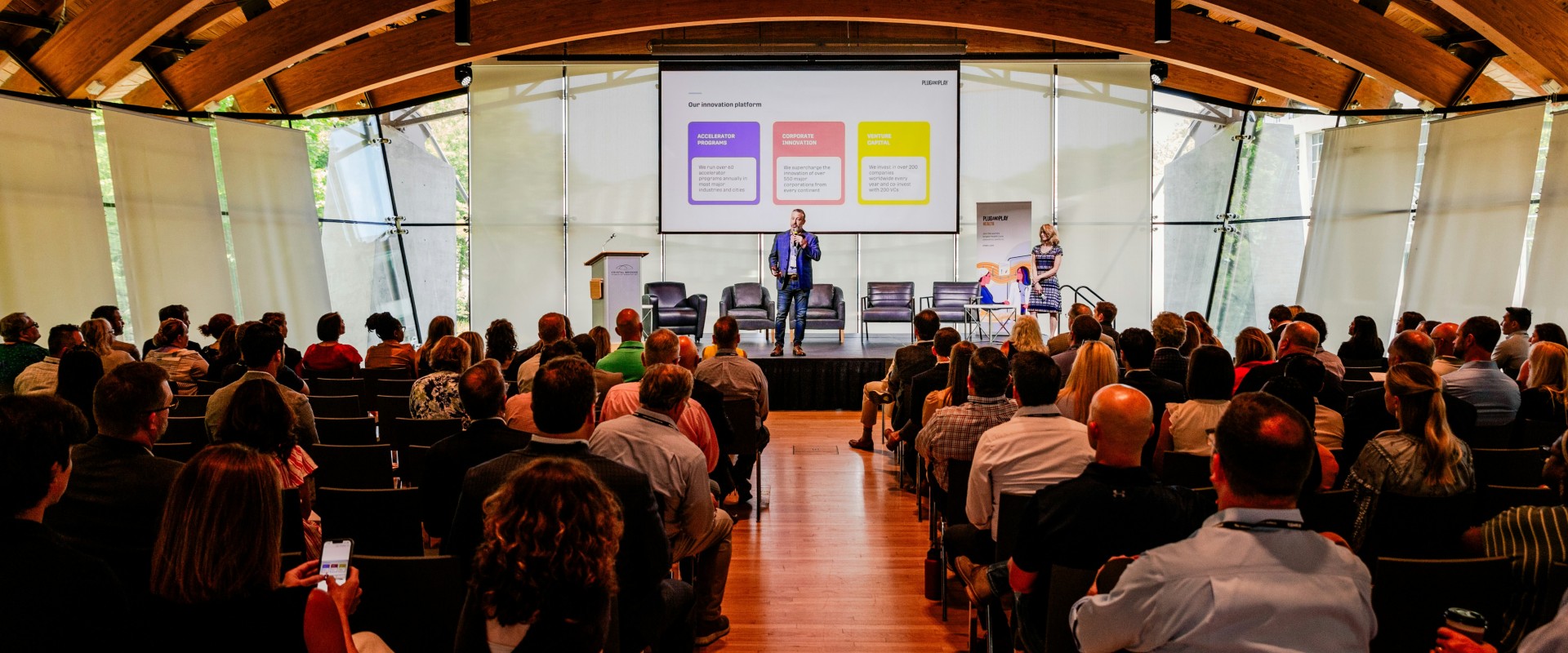
Hi there. I’m Ted Knight, special assistant to the vice president for research at the University of Maryland. And I have just been involved in the organization of the IMPACT conference here at the University of Maryland and College Park. And I want to talk a little bit today about the secret sauce behind organizing a multidisciplinary cross sector conference, which we have just done.
And I really think a lot of this comes down to human relationships and making connections ultimately.
And that can involve some background research, but also just understanding where people are working in terms of the fields and the interests that they have and where there might be interconnections behind work that might be in disparate arenas from industry to nonprofit to government to academia.
And attempting to make those connections, it’s a little bit like The New York Times Connections game that many people like to do on a on a morning before they get into their routine, really looking at where particular interests might intersect. And a lot of this comes down to doing some good research in terms of the kinds of projects and publications people may be working on.
It may relate to their personal networks, certainly thinking about using alumni backgrounds, being co-authors on publications and having connections again, that transcend both disciplinary boundaries and organizational boundaries. And looking at where those opportunities might be to bring people together who might not yet be connected, who might not know each other yet.
Those are a lot of the tools that we used in terms of, you know, designing our agenda and inviting people from a really across a wide spectrum from coast to coast from, you know, top of the country, Minnesota down to the bottom in Texas. And really looking at where we could kind of come up with some ideal people to talk about themes that we thought were really important.
So again, that research might include, I mentioned publications, but also, you know, potentially being involved in particular grant projects, maybe speaking at other events that may have been more inside or sort of siloed inside of their field, but maybe offer promise for something that’s more interdisciplinary or might relate to something outside of their sector.
And really it requires, you know, another ingredient in the secret sauce is a little bit of fearlessness because you really need to kind of reach out to people sometimes that you don’t have a connection to either personal or organizational. And it can really come down to making some cold calls and sending some introductory emails and saying, hey, we’ve got a really great idea for an event.
And here’s how and why we think you might fit into that, into the program. Here’s what we’re trying to do. And here are the particular projects or the particular activities that you’ve been involved with that we feel like really match well to some of the themes that we’re trying to capture. And so those were a lot of the approaches we took.
One last ingredient I want to mention in the secret sauce is a little a little bit of persistence. A lot of the time, some of these outreach efforts, they might come up short. Maybe someone’s not available at that particular time or maybe someone’s interested but has to cancel before the conference. What do you do? A lot of this involves follow-ups and getting suggestions from existing participants. Well, do you need another speaker for that session? Here’s someone I know.
So again, you’re constantly using your network, even when that network is brand new. You’ve just, you know, welcome the speaker into the group that you’re just getting introduced to and maybe you lean on them for some advice for others who might be involved.
But this is a great way, I think to get out of the same, you know, groups that you’re traditionally working with, right, going back to the same old folks that you’ve had conversations with or co-presented with. If you’re trying to seed your conversations with new people from across fields, from across different organizations, different sectors, I think you’ve got to do a little bit of this work that really requires new outreach and maybe getting out of your comfort space and just dealing with your own traditional discipline, your own traditional sector, whether that’s just working with higher ed folks or even people you work with due to membership in a particular association. You need to kind of have a fearlessness in terms of reaching out to new people.
And I think that’s a that’s a really important factor along with, again, persistence. You know, if the first or second connection doesn’t work out, keep working on other ideas.
So those are some of my suggestions for what goes into a secret sauce for a successful cross disciplinary and cross sector conference.