A Conversation with Diane Coyle on Bridging Media, Government and Academe
As part of his 2026 budget proposal, Andy Burnham, the United Kingdom’s prime minister, has called for “good growth in every postcode.” His acolytes insist that this focus on economic growth across all of Britain isn’t just a slogan, but a test. Among those on hand to grade this test is economist Dame Diane Coyle, research director at the University of Cambridge’s Bennett Institute of Public Policy and author of the new book, The Measure of Progress: Counting What Really Matters.
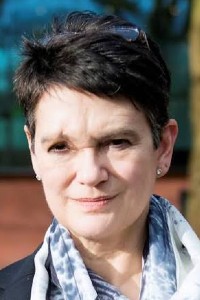
Coyle’s CV includes time as a print journalist and a BBC Radio presenter, a fellowship of the Academy of Social Sciences, and appointment as Dame Commander of the Order of the British Empire. She was also a co-winner of the inaugural Indigo Prize for an essay on overhauling GDP as an economic measurement in the modern age.
She was also one of the contributors to the brand-new report, “Perspectives on achieving good growth in the UK,” just published by the Academy of Social Sciences. Her “featured viewpoint” in the report centered on the challenges of increasing productivity.
Coyle will address what it would take to achieve, or even recognize, growth in every postcode during this year’s Campaign for Social Science Annual Sage Lecture, to be held December 3 at Sage Publishing, 3rd floor, HYLO, 103-105 Bunhill Row, London EC1Y 8LZ. She will touch on the policies, investment, institutions and local capabilities this focus on geographically inclusive growth would require, as well as what measurements—think well beyond gross domestic product—would allow us to see what’s working.
Given the breadth of her experience and her evident success as an influential economist, Social Science Space spoke with Coyle about what it takes to bridge media, government and academe, and about how to have real impact on matters of national or even international interest. Our conversation follows, edited for length and clarity.
Social Science Space (S3): Could you describe your journey from the public sector to media to academia? Was it a conscious decision to travel between those three sectors, or perhaps not?
Diane Coyle: I would say my career journey has been a chapter of accidents. It was largely unintentional. In fact, the whole of my life has been unintentional. I never meant to become an economist, but I had an absolutely brilliant tutor when I was an undergraduate at Oxford, Peter Sinclair, and I fell in love with the subject and did a Ph.D.
Then I wanted to come back to the UK from the United States, so I took a job offer at the Treasury, which I’d had before, and worked in the public sector for a bit.
I’d always wanted to write, so I thought I’d try my hand at it. That was actually a conscious decision: I became a journalist consciously. I spent quite a long time on the Investors’ Chronicle, an investment magazine, and then at The Independent, first as an economics writer and then as economics editor.
Then I had a sort of midlife crisis. I’d had kids, and I’d got tired of daily deadlines. So I quit and set up a little consultancy specializing in new technologies, because I’d got the bug about digital. At the same time, partly for security, I started to take on some public service roles. The first was the Competition Commission, which has panels of members deciding on merger cases. It was an incredibly rich educational experience. As an economist, you generalize about how markets work, in the abstract. Here was a role that involved understanding in detail how specific markets worked. It opened my eyes to the ways that markets differ and to the importance of people in business, the human factor. It was a real education in applied economics.
I loved doing that, and I was cheerfully doing a mixture of private consultancy and public roles, which included vice chair of the BBC Trust. Then I got a call from the University of Manchester saying, “Our students would like us to have some courses that teach them about the real world. They’re finding that their economics courses are ignoring the financial crisis, and we have a bit of a problem here. Can you help? Would you like to be a part-time professor?” I said yes to that. Four years into that, in 2018, I was pointed to the advert here at Cambridge.
S3: I understand that serendipity had a lot to do with it, but if somebody wanted to model themselves on your experience and follow a similar trajectory, what advice would you give them?
Diane Coyle: For any young person now, the advice is not to think you’re going to do the same thing for the rest of your career. That wasn’t even true in my day, and it’s obviously less true now, when a transformation is going on in the economy and the kinds of jobs are changing very frequently. I do see students worry a lot about their first job, as if it’s going to tie them down for the rest of their lives. Of course, it doesn’t. I think the answer is being open to opportunities and giving things a go. Many of the things that I did came about because somebody said, “Have you thought about doing X?” and I thought, “Why not? That sounds like a good idea.” Opportunities need people who are open to taking advantage of them.
The other part is to think of yourself as somebody who has certain aptitudes and skills, rather than somebody who does X. I do think of myself as an economist above all else, but not as an academic or as a public official. So it’s about defining yourself by what you’re interested in, what you can do and what you can feasibly learn, rather than fitting into the existing pigeonholes.
S3: I want to go back to something you said: that you hadn’t planned to be an economist. What were you planning on doing originally, and what was it about economics that made you switch?
Diane Coyle: I planned on becoming a philosopher and sitting in cafés in Paris, drinking coffee and pining about the state of the world. If that didn’t work, I was going to become a civil servant. The thing about economics was its broad range and how relevant it seemed to important things going on in the world.
But I think, in a sense, having a committed and brilliant teacher is the greatest gift anybody can have, because a good teacher can make anything seem interesting. If I’d started doing something completely different and had a brilliant teacher, I might have ended up being a neuroscientist or a telecommunications engineer. Who knows?
S3: You’ve also done media work. I’m interested in the intersection of policy and media, and of academia and media. I realize it’s not necessarily either/or, but do you believe it is worth it for academics to contribute to media pieces or to write them? I’m a print journalist by training, so I speak in those terms, but media can mean YouTube shorts or whatever might constitute journalism these days.
Diane Coyle: I think it can be, particularly in the social sciences or practical sciences like engineering, because the things we do our research and teaching on are things that have an impact on people’s lives. I think there’s a responsibility to be able to communicate why it’s important, or why you would advocate for some policies rather than others, whatever it might be. So there’s that sense of responsibility. I also believe firmly that being able to explain something to the average reader of social media or newspapers is a real test of whether you understand it. I find writing a way of thinking. I often don’t actually know what I think, or where the contradictions are, until I’ve tried to write it down in a very accessible way. That clarity of writing maps, in some way, onto clarity of thinking.
I also just like the public engagement, because the questions that people come to you with are really revealing about what’s salient in people’s lives, about things you haven’t thought about or didn’t know about, and about sources of information that might be helpful to you. Communication is two-way. It’s not just the academic broadcasting out to the world. It’s communicating with your ears and your eyes as well as with your voice.
S3: You were drawn into academia because you had real-world experience, but one of the knocks on academia is that academics seem to run from actual policy implications, or from advocating for things. Do you find that ever to be true, or is it a canard?
Diane Coyle: I guess it varies among individuals. Some people don’t have the personality, or the subject area, that lends itself to that. My lovely colleague who researches the history of logic probably doesn’t have direct policy implications, and I’m not sure he’s the sort of person who would want to be on the news talking about his subject. I think that’s fine. The Academy has to embrace, and have room for, people like that. But for a lot of us, I think part of the social contract is that we do engage with policymakers and we do engage with the public. As I said, I see it as a kind of responsibility.
And there are lots of us, actually. There is more appetite for that than I think people realize.
S3: As someone who has been on the other side, what are some of the mistakes that occur repeatedly when academics come with policy prescriptions, or want to influence policy or make an impact?
Diane Coyle: There are several. One of my journalist friends and I, in those days, used to have a phrase: “Oh, here’s another press release from the university: the bleeding obvious.” Important academic work might indeed confirm things that seem really intuitive, but you probably don’t want to press-release that or try to pitch it. On the other hand, university press offices, in their enthusiasm, can sometimes overpitch stories or oversell things. We’ve all come across miracle cures for some disease that are probably very far away from transforming people’s lives. That shouldn’t happen either.
I think there can also be a naivety about how government works. People think, “If I’ve come up with this really interesting finding, it has universal validity, and if I just put it out there, the government ought to do something about it.” For many economists, we come up with what we think are technically correct solutions to problems, but technically correct and politically correct are different beasts, and you have to find something that can do both.
S3: Have you seen cases where academics have come in and actually hit their marks?
Diane Coyle: Can I think of specific examples? Probably not at the moment. It’s a long time since I’ve been on the receiving end there. Did I pass on that one? Sorry.
S3: But they have happened? It’s not all a wasteland of failed efforts?
Diane Coyle: There definitely have been some, yes. And there have been some that were important to do even if they seem to have failed. I’m thinking specifically of what economists were saying about the economic costs of Brexit, which by and large turned out to be correct. It was important to say so, even though that didn’t sway the vote in the end.
S3: I didn’t want to ignore your book, The Measure of Progress. It includes what is sometimes considered a dirty word among some qualitative academics: measurement. How important is measurement across the board, and specifically in the social and behavioral sciences, especially when we’re looking for impact?
Diane Coyle: Very important, in the sense that in our society and politics, having numerical estimates is powerful. Thinking about the way that data is conceptualized, classified and sourced, and about its quality, has become increasingly important for academics doing any kind of quantitative work. That is because of the influence that numbers have on decisions people make in real life, and because AI and digital technologies are expanding the use of data so much. The way that you measure things becomes a set of lenses through which we understand what’s possible and not possible in the world, or how things work.
I completely understand why people in the cultural sector or in environmental sectors resist the idea that you can quantify everything, and I completely agree that you can’t. But it’s equally, I think, quite harmful to pretend that something is not addressable with numbers when numbers shape decisions. For many environmental services, like biodiversity or soil quality or water quality, we’ve had a zero there, and having a zero there has distorted decisions in a bad way. So my argument is that putting a number is better than having a zero, even knowing that the number can’t capture everything you think is valuable.
S3: In general, do you think we’re actually capturing the right numbers?
Diane Coyle: No, because the structure of our world and of our economy is changing so much that the set of lenses we have at the moment is becoming increasingly outdated and distorting.
S3: Is there any area where you think it’s worse? And is there an area where we’re measuring things somewhat correctly that should be an inspiration to others?
Diane Coyle: We are doing better at measuring environmental impacts, with the understanding, for example, that if food quality deteriorates too much, then that will hit agricultural yields and increase the price of food in people’s shopping baskets. So I think we’re doing a lot better on the environmental front than we used to.
But there are other areas, including a lot of the digital economy, which is the subject of a lot of the book, where we haven’t got to first base, if I’ve got the term correct. We’re just very far behind what’s actually happening.
S3: As an economist, you talk naturally about measurement. What about some of the other social sciences? What are some things they could do to have a seat at the table?
Diane Coyle: I think any social science has something to bring to the table. I suppose there’s such a tradition of economists being involved in public policy that it comes more naturally in my discipline than in many others. But people have often given the example of the importance of anthropology during the first Ebola outbreak, when the Department for Health called an anthropologist to tell them about funeral practices in West Africa. That turned out to be really useful knowledge. There will be useful knowledge across the whole of the social sciences. I would encourage people to introspect about what they wish policymakers knew about their discipline, and not have the habit of only talking to people inside academia.
S3: Is it important for academics to focus only on current policy issues and craft their scholarship toward them? Or is there some value in a blue-sky approach, in saying, “This is not on the table right now, but I think you really should be talking about it”? Does that ever work?
Diane Coyle: Oh, I think there’s huge value in blue sky, because one never knows what’s going to be important in future. And some of it is just valuable in itself. Medieval music, for example: maybe there will never be a policy use for it, but it’s a good thing to know. It’s part of the real wealth of being human and interested in things.
It’s very unpredictable. We have this construct of impact, but even in something quite practical like economics, the impact can take half a century. The insights of Ronald Coase, who eventually won the Nobel Prize, had an impact on spectrum auctions well over 60 years later. So it’s highly unpredictable. Just as anybody investing in movies or books, or a VC investor, has a huge portfolio because only one or two will pay off, we need a huge knowledge portfolio, and one or two things will have really big payoffs in terms of policy and immediate outcomes for people. But you need all of it. You don’t know which is going to be important.
S3: I don’t want to steal from the lecture you’re going to give, but at the same time, I do want to steal from it. What are some prescriptions you might have for growth in every postcode?
Diane Coyle: I haven’t written the lecture yet, so you can’t steal too much. My starting point is that we’re never going to have everything everywhere. Not everywhere can have a high-tech cluster or all the growth industries, but there needs to be a minimum something for everywhere. That’s the way I think about growth in every postcode.
We are in a context where, for many people, the pattern that has lasted at least since the middle of the twentieth century, of things getting better and of anticipating that things will get better for your kids, hasn’t worked. It stopped. That machine stopped. That’s a combination of classic affordability and cost of living, but also new frictions in everyday life. These are the kinds of things that Corey Doctorow talks about as “enshittification,” though I hate the word: the challenge of getting through to a human at your bank, and the bureaucracy involved in engaging with the government. So life feels like a struggle and not like it’s getting better. Addressing those things, you might not count it as growth in every postcode, but things have to get better in some way for everybody.
S3: “Growth in every postcode” sounds kind of coded UK, in the context of what London is interested in. But the lack of growth in every postcode is certainly apparent in my country, the US, and elsewhere in the Western world. Do you have any prescriptions that are global or universal?
Diane Coyle: I think they all are. As an economist, for me it’s first of all about making markets work better for people and making sure that public services work for people. And it’s about that sense of hope, which seems to be the thing that has been lost in many of the advanced economies: that sense of optimism that, even if you can’t have the holiday or the car, your kids will be better off. That’s what seems to have gone.
My Ph.D. supervisor, Ben Friedman, wrote a fantastic book 20 years ago called The Moral Consequences of Economic Growth. It was about the link between what seem like very pedestrian issues, such as whether your living standard is going up in measurable ways, and democracy and the sense of community. These things go hand in hand.
S3: We’re in the midst of our midterm elections here in the United States, and it’s been noted that the culture war issues that had dominated discussions have taken a back seat to bread-and-butter issues. [Editorial note: This was a statement rather than a question in the original; it is retained as the prompt for the answer below.]
Diane Coyle: I guess what’s salient to people does change over time, and even over quite short periods. In my journalism days, it was quite striking how different economic figures became salient at different times, depending on what was going wrong: the balance of payments one minute, the unemployment rate the next, and the inflation rate after that. I guess we tend to focus on only one thing at a time.
S3: That makes me wonder what you feel we ought to be focusing on, or at least giving a secondary focus to, that nobody is paying attention to now?
Diane Coyle: What is the thing that nobody’s paying attention to? That’s a good question. The one I worry about that has dropped off the policy agenda is environmental issues, because they’re really going to affect our growth and standard of living in the years to come. The measures are there, and nothing is getting better, and nobody is paying attention to them.
S3: I feel this has to be asked of every interviewee: Where does AI fit into this?
Diane Coyle: The economy is all about using information to use resources in an efficient way to deliver the things that we value, in both an economic sense and a more fundamental sense, as human beings. AI, as an information-processing technology, can help with that in the way that previous communications technologies have done, with likely very disruptive effects. Printing created mass literacy and paved the way for the Enlightenment and the Scientific Revolution, but there was a 100 Years’ War of Religion before we got there. So these technologies are disruptive, but ultimately that is the way that the human economy has progressed over time.
I would layer on top of that really big questions about the distribution of power and wealth at the moment, because of the way that AI has emerged in corporate structures and in the economy that we actually have today.