First Citizen of the Caribbean: Norman Girvan, 1941-2014
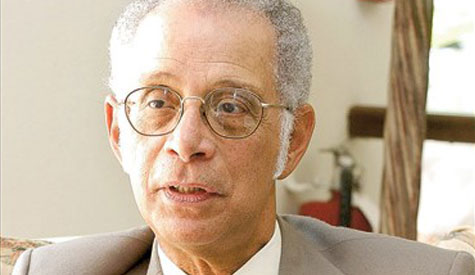 Economist Norman Girvan, one of the Caribbean’s most respected social scientists and a consistent voice for greater unity in the region, died last month at the age of 73 from injuries suffered in an earlier fall. Girvan was professor emeritus of The University of the West Indies, where he had directed the Consortium Graduate School of the Social Sciences at Mona and helped guide its merger with the Institute of Social and Economic Research to create and then helm the Sir Arthur Lewis Institute of Social and Economic Studies.
But it was as a public intellectual and diplomat for both Jamaica and the Caribbean as a whole that Girvan’s impact was arguably greatest. Besides stints in Jamaica’s government at the National Planning Agency, central bank and economic council of the cabinet, he was the second secretary general of the Association of Caribbean States, serving from 2000-2004. In 2009 Girvan was appointed to the United Nations Committee on Development Policy. The next year –and in keeping with his vision of the region as more than just the islands — he served as UN Secretary-General Ban Ki-moon’s personal representative to try and sort out the festering border controversy between Guyana and Venezuela.
“As a Caribbean man,” sociologist Anton L. Allahar wrote at the Counterpunch blog, “Norman was an integrationist and a sovereignist. He saw the region as a continuous whole and was always ready to challenge those who sought to minimise its tortured sovereignty.”
Or as sustainable development researcher Mervyn Claxton eulogized, “More than any other Caribbean, past or present, Norman truly deserves the title, ‘Mr. Caribbean’.”
Born in 1941 in Jamaica’s Saint Andrew Parish, he received a bachelor’s degree in economics from what was then the University College of the West Indies, part of what current UWI director Brian Meeks terms “a brilliant cadre of students” such as historian Walter Rodney and sociologist H. Orlando Patterson. Girvan went on to earn a Ph.D. at the London School of Economics before returning back home to a life of service and scholarship.
“He, in a sense, was a living embodiment of the idea that the Caribbean economy should be theorized, explained originally and would be used a basis for giving advice to government and for determining policy,” Tennyson Joseph, head of the Department of Government, Sociology and Social Work at the UWI Cave Hill, told the Antigua Observer.
Much of his early academic writing focused on the malign friction between developing economies and first world corporations, and clearly influenced the policies of his native country. Later he dealt less with grievance and more with solution, in his estimation an economic bloc (which he predicted for 2015). “His service as main author of Towards a Single Development Vision and the Role of the Single Economy, a visionary document to guide the development of the Caribbean Community, was a prime example of the commitment that professor Girvan had to his region,” according to Caricom Secretary General Irwin LaRocque.
Girvan was known to “wear his learning lightly” — Girvan was “deeply theoretical but astoundingly practical,” political scientist Neville Duncan told Jamaica’s Nationwide Radio — and was always ready to express his convictions in popular outlets. Those included his own blog where he fleshed out ideas and issues on Caribbean economic integration and at the forum 1804 CaribVoices, which he founded with Alexander Gittens.