 News
Has Donald Trump Lost the Plot?
David Canter looks for narrative structure in the U.S. president’s statements and actions by comparing these with the contentious The Diary of Jack the Ripper.
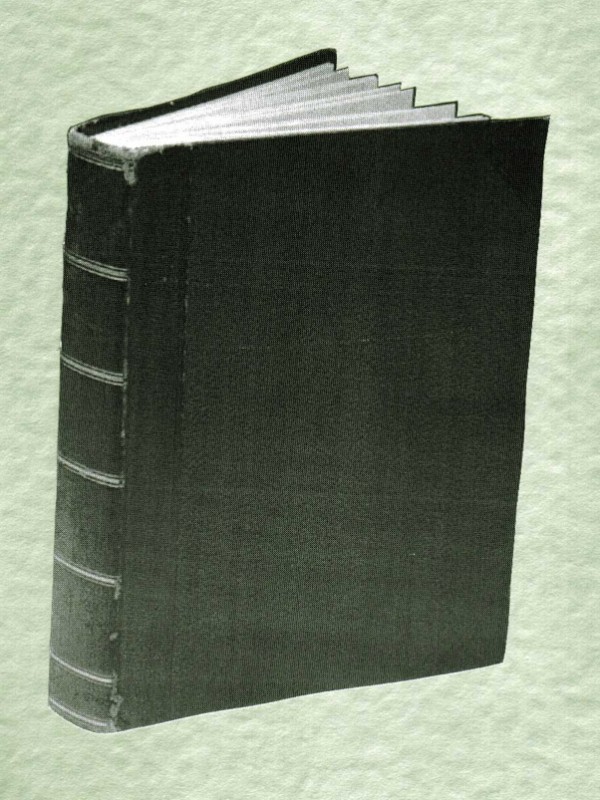
It may be a curious comparison to a US president’s activities, but I recently published a study of the contested Diary of Jack the Ripper.1 This unusual document purports to be the first-person account of the killings carried out by an unknown murderer of at least five women in Whitechapel area of London towards the end of 1888. Its authenticity is hotly debated. Nonetheless, what particularly interests me about that so called ‘diary’ is that, whether it was genuine or fraudulent, it has a strange structure to it and organization of it.
It is not a ‘diary’ in any usual sense. There are no dates or direct references to specific days. It has a patchy chronological sequence to the account given, but this can be references to what is planned as well as what has happened. Some pages are devoted to what look like attempts at doggerel. There are asides about what he calls his ‘campaign’ against his wife and what he believes is her lover. There are also comments on his delight or dismay in what he has experienced, or anticipation about what he plans to do.
What intrigues me about this document is what a mess it is. I therefore set about trying to see if it really does have the sort of framework and structure that narratives are supposed to have. I had even done a study some years ago seeing whether narratives given in a logical, chronological order are regarded as more plausible than those that are not. 2 They are.
To my surprise, The Diary does reveal, in unexpected ways, all the components to be expected in a coherent storyline. For example, the opening line of The Diary starts in the middle of the sentence: what they have in store for them… This is not obviously any sort of introductory statement that a good narrative has. It seems to assume the reader already knows a lot, who ‘they’ are and what they have ‘in store for them.’ It doesn’t even hint at the point of writing The Diary or other background, as setting the scene in storytelling requires. Yet with a little consideration this opening in the middle of a sentence is a masterful start to bring the reader into an intriguing adventure.
Good stories also have jeopardy. This is achieved in The Diary by starting off expressing concern about how risky it is to write it, for fear he will be detected. That becomes a frequent refrain reminding the reader the danger the author is in, not just for his descriptions the murders he has carried out, but for putting an account of them on paper.
Further, it may be thought that the accounts of his vicious crimes would lead to some denouement in the actions carried out. There would be development in the adventure being described. The diarist turns this on its head. It is the purpose of writing The Diary that emerges during the writing, not the accounts of the crimes themselves. Towards the end the writer makes clear he wants the world to know what he has done and why. He states specifically that he wants that: history do tell, what love can do to a gentleman born. The resolution of the narrative is the emerging realisation of the need to tell the story.
There are many other components to the structure of The Diary, that can be found to reveal it does operate as an unfolding narrative, despite its apparent randomness. I therefore wondered if hidden in the actions and comments of President Trump there could be found a hidden narrative despite the views of many people who describe him as mercurial, unpredictable or apparently random in his actions and speeches.
Some commentators have even proposed that Donald Trump has “lost the plot.” That raises the question of what the plot was that has been lost?
I’m thinking about this from North Wales in the UK. So, I only have public accounts available in the BBC, New York Times and other news outlets. However, the three features I’ve noted for The Diary can provide at least a start in exploring the storyline of the current U.S. administration.
First, the introductory overview. As noted, the opening sets the scene for any narrative, even if it doesn’t look as if it does. As far as I can tell the earliest actions of the Trump 2.0 was to publicly sign a number of executive orders, even in some cases on an arena stage. Twenty-six on his first day and in the next few weeks well over 100. It is difficult to believe he had full details of what these orders covered and their implications. These actions set up the character for his story. An all-powerful executive for whom the process of acting in a commanding role is the essence of the hero of his drama.
Another issue that moves engaging stories is jeopardy. There are risks and dangers that have to be overcome. They reveal the frailty of the protagonist in the story. That makes the eventual overcoming or resolving of those challenges all the more impressive. However, I’ve searched in vain for President Trump’s declaration of difficulties so severe that there is a risk they will not be surmounted. Every announcement is about the inevitability of victory, whether these are internal challenges such as the mid-term elections or external wars being fought.
That invulnerability is not found in even the strongest of superheroes. Even the archetypal Superman is weakened by kryptonite. The biblical Samson has his strength taken when is hair is cut. These flaws are crucial to keeping the story going. They provide a reason for the audience to be engaged and wonder if their hero will indeed survive. By avoiding any self-referential mention of vulnerability, Donald Trump’s personal narrative becomes little more than a picaresque adventure in which the audience wonders what might happen next. It is possible to jump in and out of such narratives without feeling there has been any change in the plot. It makes the story a constant revisiting of the character of the omnipotent executive.
The third feature that all stories require is development, momentum, the belief that the protagonist will change either in their view of themselves or the nature of their actions. Although the president has indeed changed and reversed his actions and statements, I can see no inherent logic and demonstrable progress in them. Unlike the author of the Jack the Ripper diary who starts to realize, towards the end of his 90 pages, why he is s writing The Diary, I am hard pressed to get a sense of any resolution in Trump’s presidential storyline.
The question, then, of whether Trump has lost the plot, requires a description of what the plot may be. This brief analysis suggests the plot is a revelation, in many different forms, of the character that the president wishes to portray of himself. The persona Trump is so determined to project is the plot. Admittedly, that is a rather one-dimensional character. It does not embody much opportunity for development or denouement. It is a story that will continue on its one note until some external force, like an election, or end of term of office, brings it to an end.