Berggruen Philosophy Prize Awarded to Sociologist Patricia Hill Collins
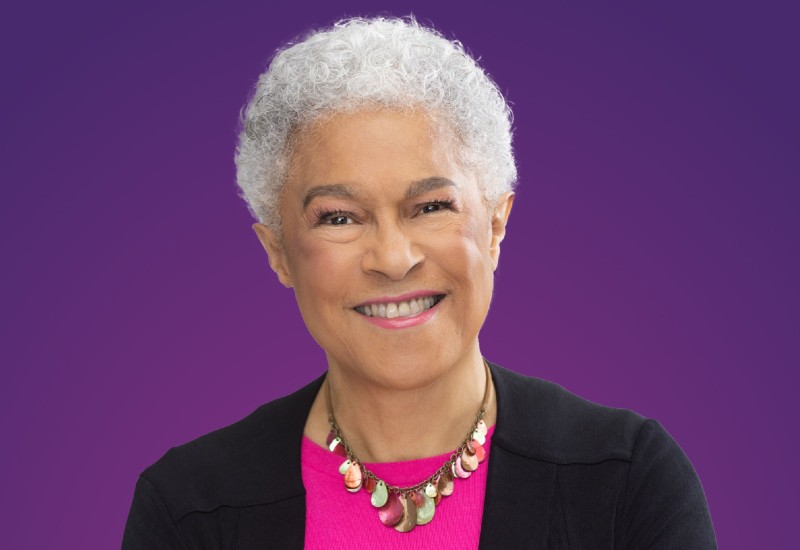
A sociologist and social theorist whose work helped set the stage for theoretical examinations of intersectionality, especially for African-American women, was awarded the 2023 Berggruen Prize for Philosophy and Culture on Monday. Patricia Hill Collins, a distinguished university professor emerita in the Department of Sociology at the University of Maryland, will officially receive the prize next year in Washington, D.C., along with the Berggruen’s $1 million cash award. The Berggruen is given annually “to thinkers whose ideas have profoundly shaped human self-understanding and advancement in a rapidly changing world.”
“Patricia Hill Collins has given a voice and a face to so many who would otherwise have remained unheard and unseen,” a release quoted Antonio Damasio, chair of the Berggruen Prize Jury. “Her studies illuminate the material, social, and cultural conditions behind the mutilation of human possibilities while never failing to recognize the uniqueness of human experience.”
Collins is the eighth winner of the prize since philanthropist Nicolas Berggruen established it through the Berggruen Institute in 2016, and she is both the first social scientist and the first Black recipient. All of the past winners, with the exception of 2019 winner Ruth Bader Ginsburg, then a U.S. Supreme Court justice, have been philosophers.
Her body of work, including the pioneering 1986 journal article “Learning from the Outsider Within: The Sociological Significance of Black Feminist Thought” and the hugely influential 1990 book Black Feminist Thought: Knowledge, Consciousness, and the Politics of Empowerment, offered a new lens and a new vocabulary for understanding long ignored communities. The book went on to win the Jessie Bernard Award of the American Sociological Association for significant scholarship in gender, and the C. Wright Mills Award of the Society for the Study of Social Problems. Collins herself would, in 2008, become the 100th president of the American Sociological Association – the ASA’s first-ever Black woman president.
“In Black Feminist Thought,” Collins wrote in 2019, “I analyzed how African-American women resisted the dehumanization of chattel slavery by producing a self-defined oppositional knowledge. Black women could see, feel, and experience how the treatment of their bodies as simultaneously raced and gendered shaped the contours of their subordination. This initial insight that both race and gender intersected reflected a methodology of bottom-up theorizing to address social problems. The terms race and gender signify the intersection of racism and sexism, with other terms added over time to flesh out contemporary understandings of intersectionality.”
As the Berggruuen release notes, “These insights underpinned an idea with relevance far beyond the American experience: that race, class, gender, and myriad other dimensions of identity mutually construct one another as expressions of power, reinforcing inequality everywhere.”
Born into a working-class family in Philadelphia in 1948, Collins earned a bachelor’s degree in sociology at Brandeis University in 1969, where her advisors included another pioneering Black woman scholar, Pauli Murray. “Sociology was right between the sciences and philosophy,” Collins would later reflect. “The sciences, with an emphasis on empirical data, can reveal some of the hidden structures and patterns that are not obvious to you, whether you are talking about explaining natural or social phenomena. Philosophy offers explanations and interpretations.”
From Brandeis she went to Harvard University, earning a Master of Arts in Teaching in 1970 and then spending six years teaching at a progressive middle school in Boston’s Roxbury neighborhood. Collins next directed the Africana Center at Tufts University for four years until returning to Brandeis in 1980 to pursue a Ph.D. in sociology. While in the Ph.D. program, Collins joined the University of Cincinnati’s Department of Africana Studies, where she would remain for the next 23 years until joining the University of Maryland in 2005.
Collins’ writings after Black Feminist Thought serve as mileposts in the public and academic advancement of critical race theory, intersectionality, feminism and social justice. Some of these volumes include the 1992 textbook Race, Class and Gender: Intersections and Inequalities (co-edited with Margaret Andersen and now in its 11th edition); 1998’s Fighting Words: Black Women and the Struggle for Justice; Black Sexual Politics: African Americans, Gender, and the New Racism in 2004; From Black Power to Hip Hop: Racism, Nationalism, and Feminism, 2006; the co-edited (with John Solomos) reference work The SAGE Handbook of Race and Ethnic Studies 2010; Intersectionality (with Sirma Bilge) in 2016; and Intersectionality as Critical Social Theory in 2019. “Altogether,” noted the Berggruen release, “her writings have redefined injustice, ushering into mainstream thought an institutional, systemic perspective on the source of inequality and the reasons for its perpetuation, as well as the resistance of oppression a