Quick Insight: Euan Adie on Getting Academics Credit for Their Impact

Euan Adie, the founder of Altmetric and later of Overton, discusses the reasons the led to Overton’s focus on showing researchers how they can locate and identify the impact their work has made in the policy world. He cites Sage Policy Profiles, a free tool available to individual researchers that allows them to track their citations in policy documents collected by Overton.
A transcript of his remarks appears after the video.
Hi, my name is Ewan Adie and I work at a company called Overton. My interest, or the question we’re interested in, is how do academics get credit for all the work they do both inside academia, but even more importantly beyond that. So in publicly communicating their research or engaging with policy makers or, you know, getting into patents or startups or clinical guidelines or anything like that. And broadly speaking, this field is called alt metrics, or alternative metrics.
There’s an alternative to just looking at citations in academic journals. As researchers, a lot of us get into research in the first place to have a wider impact on the world. It might be mainly because you’re curious and driven to answer specific questions, but a lot of it is also because you want to make the world better more generally.
But academic systems aren’t really set up to reward that. Outside of research and teaching, you don’t get credit as an academic necessarily for, say, engaging with a policy maker. So if you want to change that, we have to kind of think about, first of all, how can we measure this kind of thing? How can we see that it’s happening and, and kind of evidence any claims that you are doing that?
And then secondly, we need to start thinking about questions like what is impact that, you know, what do we count?
If I talk to a politician and it influences her views on something, is that impact or is it only impact when that politician goes on and then gets legislation that gets put into practice and then at that point that kind of the concrete changes happen?
It’s a fascinating area. There’s lots of questions that I think lots of people are working on in interesting ways. From a practical perspective, how we work is we have a big database of public policy documents and we try and link that back to the influences and the evidence that went into them.
So if you take any one piece of legislation or a policy document, can we say this is who’s being cited in it here, the think tanks that are contributing ideas to it here, the people that are maybe acknowledged in in the work around it, and all this kind of thing.
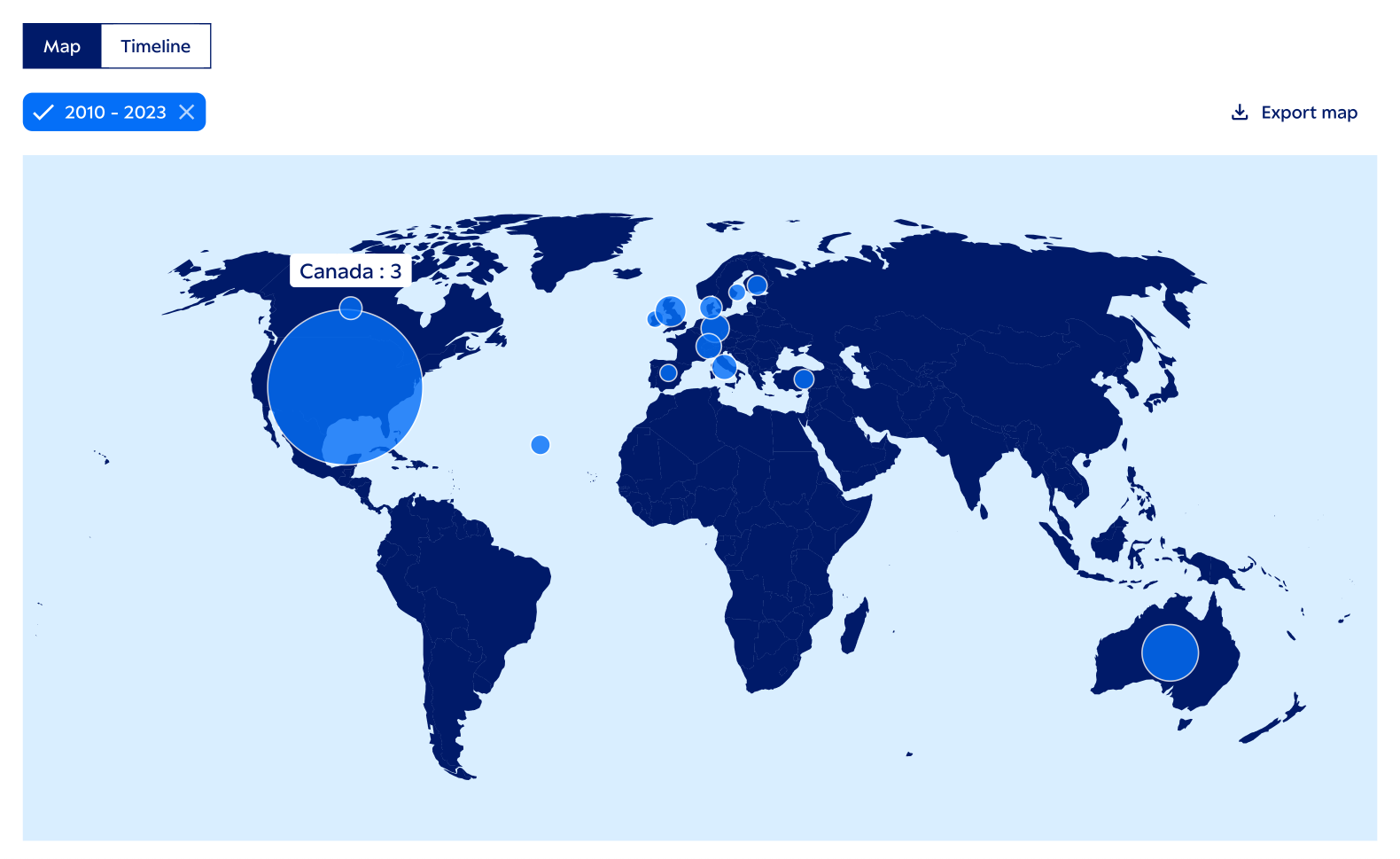
And that’s available to individual researchers, too. We do a collaboration with Sage called Sage Policy Profiles, which you can visit and you can see for you as an individual academic, where’s your work appeared in in global policy.