Why is It So Difficult to Agree About Masks and Respiratory Infections?
The Northern Hemisphere is experiencing its regular seasonal increase in viral respiratory infections. Traditional schedules have not fully adjusted post-Covid so influenza came to the UK in December rather than January. For several weeks, both the mainstream media and social media were full of headlines about “record levels of infection,” which would have been entirely normal a few weeks later. Nevertheless the panic provoked new calls for community mask wearing, and mandates in some hospitals. It also revived arguments about the evidence for the effectiveness of these measures. These had been largely settled by 2020 as far as influenza, and influenza-like illnesses (ILI), were concerned – studies do not always distinguish between ILI and laboratory-confirmed influenza.
There is a history of research on the impact of masks on the transmission of these infections going back to the 1918 influenza pandemic. This evidence had been thoroughly, and uncontroversially, evaluated by successive reports from the respected Cochrane Collaboration since 2009. As a result, the initial response of many public health leaders to the COVID-19 pandemic was to dismiss masking as an intervention unlikely to be beneficial. A significant number of them continued to hold this as a private view throughout that pandemic.
There might have been a respectable argument for questioning the validity of this evidence in its application to a novel coronavirus, although other coronaviruses are represented among the 200-300 viruses that cause ILI. But this is not a justification for questioning the evidence in relation to seasonal influenza or historic ILI viruses. However, the limited evidence produced during the COVID-19 pandemic re-ignited debate and is being read backwards to introduce uncertainty in interventions to control ILI. Arguably, the problem is one of a public expectation that it must be possible for medicine to control nature. Something must be done and masks appear to be a simple, commonsense measure.
On closer inspection, however, at least six academic fields might have something to contribute, and it is unlikely that they will ever produce a clear consensus.
Physics/Engineering
This was given a particular impetus during the early phases of the COVID-19 pandemic. Its laboratory studies appeared to produce convincing evidence of benefit. However, the more rigorous the experiments, the less realistic they became. Studies depend upon the passage of a jet of air, carrying particles intended to simulate a virus, through a model human face, covered by a mask, in a contained environment. All these elements are influenced by the decisions of the experimenter – the speed and temperature of the air jet, the size and weight of the proxy particles, the material of the mask and its seal to the model face. In order to get measurable results, the air in the chamber has to be artificially stilled – but air is never still in nature. Given all of these controls, it is not difficult to produce positive results. They do not, however, necessarily translate into benefits ‘in the wild’ to use a phrase familiar to sociologists of science.
Materials
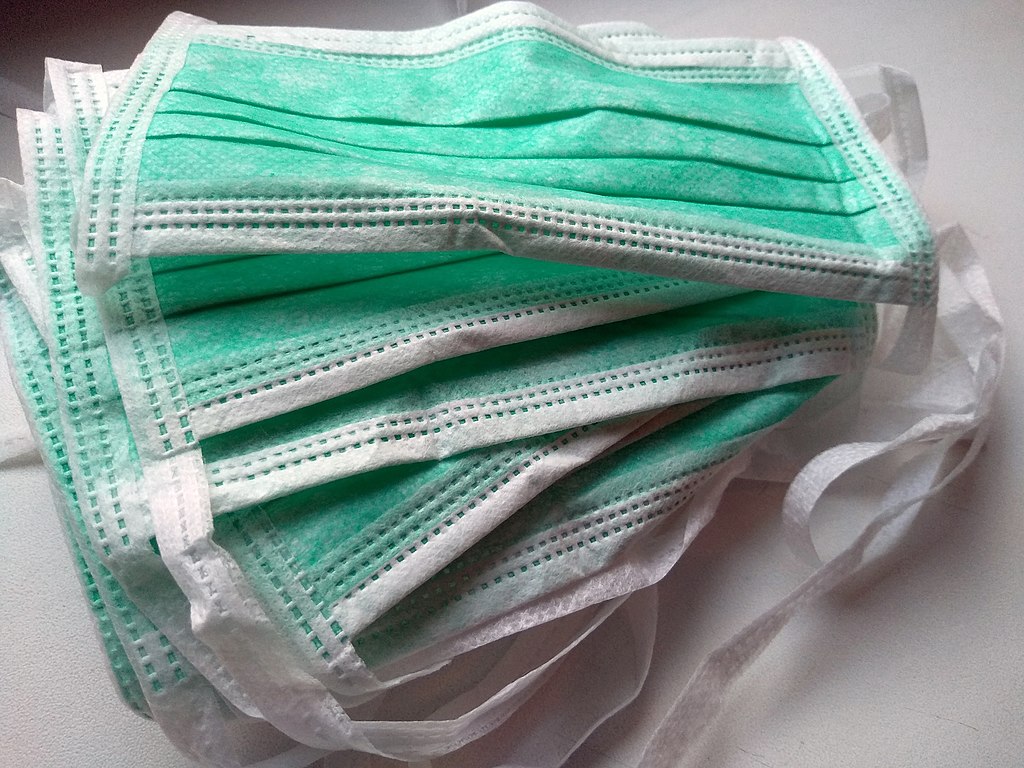
Any benefit from masks results from their ability to filter and retain viral particles. Viruses are, however, so small that it is difficult to create materials that hold them back while still allowing the wearer to breathe. There does appear to be broad agreement that the simple fabric masks that appeared early in the Covid-19 pandemic have little or no value. The pores in the fabric are simply too large and the leakage around the edges too great to have any significant impact. Where they have a history of use in hospitals, this has been for the protection of staff during treatments that generate much larger particles from bone fragments, blood or body fluids. Attention then switched to a higher grade of masks, N95/FFP2. These are more elaborate but not clearly more protective, except to the extent that viruses may hitch a ride on larger particles, like water droplets, that are held back. Occupational health and safety agencies do not recommend these for work with viruses. In laboratory contexts, protection of employees is achieved by containment and remote manipulation or by much higher quality masks or respirators that are difficult to use for any length of time. Both cloth and N95/FFP2 masks also see their properties change over time as they become damp from exhaled moisture.
Virology
To the extent that masks may interrupt the flow of viral particles, does this actually have an impact on the risk of infection? How much virus does a person need to take on board to develop a respiratory infection? There does not seem to be a clear answer to this question, which will, in any case, depend on the vulnerability of that person. Attempts to infect human volunteers have a very long history in the study of ILI. Even with the delivery of live virus high up the nostrils, it has been difficult to get consistent results, as COVID-19 studies also found. Simply finding virus particles in the air at some distance from their source does not establish that they are capable of being infectious. Air movements are constantly diluting exhalations and many ILI viruses are rapidly inactivated by the drier and cooler environments outside the human body.
Epidemiology and related social sciences
These look at the population-level effects, particularly through randomized controlled trials (RCTs). Whatever the lab studies, or the models derived from them, have to say, what is actually happening in the wild? For influenza and ILI, the Cochrane reviews are pretty conclusive. The COVID-19 RCTs do not challenge this assessment. While any individual RCT can be criticized for its own imperfections, the level of agreement is striking. At scale, any benefit from masking disappears within the confidence intervals defining the degree of uncertainty around the findings. There is not a protective effect that can be ‘seen from space’ as the lab studies might imply.
Each of these disciplines has its own advocates who tend to focus on the contribution from that one field. If, however, we aggregate the findings, it does seem that, at best, masks have a very small impact on the transmission of influenza and ILI in most contexts. It is possible to devise experiments that suggest large benefits but these are not validated in everyday life. The diversity of evidence, however, leaves questions that can only be addressed by two other disciplines.
Psychology
Risk aversion is often treated as purely a property of individuals. In practice, it is also a matter of culture where anthropologists and sociologists also have a contribution to make. The point is that different people in different times and places have different degrees of tolerance for risk. Clearly, for some people, even a minimal benefit from masks is worth having because of their level of anxiety or personal respiratory or immunological health issues. For others, there is an acceptance that everyday life is accompanied by a certain level of risk that cannot reasonably reduced without disrupting other activities that they value, like face-to-face interactions. Those who hold strong beliefs on either side can find enough uncertainty in the evidence to justify either demanding strict mandates at relevant times of year or dismissing masks as mere comfort blankets. The underlying question is who gets to decide.
Politics/law
This is classically the space occupied by politics and law. There are both practical and philosophical issues here. The first is whether any mask mandate backed by state power is enforceable at a sufficient scale to have any impact. Public health professionals, in particular, are quick to demand laws to compel people to live their lives in ways that reduce the risks of ill-health. Evidence from law and society studies on the consequences is very mixed. Beyond a certain point, regulation may do more harm than good by creating black markets, as seems to be happening with the recent increments in restrictions on smoking. The second is the question of when it is justifiable to use the power of the state to require citizens to behave in certain ways. Should public policy be directed by the most risk-averse citizens or experts with a single-issue view? Alternatively, should governments seek to strike a balance between risk-averse and risk-tolerant citizens and to set single-issue experts within a broader vision of what might constitute the public good?
The consequences of the COVID-19 pandemic exposed a critical fault line in modern societies. A cadre of biomedical and public health experts had become accustomed to a strong voice in shaping government policies. Their attempts to direct pandemic policy ran up against the foundations of democracy and the role of politicians in considering public health in the context of other values and interests. Masks are a symbol of that conflict, which is likely to be renewed every winter when the seasonal influenza and ILI viruses arrive.