


Could Distributed Peer Review Better Decide Grant Funding?
The landscape of academic grant funding is notoriously competitive and plagued by lengthy, bureaucratic processes, exacerbated by difficulties in finding willing reviewers. Distributed […]

A grant program that provides early stage funding for innovative software ideas that support social science researchers working with big data and new technology is now accepting applications.
#SAGETalks returns with the third installment of the FREE SAGE Ocean Speaker Series on June 11th in London at 6pm. Keith Porcaro, fellow at Harvard’s Berkman Klein Center, will present his work on data trusts, a legal tool for governing and protecting digital movements.
In the latest of its monthly series of interdisciplinary microsites addressing important public issues, SAGE Publishing today is offering free access to academic articles that support Mental Health Awareness Week. The week, sponsored by Britain’s Mental Health Foundation, this year is focused on stress (“Are we coping?”), which the collection covers along with the causes, diagnosis, experiences and treatment of mental illness, are the content areas represented in the collection.
How do firms transform big data and why do firms differ in their abilities to create value from big data? in a research article that tries to find answers to these questions. Jing Zeng and Keith Glaister find “it is not the data itself, or individual data scientists, that generate value creation opportunities. Rather, value creation occurs through the process of data management.”
SAGE Ocean is pleased to announce their 2nd Speaker Series titled “Violence, VR & Video Data – Experimental Research into Violent Events.” This second session will see Mark Levine discussing the use of virtual reality to study the behavior of bystanders in violent emergencies.
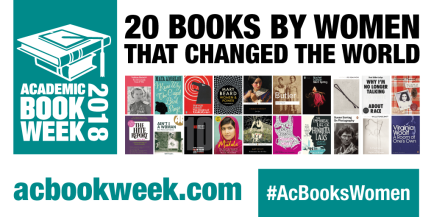
For Academic Book Week, SAGE Publishing, the parent of Social Science Space, asked some of its authors and editors for their top tips for women in academia:

CASBS at Stanford University and SAGE Publishing are announcing nominations to the fifth annual SAGE-CASBS awards. The award goes to researchers who have made outstanding societal contributions by using social and behavioral research to address or understand vital social concerns.

In the latest iteration of a survey series she’s been running for four decades, Carol Tenopir aims to assess the value of access to scholarly journals by examining patterns of use and reading. Your input is sought.
People often see science as a world apart: cool, rational and untouched by persuasion or performance. In this view, scientists simply discover […] “Research impact” means different things to different people. Some refer broadly to how science changes behaviors, beliefs, or practices outside academic institutions. […] One researcher studies how war affects children, another took a literal worm’s eye view to examine rural development, while two others scrutinized […] David Canter considers informal places where people socialize, suggesting they’re an arena ChatGPT and other LLMs can’no’t replicate. As someone who lives […] It’s become cliche since Clive Humbly coined it in 2006, but data is indeed the new oil. It’s a mantra repeated by […] In September 2025, The Guardian reported about a lawyer in Australia having faced sanctions due to false citations. These citations were not […]
EXPLORE
Impact

Scientists Should Keep in Mind It’s Called the ‘Marketplace of Ideas’ for a Reason
READ MORE

Survey Finds Social Scientists Feel Unsupported in Seeking Societal Impact
READ MORE
Canada’s SSHRC Names 2025 Impact Winners
READ MORE
Innovation

Reaching Parts to Which AI Has No Access
READ MORE

Andrea Medina-Smith on Making Research Data More FAIR
READ MORE

A Status Check on Hallucinated Case Law Incidents
READ MORE