
Could Distributed Peer Review Better Decide Grant Funding?
The landscape of academic grant funding is notoriously competitive and plagued by lengthy, bureaucratic processes, exacerbated by difficulties in finding willing reviewers. Distributed […]

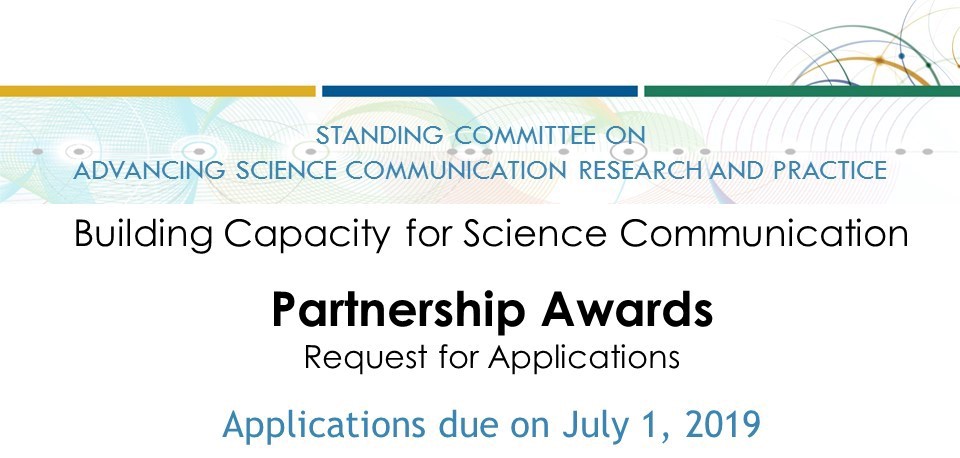
The Rita Allen Foundation, and NASEM are offering awards to support the formation and development of collaborative researcher–practitioner partnerships. To apply for these awards, submit a joint proposal that describes the rationale for your partnership. Apply by July 1st.

In the latest of its monthly series of interdisciplinary microsites addressing important public issues, SAGE Publishing is offering free access to a suite academic articles that focus on the ramifications of Britain’s exit from the European Union. The content will remain ungated until April 5.
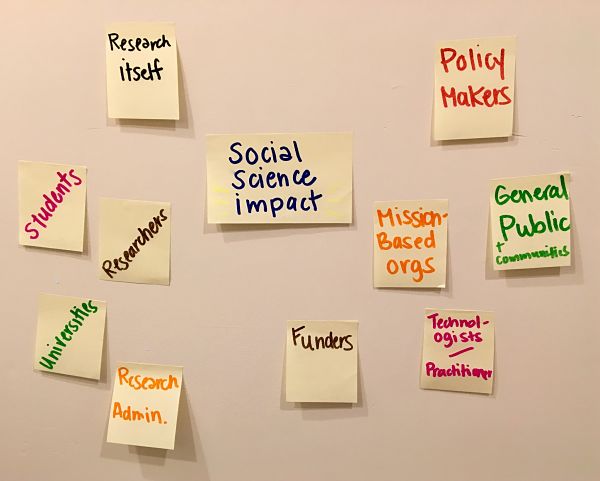
As part of a larger effort to support social scientists achieve and demonstrate impact, SAGE Publishing brought together 14 individuals who are both passionate about social science’s impact and intimately involved in improving its measurement for a one-day workshop.
How can we develop a new field of collective intelligence that pulls across disciplines and works between academic and practitioner domains? This was a key question addressed at the ‘Designing collective intelligence to address social needs’ event hosted by the global innovation foundation Nesta.

Carol Dweck, the Stanford-based psychologist whose work brought the idea of “mindset” into the education mainstream, will receive the 2018 SAGE-CASBS Award.

In the latest of its monthly series of interdisciplinary microsites addressing important public issues, SAGE Publishing is offering free access to a suite academic articles that focus on artificial intelligence.
Each year since 1982 the American Library Association has spearheaded a celebration of books that have been suppressed or banned. Two authors of banned books, a sociologist and the deputy editor of ‘Index on Censorship’ discusses banned books in this archived webinar.

One of the most frustrating things media instructors face is the lack of quality writing that their students produce. While instructors aren’t […]
The Royal Swedish Academy of Sciences has awarded this year’s Nobel Prize in Economic Sciences to the American economists Robert E. Hall […] Four Americans working in the social and behavioral sciences are among the 20 people named MacArthur Fellows this year. Recipients may be […] Euan Adie, the founder of Altmetric and later of Overton, discusses the reasons the led to Overton’s focus on showing researchers how […] The following is an adapted extract from The Cultural Industries, fifth edition, by David Hesmondhalgh. The increasing presence of information technology (IT) […] Developers of AI data centers have a public trust problem. According to multiple surveys, a majority of Americans say they would oppose […] I was adding some final flourishes on the topic of ‘iatrocracy’ to my forthcoming book with Natewindé Sawadogo – Sickness and Social […]
EXPLORE
Impact
Economic Peaks, Troughs and This Year’s Nobelists in Economics
READ MORE
Four From Social Science World Receive 2026 MacArthur Fellowships
READ MORE
Quick Insight: Euan Adie on Getting Academics Credit for Their Impact
READ MORE
Innovation

IT Giants and Their Operations: Should We Be Concerned?
READ MORE

What We Miss When We Study Public Trust with Surveys Alone
READ MORE

AI and ‘Iatrocracy’ – A Cautionary Tale
READ MORE