


Could Distributed Peer Review Better Decide Grant Funding?
The landscape of academic grant funding is notoriously competitive and plagued by lengthy, bureaucratic processes, exacerbated by difficulties in finding willing reviewers. Distributed […]


For a limited as the the United States’ presidential election cycle reaches some critical state-level primary votes, the journal Political Research Quarterly […]

Starting in January, SAGE Publishing – the parent of Social Science Space — began publishing the full journal portfolio of the London-based […]

The Journal of Strategic Contracting and Negotiation, which launched last year as the official journal of the International Association for Contract and Commercial […]

The former Census director and president of the Social Science Research Council will be honored at the 2015 Behavioral & Social Science Summit at the Center for Advanced Study in the Behavioral Sciences at Stanford University.
How do you make the world better place? There is no lack of prescriptions, but one of the surer bets, even if […]

Authors have until December 1 to submit abstracts for a special issue for Journalism Theory, Practice and Criticism titled, “From aftermath to […]
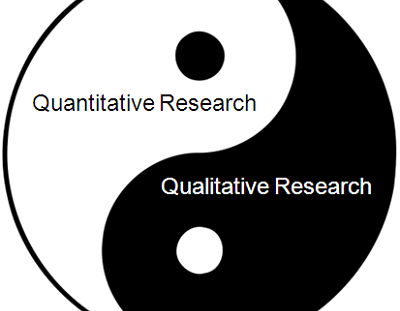
Methods have never been more pragmatic, more eclectic, and more dynamic than they are today, says Alex Clark, the editor of the International Journal of Qualitative Methods.

From the margins of the political landscape to its center, Ruth Wodak examines the trajectories of populist right-wing parties in Europe in order to understand and explain how they are transforming from fringe voices to persuasive political actors who set the agenda and frame media debates.
People often see science as a world apart: cool, rational and untouched by persuasion or performance. In this view, scientists simply discover […] “Research impact” means different things to different people. Some refer broadly to how science changes behaviors, beliefs, or practices outside academic institutions. […] One researcher studies how war affects children, another took a literal worm’s eye view to examine rural development, while two others scrutinized […] David Canter considers informal places where people socialize, suggesting they’re an arena ChatGPT and other LLMs can’no’t replicate. As someone who lives […] It’s become cliche since Clive Humbly coined it in 2006, but data is indeed the new oil. It’s a mantra repeated by […] In September 2025, The Guardian reported about a lawyer in Australia having faced sanctions due to false citations. These citations were not […]
EXPLORE
Impact

Scientists Should Keep in Mind It’s Called the ‘Marketplace of Ideas’ for a Reason
READ MORE

Survey Finds Social Scientists Feel Unsupported in Seeking Societal Impact
READ MORE

Canada’s SSHRC Names 2025 Impact Winners
READ MORE
Innovation

Reaching Parts to Which AI Has No Access
READ MORE

Andrea Medina-Smith on Making Research Data More FAIR
READ MORE

A Status Check on Hallucinated Case Law Incidents
READ MORE