
Could Distributed Peer Review Better Decide Grant Funding?
The landscape of academic grant funding is notoriously competitive and plagued by lengthy, bureaucratic processes, exacerbated by difficulties in finding willing reviewers. Distributed […]
In this column from the Association for Psychological Science, David Yokum, a leader of the Obama administration’s Social and Behavioral Sciences Team, details what that nudge team has been doing.

Because the landscape of the digital industry is always changing, its organizational structures have to be more malleable in form; the development […]

In the past few years there has been an insidious rise in predatory journals and publishers, notes Adele Thomas, and African academics have not been immune to their predation.
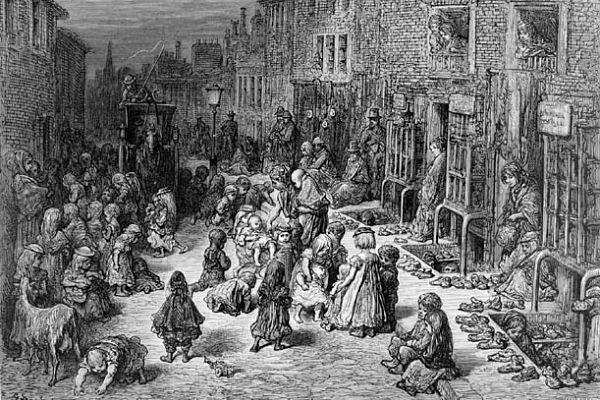
The content of scholarly debates is increasingly secondary to the instrumentalization of scholarship in the promotion of one’s brand,” says our Daniel Nehring. It may not matter much that this brand is built on — academically at least — somewhat dubious welfare bashing, as long as the right markers of scholarly status are attached to it.
[We’re pleased to welcome Deborah C. Andrews of University of Delaware, author of the article “Making the Familiar Strange: Thinking Visually in […]
[We’re pleased to welcome Michael Sollitto of Texas A&M University. Dr. Sollitto recently published an article in International Journal of Business Communication […]

If you can really do communication in an accessible way, explains Patrick Dunleavy, your writing may also circulate widely in other disciplines and in the external world outside universities, enhancing your reputation there. And you are in luck – he also explains one way to do that.
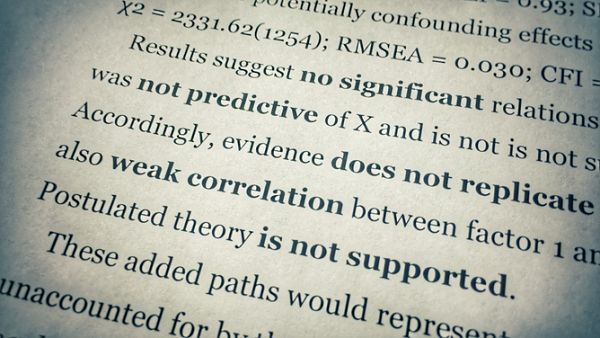
In a joint statement, 10 editors representing some of the academia’s most prestigious journals for management, organisational behavior and work psychology research, have vowed to publish research that fails to prove a hypotheses.

Jürgen Habermas, a globally known social theorist whose explorations of democracy, validity and communication have gained new prominence in the current moment, […] People often see science as a world apart: cool, rational and untouched by persuasion or performance. In this view, scientists simply discover […] “Research impact” means different things to different people. Some refer broadly to how science changes behaviors, beliefs, or practices outside academic institutions. […] David Canter considers informal places where people socialize, suggesting they’re an arena ChatGPT and other LLMs can’no’t replicate. As someone who lives […] It’s become cliche since Clive Humbly coined it in 2006, but data is indeed the new oil. It’s a mantra repeated by […] In September 2025, The Guardian reported about a lawyer in Australia having faced sanctions due to false citations. These citations were not […]
EXPLORE
Impact

Jürgen Habermas, 1929-2026: Exponent of the Public Sphere
READ MORE

Scientists Should Keep in Mind It’s Called the ‘Marketplace of Ideas’ for a Reason
READ MORE

Survey Finds Social Scientists Feel Unsupported in Seeking Societal Impact
READ MORE
Innovation

Reaching Parts to Which AI Has No Access
READ MORE

Andrea Medina-Smith on Making Research Data More FAIR
READ MORE

A Status Check on Hallucinated Case Law Incidents
READ MORE