

Could Distributed Peer Review Better Decide Grant Funding?
The landscape of academic grant funding is notoriously competitive and plagued by lengthy, bureaucratic processes, exacerbated by difficulties in finding willing reviewers. Distributed […]
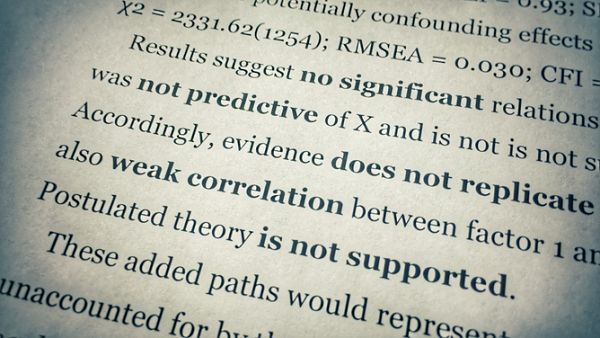
In a joint statement, 10 editors representing some of the academia’s most prestigious journals for management, organisational behavior and work psychology research, have vowed to publish research that fails to prove a hypotheses.
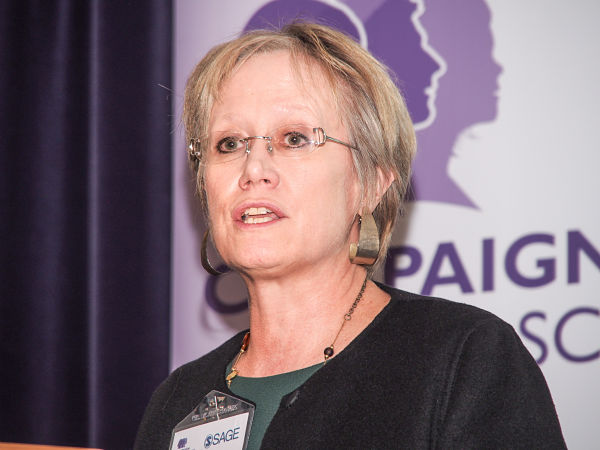
In the third annual Campaign for Social Science/SAGE lecture, Sharon Witherspoon said we must show the ways ‘social science can give rise to public benefit’

Tone-of-voice policies raise serious questions about the future of academic freedom in Britain and the extent to which academic labour may come to be subject to the financial and political objectives of the corporate managers that form universities’ leadership.

Academics need to enter the discussion that the rest of the world engages in every day, argue Jonathan Wai and David Miller. That requires them to write in a more conversational way, they write in an article first published at, umm, The Conversation.

The following articles are drawn from SAGE Insight, which spotlights research published in SAGE’s more than 800 journals. The articles linked below are free […]

On the 11th anniversary of Google Scholar, Max Kemman provides an overview of the growth and impact of the platform and examines why Google Scholar is virtually unrivaled — and whether that’s a good thing or not.

In receiving the SAGE-CASBS Award, Ken Prewitt, a champion for scholarly knowledge, suggests there is no applied or basic science, only science in use and science soon to be used.
The following articles are drawn from SAGE Insight, which spotlights research published in SAGE’s more than 800 journals. The articles linked below are free […]

The Royal Swedish Academy of Sciences has awarded this year’s Nobel Prize in Economic Sciences to the American economists Robert E. Hall […] Four Americans working in the social and behavioral sciences are among the 20 people named MacArthur Fellows this year. Recipients may be […] Euan Adie, the founder of Altmetric and later of Overton, discusses the reasons the led to Overton’s focus on showing researchers how […] The following is an adapted extract from The Cultural Industries, fifth edition, by David Hesmondhalgh. The increasing presence of information technology (IT) […] Developers of AI data centers have a public trust problem. According to multiple surveys, a majority of Americans say they would oppose […] I was adding some final flourishes on the topic of ‘iatrocracy’ to my forthcoming book with Natewindé Sawadogo – Sickness and Social […]
EXPLORE
Impact

Economic Peaks, Troughs and This Year’s Nobelists in Economics
READ MORE
Four From Social Science World Receive 2026 MacArthur Fellowships
READ MORE

Quick Insight: Euan Adie on Getting Academics Credit for Their Impact
READ MORE
Innovation

IT Giants and Their Operations: Should We Be Concerned?
READ MORE

What We Miss When We Study Public Trust with Surveys Alone
READ MORE

AI and ‘Iatrocracy’ – A Cautionary Tale
READ MORE