



Could Distributed Peer Review Better Decide Grant Funding?
The landscape of academic grant funding is notoriously competitive and plagued by lengthy, bureaucratic processes, exacerbated by difficulties in finding willing reviewers. Distributed […]

Shannon Mason and Margaret K. Merga argue that researchers should adopt more careful citation practices, as a means to broaden and contextualise what counts as ‘prestigious’ research and create a more equitable publishing environment for research outside of core anglophone countries.
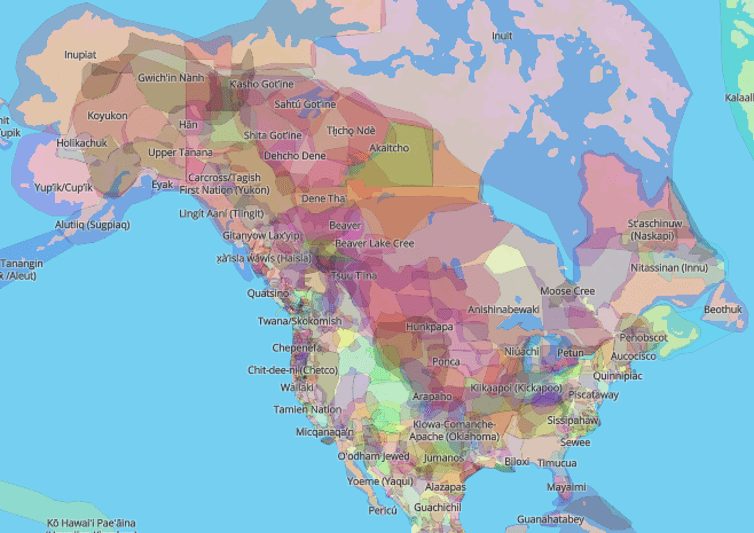
The Association of Indigenous Anthropologists requested that the American Anthropological Association officially pause land acknowledgments and the related practice of the welcoming ritual, in which Indigenous persons open conferences with prayers or blessings.

My absence from these pages has been a produce of many forces. Paradoxically, pandemic-related lockdown has made access through the internet to […]

So you know it’s vital to publish your academic work, but need some guidance? SAGE Publishing recently released a free “How to Get Published” webinar – a 2021 APEX […]

A few months after the assassination of Martin Luther King, Jr. in 1968, two Black social scientists in Southern California approached a fledgling academic publisher with a unique proposition: let us launch a journal for another fledgling — the discipline of Black studies.

While writing is certainly a critical communication skill, universities need to start learning how to thoughtfully integrate all available skills.
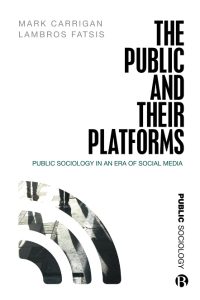
In The Public and their Platforms: Public Sociology in an Era of Social Media, Mark Carrigan and Lambros Fatsis explore the discipline of sociology at a time when public life is increasingly shaped by social media platforms.

Review papers play a significant role in curating the scholarly record. Drawing on a study of close to six million research articles, Peter McMahan, shows how review papers not only focus and shift attention onto particular papers, but also serve to shape entire research domains by linking them together and outlining core concepts. As such, the constitutive role of review papers and those who write them warrant further attention.

The Royal Swedish Academy of Sciences has awarded this year’s Nobel Prize in Economic Sciences to the American economists Robert E. Hall […] Four Americans working in the social and behavioral sciences are among the 20 people named MacArthur Fellows this year. Recipients may be […] Euan Adie, the founder of Altmetric and later of Overton, discusses the reasons the led to Overton’s focus on showing researchers how […] The following is an adapted extract from The Cultural Industries, fifth edition, by David Hesmondhalgh. The increasing presence of information technology (IT) […] Developers of AI data centers have a public trust problem. According to multiple surveys, a majority of Americans say they would oppose […] I was adding some final flourishes on the topic of ‘iatrocracy’ to my forthcoming book with Natewindé Sawadogo – Sickness and Social […]
EXPLORE
Impact

Economic Peaks, Troughs and This Year’s Nobelists in Economics
READ MORE

Four From Social Science World Receive 2026 MacArthur Fellowships
READ MORE
Quick Insight: Euan Adie on Getting Academics Credit for Their Impact
READ MORE
Innovation
IT Giants and Their Operations: Should We Be Concerned?
READ MORE

What We Miss When We Study Public Trust with Surveys Alone
READ MORE

AI and ‘Iatrocracy’ – A Cautionary Tale
READ MORE