

Could Distributed Peer Review Better Decide Grant Funding?
The landscape of academic grant funding is notoriously competitive and plagued by lengthy, bureaucratic processes, exacerbated by difficulties in finding willing reviewers. Distributed […]

‘Henry Riley: A Personal History of Human Relations’ frames the seven decades of The Tavistock Institute’s journal ‘Human Relations’ against key moments in one man’s ordinary life and how those moments are reflected through seminal articles published in the journal.

Many research evaluation systems continue to take a narrow view of excellence, judging the value of work based on the journal in which it is published. Recent research by Diego Chavarro, Ismael Ràfols and colleagues shows how such systems underestimate and prove detrimental to the production of research relevant to important social, economic, and environmental issues and reflect the biases of journal citation databases which focus heavily on English-language research from the US and Western Europe.
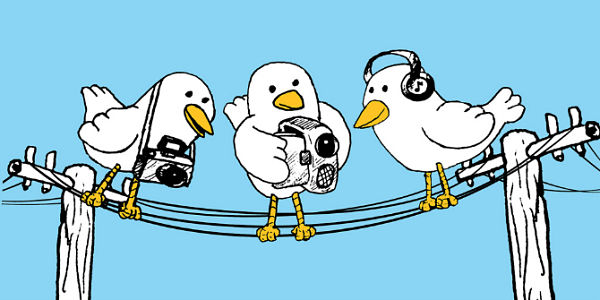
The success of academic research in reaching out beyond its own scientific community is a perennial concern, even more so following the rapid adoption of social media and the ability to easily transmit information to potentially millions of people. But is increased social media attention really indicative of “broader impact”? A new study suggests social media does not broaden scientific communication, but rather replicates and perpetuates pre-established disciplinary boundaries.
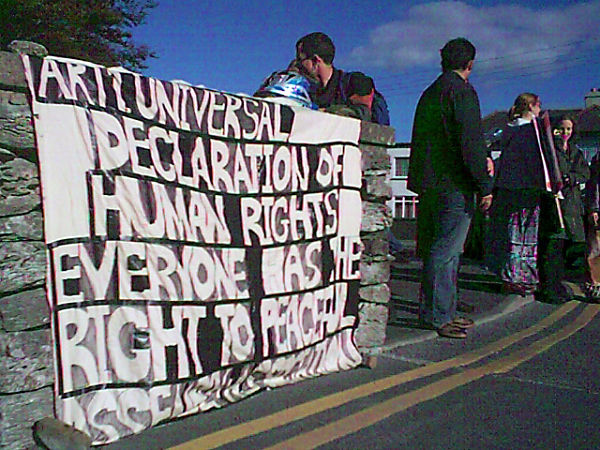
The response on many universities to a high tide of intolerance has been to limit free speech. That, says James Turk, is exactly the wrong response.
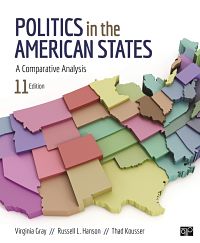
An award that honors enduring contribution from a political science text this year has gone to ‘ Politics in the American States.’
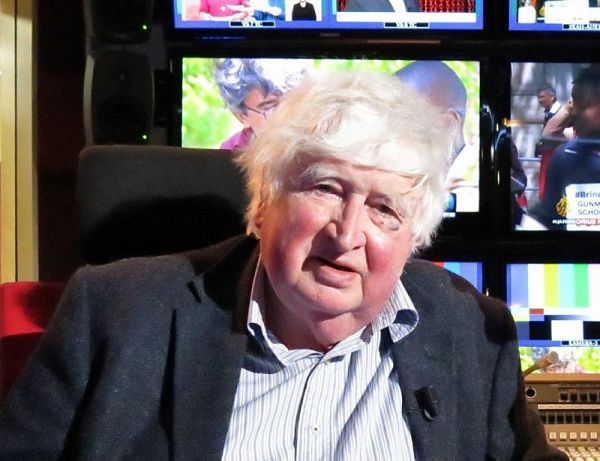
Denis McQuail, the British social scientist and foundational theorist in mass communication both through his scholarship and his hugely influential textbook ‘McQuail’s Mass Communication Theory,’ died at age 82.

A concern for free expression and respect for science journalism are two themes Canadian novelist Margaret Atwood expounds on in an article in the newest edition of ‘Index on Censorship.’
Where sharing industry information was once thought of as “giving away the farm,” it has since grown into its role as a commonplace technique capable of generating big results.

The Royal Swedish Academy of Sciences has awarded this year’s Nobel Prize in Economic Sciences to the American economists Robert E. Hall […] Four Americans working in the social and behavioral sciences are among the 20 people named MacArthur Fellows this year. Recipients may be […] Euan Adie, the founder of Altmetric and later of Overton, discusses the reasons the led to Overton’s focus on showing researchers how […] The following is an adapted extract from The Cultural Industries, fifth edition, by David Hesmondhalgh. The increasing presence of information technology (IT) […] Developers of AI data centers have a public trust problem. According to multiple surveys, a majority of Americans say they would oppose […] I was adding some final flourishes on the topic of ‘iatrocracy’ to my forthcoming book with Natewindé Sawadogo – Sickness and Social […]
EXPLORE
Impact
Economic Peaks, Troughs and This Year’s Nobelists in Economics
READ MORE
Four From Social Science World Receive 2026 MacArthur Fellowships
READ MORE
Quick Insight: Euan Adie on Getting Academics Credit for Their Impact
READ MORE
Innovation

IT Giants and Their Operations: Should We Be Concerned?
READ MORE

What We Miss When We Study Public Trust with Surveys Alone
READ MORE

AI and ‘Iatrocracy’ – A Cautionary Tale
READ MORE