

Could Distributed Peer Review Better Decide Grant Funding?
The landscape of academic grant funding is notoriously competitive and plagued by lengthy, bureaucratic processes, exacerbated by difficulties in finding willing reviewers. Distributed […]

Now in its fourth year, the ESRC Celebrating Impact Prize recognizes the work conducted by researchers funded by Britain’s Economic and Social Research Council who achieve outstanding economic and societal impacts.
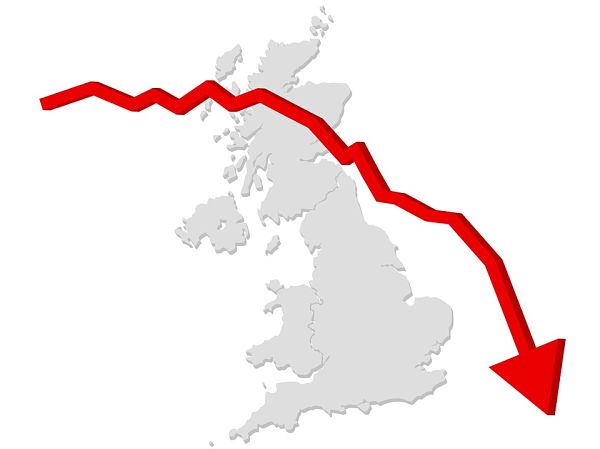
Daniel Nehring sees a fundamental contradiction between the critically engaged scholarship on social inequalities and power structures that British sociologists still produce and the thoroughly financialized, individualistic, and highly competitive organisational logics of the universities in which they work.
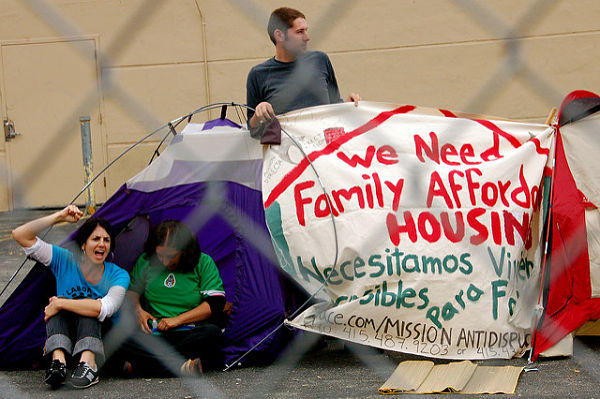
Nico Calavita is, by his own admission, a sort of accidental activist scholar. Now, after a career in which he’s become a recognized expert on the tools and provision of affordable housing, Calavita has been honored with the Marilyn J. Gittell Activist Scholar Award, sponsored by the Urban Affairs Association and SAGE Publishing.

As governments seek practical metrics for determining if their research funding is money wisely spent, the quest for ‘impact’ takes on great importance. Drawing from the Australian experience, Stephen Taylor addresses several key measurement principles.

A new report produced by the Digital Science team explores the types of evidence used to demonstrate impact in REF2014 and pulls together guidance from leading professionals on good practice.
From the ashes of the aborted American Teen Survey arose one of the most important longitudinal surveys in the social and and behavioral arsenal, the National Longitudinal Study of Adolescent to Adult Health. This is a story of government spending gone terribly right!
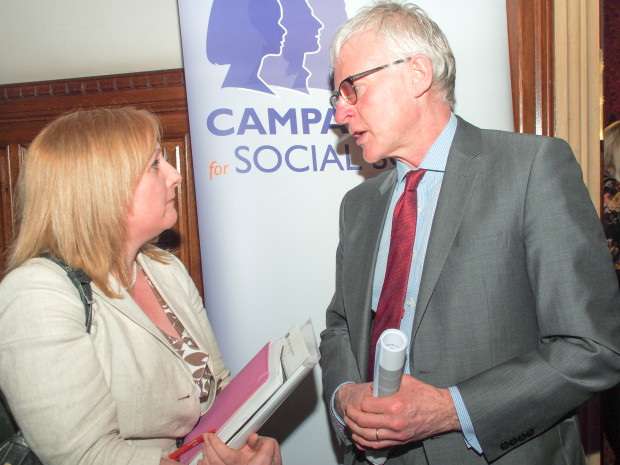
A new booklet in a series of releases by Britain’s Academy of Social Sciences highlights the important role that social and behavioral scientists have in the global fight against dementia.

John Urry, a sociologist probably best known for his work on mobilities but whose gaze also lit on issues ranging from tourism to energy use, from social change to complexity theory, died suddenly on March 18.


Jürgen Habermas, a globally known social theorist whose explorations of democracy, validity and communication have gained new prominence in the current moment, […] People often see science as a world apart: cool, rational and untouched by persuasion or performance. In this view, scientists simply discover […] “Research impact” means different things to different people. Some refer broadly to how science changes behaviors, beliefs, or practices outside academic institutions. […] David Canter considers informal places where people socialize, suggesting they’re an arena ChatGPT and other LLMs can’no’t replicate. As someone who lives […] It’s become cliche since Clive Humbly coined it in 2006, but data is indeed the new oil. It’s a mantra repeated by […] In September 2025, The Guardian reported about a lawyer in Australia having faced sanctions due to false citations. These citations were not […]
EXPLORE
Impact

Jürgen Habermas, 1929-2026: Exponent of the Public Sphere
READ MORE

Scientists Should Keep in Mind It’s Called the ‘Marketplace of Ideas’ for a Reason
READ MORE

Survey Finds Social Scientists Feel Unsupported in Seeking Societal Impact
READ MORE
Innovation

Reaching Parts to Which AI Has No Access
READ MORE

Andrea Medina-Smith on Making Research Data More FAIR
READ MORE

A Status Check on Hallucinated Case Law Incidents
READ MORE