

Could Distributed Peer Review Better Decide Grant Funding?
The landscape of academic grant funding is notoriously competitive and plagued by lengthy, bureaucratic processes, exacerbated by difficulties in finding willing reviewers. Distributed […]
You don’t have to be a rocket scientist to fix peer review. An astronomic number of ideas to repair peer review followed a tweet about the system.

Training to help multicultural teams to mesh and feel comfortable together is reckoned a good thing – unless its done in an overly simplistic manner.

How can organizations get their members to engage in sustainability practices? The authors outlines several mechanisms.
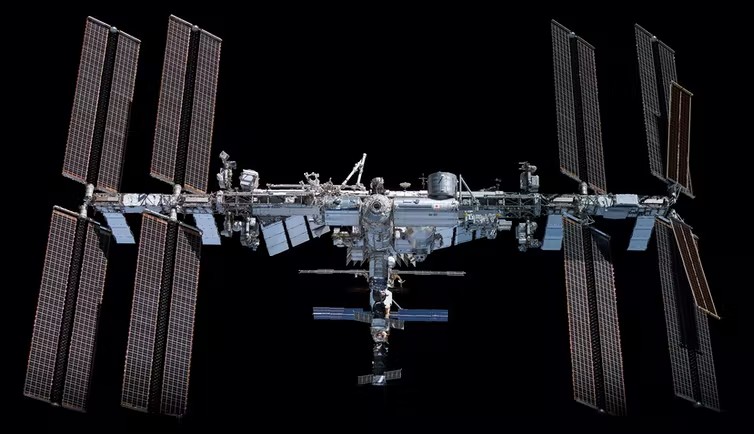
The development of scientific capacity in many parts of the world and the building of academic ties is critical when it comes to responding to a new virus or tracking changes in climate. And yet …

Ludo Waltman and Jessica Polka make the case for a more contextualized approach to open access publishing and preprinting, and introduce the Publish Your Reviews initiative.

The question of what kinds of blogs were already being cited by academics, and what criteria they were using to guide their choice of blogs animated research by two urban planners.

In this post, Holly Slay Ferraro, an associate professor in the Villanova School of Business and Academic Director for DEI Research and […]
Patrick Dunleavy argues that there have already been three false starts in open science: focusing only on isolated bits of the open agenda in ways that don’t connect and so are not meaningful; loading researchers with off-putting, external bureaucratic requirements; and risking reopening ‘sectarian’ divides between quantitative and qualitative social scientists.
Jürgen Habermas, a globally known social theorist whose explorations of democracy, validity and communication have gained new prominence in the current moment, […] People often see science as a world apart: cool, rational and untouched by persuasion or performance. In this view, scientists simply discover […] “Research impact” means different things to different people. Some refer broadly to how science changes behaviors, beliefs, or practices outside academic institutions. […] David Canter considers informal places where people socialize, suggesting they’re an arena ChatGPT and other LLMs can’no’t replicate. As someone who lives […] It’s become cliche since Clive Humbly coined it in 2006, but data is indeed the new oil. It’s a mantra repeated by […] In September 2025, The Guardian reported about a lawyer in Australia having faced sanctions due to false citations. These citations were not […]
EXPLORE
Impact

Jürgen Habermas, 1929-2026: Exponent of the Public Sphere
READ MORE

Scientists Should Keep in Mind It’s Called the ‘Marketplace of Ideas’ for a Reason
READ MORE

Survey Finds Social Scientists Feel Unsupported in Seeking Societal Impact
READ MORE
Innovation

Reaching Parts to Which AI Has No Access
READ MORE

Andrea Medina-Smith on Making Research Data More FAIR
READ MORE

A Status Check on Hallucinated Case Law Incidents
READ MORE