



Could Distributed Peer Review Better Decide Grant Funding?
The landscape of academic grant funding is notoriously competitive and plagued by lengthy, bureaucratic processes, exacerbated by difficulties in finding willing reviewers. Distributed […]
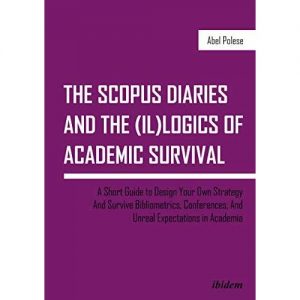
In The Scopus Diaries and the (Il)Logics of Academic Survival, Abel Polese helps to demystify many of the inner workings of academia for researchers and the challenges that these present through a FAQ format that readers can dip in and out of to explore topics ranging from organizing a panel at a conference to arranging your bibliography and writing good abstracts. This is a useful eye-opening guide for new academics that emphasizes the value of setting one’s own goals and personal boundaries when navigating academia, writes Hind Hussein.

Earlier this week the Carnegie Corporation of New York named the 2020 class of 27 Andrew Carnegie Fellows. Each fellow will receive $200,000 to go toward scholarly research over the next two years in the humanities and social sciences that addresses important and enduring issues confronting our society. The anticipated result of each award is a book or major study.
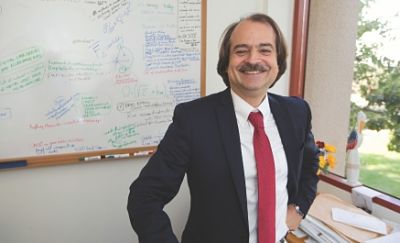
“We felt it’s important to dissociate the specific paper from making policy recommendations, because this is taking things to a different level. Now, if you ask my opinion about whether it does have policy recommendations or implications separate from the study, I think what it says is that this is a very common infection, and very often it is asymptomatic, so it goes below the radar screen. “
A new report from the British Academy offers a reassuring message to the humanities and social science community: Graduates in the arts, humanities and social sciences in the United Kingdom are as resilient to economic upheaval as other graduates and are just as likely to remain employed as STEM graduates during downturns.
Even amid a pandemic academics have an ongoing need and desire for professional development, and the American Educational Research Association has responded by offering a virtual academy. The Virtual Research Learning Series offers nine four-hour courses, the first starting on May 19 and the ninth in mid-September.

The Center for Advanced Study in the Behavioral Sciences (CASBS) at Stanford University has named 38 scholars, representing 20 U.S. institutions and 11 international institutions and programs, to its 2020-21 class of fellows.
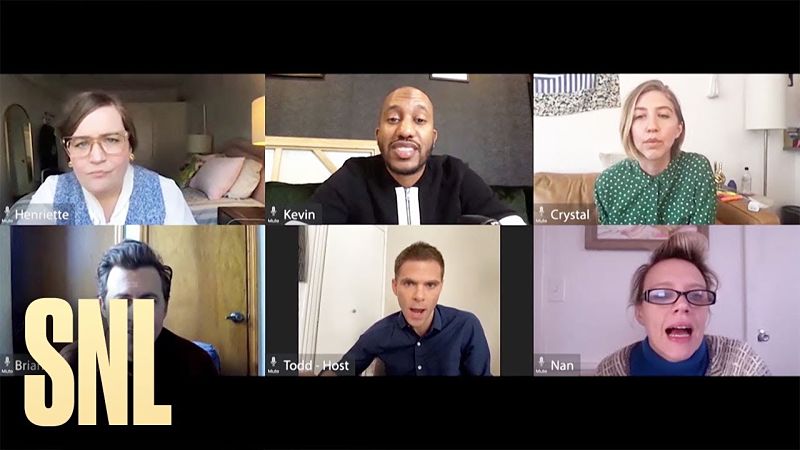
Academics are not immune to the follies that often accompany their first interfaces with using Zoom.
Here performative social scientist Kip Jones offers a light piece with a serious message that the typical managerial methods will one way or the other find their way into working virtually.
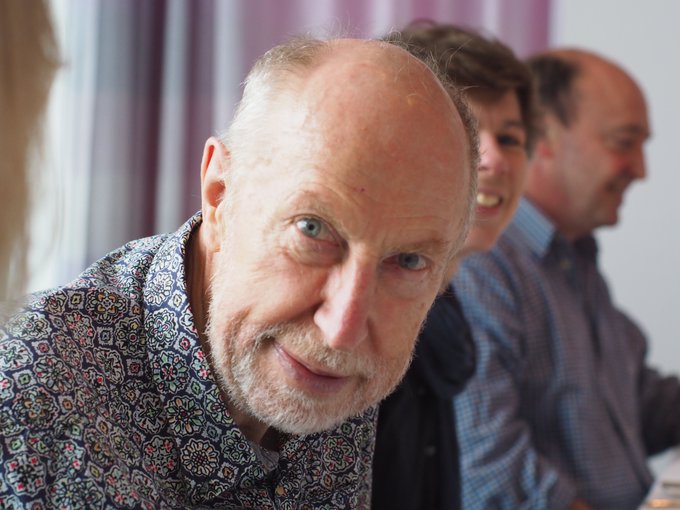
Mark Easterby-Smith, a pioneer in the creation of research methodology for management studies and co-author of the foundational text of that field, died on April 15 after a long battle with Parkinson’s disease. He was 72.

Jürgen Habermas, a globally known social theorist whose explorations of democracy, validity and communication have gained new prominence in the current moment, […] People often see science as a world apart: cool, rational and untouched by persuasion or performance. In this view, scientists simply discover […] “Research impact” means different things to different people. Some refer broadly to how science changes behaviors, beliefs, or practices outside academic institutions. […] David Canter considers informal places where people socialize, suggesting they’re an arena ChatGPT and other LLMs can’no’t replicate. As someone who lives […] It’s become cliche since Clive Humbly coined it in 2006, but data is indeed the new oil. It’s a mantra repeated by […] In September 2025, The Guardian reported about a lawyer in Australia having faced sanctions due to false citations. These citations were not […]
EXPLORE
Impact

Jürgen Habermas, 1929-2026: Exponent of the Public Sphere
READ MORE

Scientists Should Keep in Mind It’s Called the ‘Marketplace of Ideas’ for a Reason
READ MORE

Survey Finds Social Scientists Feel Unsupported in Seeking Societal Impact
READ MORE
Innovation

Reaching Parts to Which AI Has No Access
READ MORE

Andrea Medina-Smith on Making Research Data More FAIR
READ MORE

A Status Check on Hallucinated Case Law Incidents
READ MORE