



Could Distributed Peer Review Better Decide Grant Funding?
The landscape of academic grant funding is notoriously competitive and plagued by lengthy, bureaucratic processes, exacerbated by difficulties in finding willing reviewers. Distributed […]
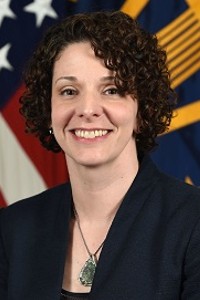
Karin Orvis, an organizational psychologist who currently heads the Pentagon’s suicide prevention office, has been named the chief statistician of the United States, filling the role on a permanent basis for the first time since 2019.
The White House announced last week that the Office of Science and Technology Policy’s National Science and Technology Council will re-commission the Social and Behavioral Sciences Subcommittee of the Committee on Science.

SAGE Publishing, the parent of Social Science Space, is inviting applications for the 2022 SAGE Concept Grant, which provides funding for new software tools for social science research.

Arik Burakovsky, an expert on relations between the U.S. and Russia, shines light on the future of cooperation between Russia and the West in the realm of higher education.

Sociologist and organizational theory pioneer Walter W. “Woody” Powell will serve as interim director of the Center for Advanced Study in the Behavioral Sciences as the center based at Stanford University continues to find a permanent replacement for Margaret Levi

We live in the information age. So where are all the answers? A new data science consortium led by NSF’s National Center for Science and Engineering Statistics wants to reveal the answers and evidence hidden in a sea of federally compartmentalized data.
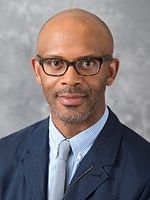
and a science and technologies studies scholar whose high-profile work often looks at the connection of sport and technology, has taken the reins of the National Science Foundation’s Social and Economic Sciences Division
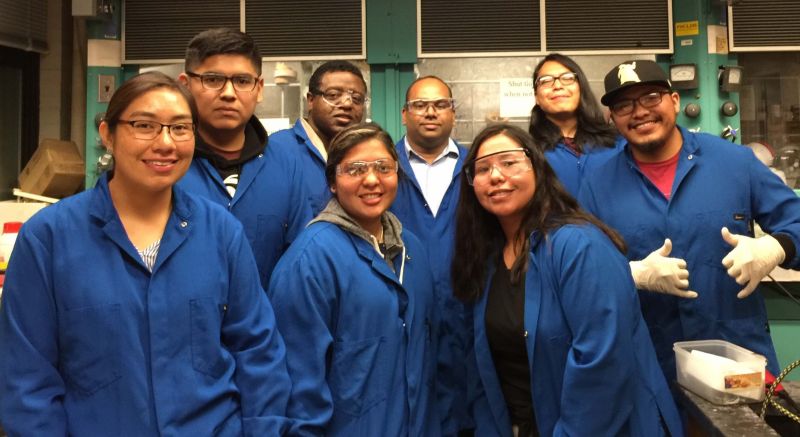
The U.S. National Science Foundation has many programs designed to support researchers at minority-serving institutions and broaden participation of outstanding researchers from across a diverse group of regions, institutions and demographic groups. Here’s some tips on accessing those options.

The Royal Swedish Academy of Sciences has awarded this year’s Nobel Prize in Economic Sciences to the American economists Robert E. Hall […] Four Americans working in the social and behavioral sciences are among the 20 people named MacArthur Fellows this year. Recipients may be […] Euan Adie, the founder of Altmetric and later of Overton, discusses the reasons the led to Overton’s focus on showing researchers how […] The following is an adapted extract from The Cultural Industries, fifth edition, by David Hesmondhalgh. The increasing presence of information technology (IT) […] Developers of AI data centers have a public trust problem. According to multiple surveys, a majority of Americans say they would oppose […] I was adding some final flourishes on the topic of ‘iatrocracy’ to my forthcoming book with Natewindé Sawadogo – Sickness and Social […]
EXPLORE
Impact
Economic Peaks, Troughs and This Year’s Nobelists in Economics
READ MORE

Four From Social Science World Receive 2026 MacArthur Fellowships
READ MORE

Quick Insight: Euan Adie on Getting Academics Credit for Their Impact
READ MORE
Innovation

IT Giants and Their Operations: Should We Be Concerned?
READ MORE

What We Miss When We Study Public Trust with Surveys Alone
READ MORE

AI and ‘Iatrocracy’ – A Cautionary Tale
READ MORE