




Could Distributed Peer Review Better Decide Grant Funding?
The landscape of academic grant funding is notoriously competitive and plagued by lengthy, bureaucratic processes, exacerbated by difficulties in finding willing reviewers. Distributed […]

An online seminar hosted by the NAS’ Division of Behavioral and Social Sciences and Education featured a series of presentations on what can we do to lessen, reverse and even thrive in the face of changes wrought by the pandemic.
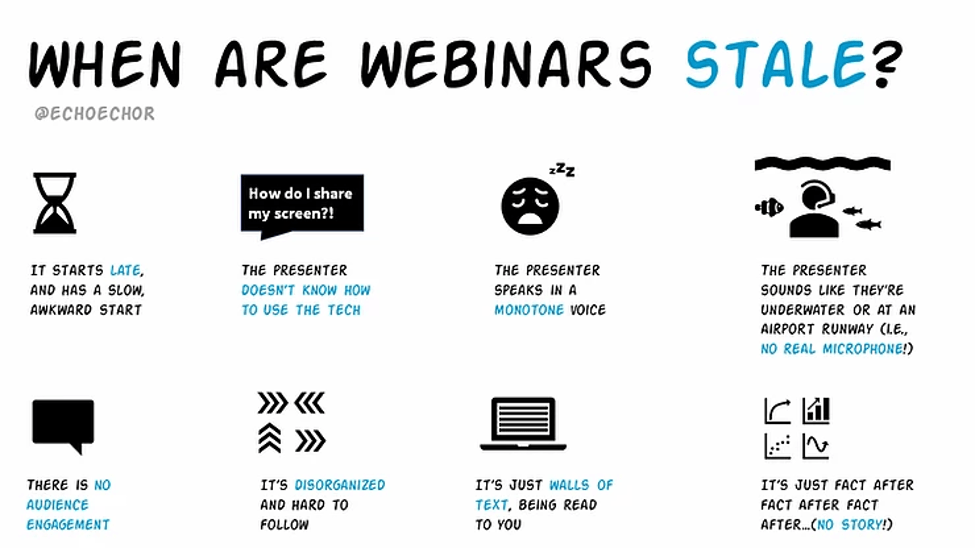
What makes a webinar presentation feel stale? You probably know ’em when you experience ’em. But how do you escape that trap in your own presentation, Echo Rivera is here to help …

Could the 2020 iteration of the United States Census, the constitutionally mandated count of everyone present in the nation, be the last of its kind?

At a loss for how to demonstrate impact? Laura Meagher and David Edwards outline a dynamic understanding of impact evaluation comprised of ‘building blocks’. These building blocks are five types of impacts; five broad categories of stakeholders; and eight causal factors, along with a set of over-arching reflective questions.

As Lina Ashour has recently written, SAGE Publishing has helped make possible a report by the UK’s Campaign for Social Science on […]

Census data can be pretty sensitive – it’s not just how many people live in a neighborhood, a town, a state or […]

The 2020 census is fraught with uncertainty for a variety of reasons, including a lack of money, a growing distrust in government and the months of debate over the now-dropped citizenship question – which the Census Bureau itself called a major barrier to participation.

As conversations around decolonization in universities are being afforded greater urgency, some key risks of this institutional capture or inertia to wider decolonization efforts are described by Rima Saini.

The Royal Swedish Academy of Sciences has awarded this year’s Nobel Prize in Economic Sciences to the American economists Robert E. Hall […] Four Americans working in the social and behavioral sciences are among the 20 people named MacArthur Fellows this year. Recipients may be […] Euan Adie, the founder of Altmetric and later of Overton, discusses the reasons the led to Overton’s focus on showing researchers how […] The following is an adapted extract from The Cultural Industries, fifth edition, by David Hesmondhalgh. The increasing presence of information technology (IT) […] Developers of AI data centers have a public trust problem. According to multiple surveys, a majority of Americans say they would oppose […] I was adding some final flourishes on the topic of ‘iatrocracy’ to my forthcoming book with Natewindé Sawadogo – Sickness and Social […]
EXPLORE
Impact

Economic Peaks, Troughs and This Year’s Nobelists in Economics
READ MORE

Four From Social Science World Receive 2026 MacArthur Fellowships
READ MORE

Quick Insight: Euan Adie on Getting Academics Credit for Their Impact
READ MORE
Innovation

IT Giants and Their Operations: Should We Be Concerned?
READ MORE

What We Miss When We Study Public Trust with Surveys Alone
READ MORE

AI and ‘Iatrocracy’ – A Cautionary Tale
READ MORE