



Could Distributed Peer Review Better Decide Grant Funding?
The landscape of academic grant funding is notoriously competitive and plagued by lengthy, bureaucratic processes, exacerbated by difficulties in finding willing reviewers. Distributed […]

The NSF asked researchers across the social, behavioral and economic sciences are encouraged to submit proposals to the Future of Work at the Human-Technology Frontier: Core Research solicitation by March 23
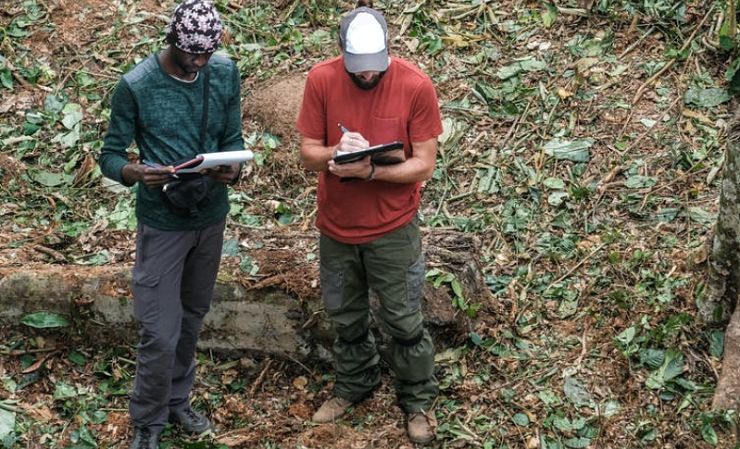
Research has long highlighted the importance of research associates and assistants in the production of knowledge, and the importance of locally embedded expertise – though often without giving them a voice. An online project seeks to address that.

The reality regarding the current mental state of researchers around the world is explored in a comprehensive new survey.

While the dominant model of open access using article processing charges lowers financial barriers for readers, it has erected a new paywall at the other end of the pipeline, blocking access to publication for less-privileged authors.

The pandemic has shaken our fieldwork activities to the core, if by fieldwork we mean working ‘in the field’. Even though it can be very demanding, we should adapt – when possible – to the new reality, and learn from it, writes Matteo Marenco
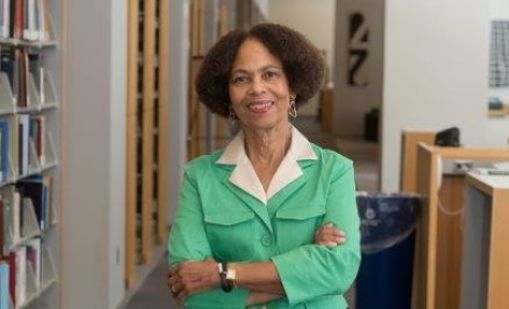
Leith Mullings, an anthropologist whose work on what she dubbed the Sojourner Syndrome created a baseline understanding of the “weathering” that the amplified stresses of race, class, and inequality have on African Americans, and in particular African American women, died on Cancer on December 12.
Free webinar: Having conversations about race in the classroom Professor of criminal justice Stephanie A. Jirard offers suggestions on how to approach […]

To what extent do the realities of social research in China live up to the favorable image created by job ads on academic recruitment sites?

The Royal Swedish Academy of Sciences has awarded this year’s Nobel Prize in Economic Sciences to the American economists Robert E. Hall […] Four Americans working in the social and behavioral sciences are among the 20 people named MacArthur Fellows this year. Recipients may be […] Euan Adie, the founder of Altmetric and later of Overton, discusses the reasons the led to Overton’s focus on showing researchers how […] The following is an adapted extract from The Cultural Industries, fifth edition, by David Hesmondhalgh. The increasing presence of information technology (IT) […] Developers of AI data centers have a public trust problem. According to multiple surveys, a majority of Americans say they would oppose […] I was adding some final flourishes on the topic of ‘iatrocracy’ to my forthcoming book with Natewindé Sawadogo – Sickness and Social […]
EXPLORE
Impact
Economic Peaks, Troughs and This Year’s Nobelists in Economics
READ MORE
Four From Social Science World Receive 2026 MacArthur Fellowships
READ MORE

Quick Insight: Euan Adie on Getting Academics Credit for Their Impact
READ MORE
Innovation
IT Giants and Their Operations: Should We Be Concerned?
READ MORE

What We Miss When We Study Public Trust with Surveys Alone
READ MORE

AI and ‘Iatrocracy’ – A Cautionary Tale
READ MORE