


Could Distributed Peer Review Better Decide Grant Funding?
The landscape of academic grant funding is notoriously competitive and plagued by lengthy, bureaucratic processes, exacerbated by difficulties in finding willing reviewers. Distributed […]

Textbooks now play a crucial role in teaching in the social sciences. Their importance is mirrored by their abundance; there is an enormous variety of textbooks on the most commonly taught subjects. The rise of the ‘textbook industry’ is not necessarily a good thing, though.

The claim that real politics is messier than the statistics are capable of capturing is obviously correct. But the implied corollary – that the government shouldn’t go out of its way to support it – doesn’t follow.
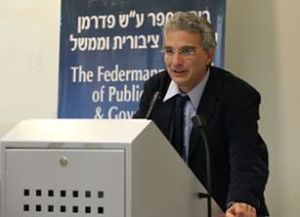
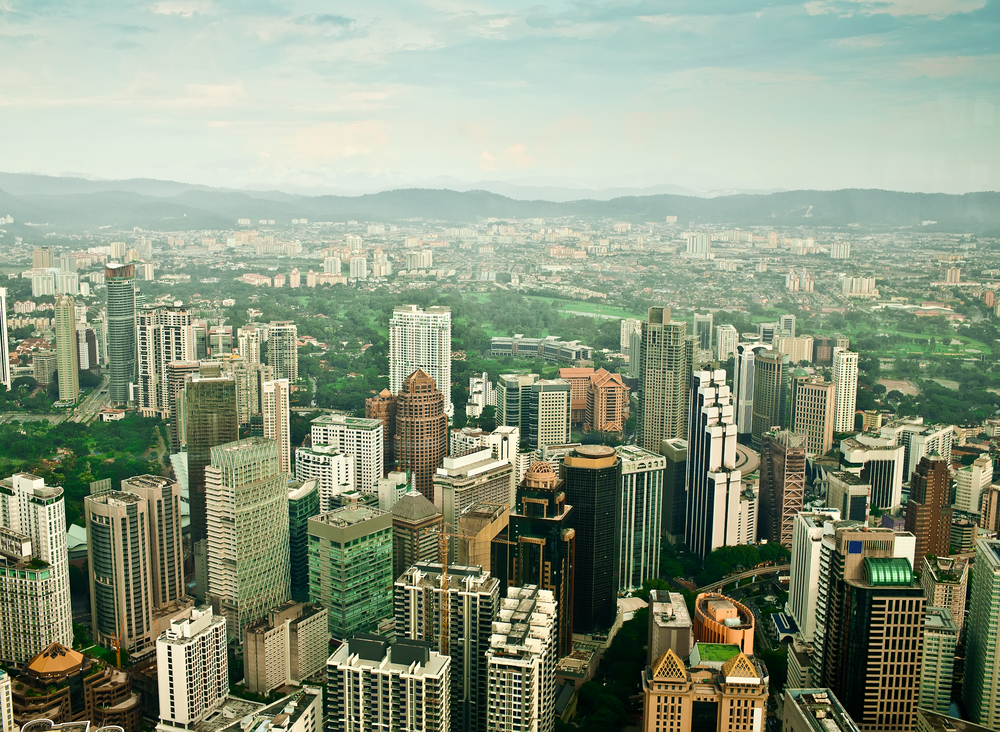
Some people have strong and visceral reactions to cities. They might love or loathe New York, or Jerusalem, or Berlin. This may have something to do with the architecture and the infrastructure of a place; it may also be a response, at some level, to the people, the culture, the politics, the way of life. Avner de-Shalit claims that some cities – not all cities but some – have a spirit.

On 16 April, Aditya Chakrabortty wrote an article for the Guardian’s Comment is Free, arguing that social scientists have failed to step up and offer alternatives in the wake of the economic crisis. Here, Andrew Gamble FBA responds.

No matter what type of market organization or operation we observed or how good or bad the quality of the local product being sold, we found that relationships and transactions in methamphetamine markets were always personal.

As part of a series of occasional interviews with leading social scientists, Steve Duck, Professor of Communication Studies and Daniel and Amy Starch Research Chair, University of Iowa, spoke to socialsciencespace.

People’s behavior has been noticeably absent in science on sustainability, but a conference before June’s U.N. summit offers some hint human processes may join natural ones in developing solutions.
As part of a series of occasional interviews with leading social scientists, Linda Putnam, Chair of the Department of Communication, University of California, Santa Barbara, spoke to socialsciencespace about her career.

Jürgen Habermas, a globally known social theorist whose explorations of democracy, validity and communication have gained new prominence in the current moment, […] People often see science as a world apart: cool, rational and untouched by persuasion or performance. In this view, scientists simply discover […] “Research impact” means different things to different people. Some refer broadly to how science changes behaviors, beliefs, or practices outside academic institutions. […] David Canter considers informal places where people socialize, suggesting they’re an arena ChatGPT and other LLMs can’no’t replicate. As someone who lives […] It’s become cliche since Clive Humbly coined it in 2006, but data is indeed the new oil. It’s a mantra repeated by […] In September 2025, The Guardian reported about a lawyer in Australia having faced sanctions due to false citations. These citations were not […]
EXPLORE
Impact
Jürgen Habermas, 1929-2026: Exponent of the Public Sphere
READ MORE

Scientists Should Keep in Mind It’s Called the ‘Marketplace of Ideas’ for a Reason
READ MORE

Survey Finds Social Scientists Feel Unsupported in Seeking Societal Impact
READ MORE
Innovation

Reaching Parts to Which AI Has No Access
READ MORE

Andrea Medina-Smith on Making Research Data More FAIR
READ MORE

A Status Check on Hallucinated Case Law Incidents
READ MORE