


Could Distributed Peer Review Better Decide Grant Funding?
The landscape of academic grant funding is notoriously competitive and plagued by lengthy, bureaucratic processes, exacerbated by difficulties in finding willing reviewers. Distributed […]

As part of a pioneering effort to systematically use privacy-protected Facebook data to study the platform’s impact on democracy, the Social Science Research Council and its partner Social Science One have named the inaugural recipients of the Social Media and Democracy Research Grants.

Daniel Nehring describes China’s social networking platform WeChat as ‘Facebook on steroids,’ and notes it has long surpassed e-mail as the main tool of mediating communication at Chinese universities while obliterating boundaries between work and home. Is this a cautionary tale for academe outside of China?

Humanitarian aid organizations often find themselves torn by reasonable expectations – to address a pressing crisis and to show that what they are doing is actually helping. While these might not seem at odds, in practice, says sociologist Monika Krause, they often do. Krause, is the author of The Good Project, an award-winning book from 2014, and guest of this Social Science Bites podcast.
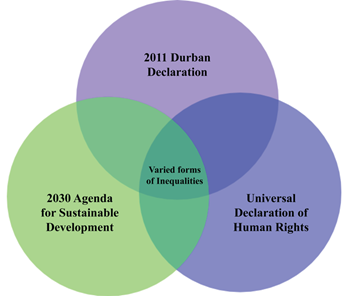
Evidence suggests that one effect of the growing phenomenon of online hate speech is that it fosters varied forms of inequalities (e.g. class, race, gender, and place of origin) and, consequently, also (in)directly undermines important United Nations declarations promoting human rights.
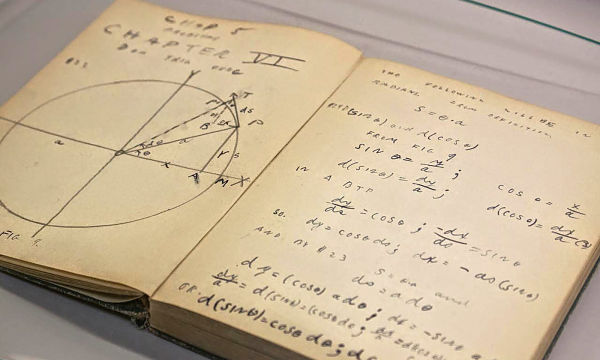
Outsourcing our memories — or actually forgetting once-vital skills that no longer matter in our daily lives — has always been with humanity. But how does the drift to artificial intelligence reflect what’s always been the case versus what should be a special case?

In May 2017 a small band of researchers at Bournemouth University organized a workshop on “Gender and Sexuality in the 21st Century.” The participants’ openness to a discussion on sexuality, gender, and emotion began to expose this latest generation’s “ambivalence,” even “dissonance,” regarding concepts such as “gender” and “sexuality.”
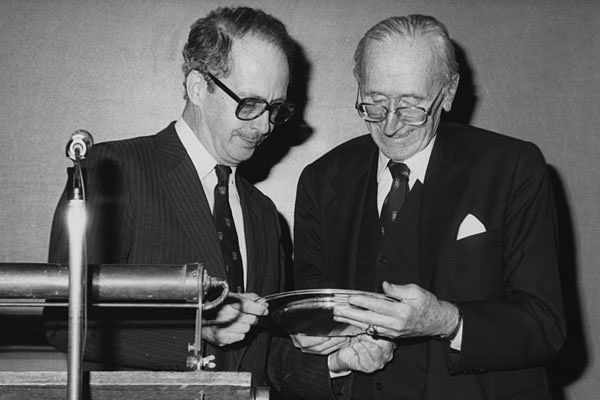
In the wake of Brexit, Robert Dingwall asks a series of probing questions about the eclipse of Conservative Social Thought at universities, such as when did the social sciences last have a serious engagement with the institutions of the bourgeoisie, even though by income and status many of us would belong to that class?
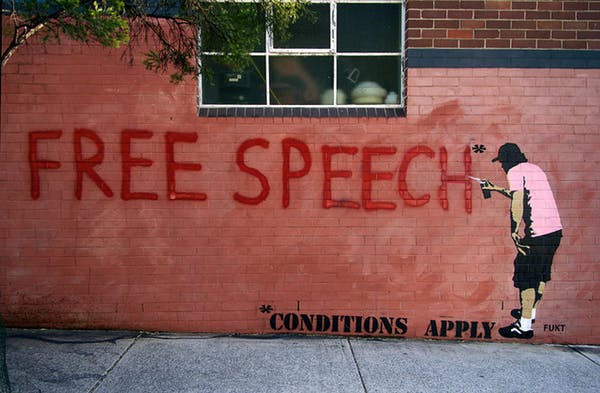
Some language in campus speech legislation may be largely symbolic and not change what many colleges are already doing. But, argues Neal Hutchens, some provisions in legislation could change campus speech rules in important ways.

Jürgen Habermas, a globally known social theorist whose explorations of democracy, validity and communication have gained new prominence in the current moment, […] People often see science as a world apart: cool, rational and untouched by persuasion or performance. In this view, scientists simply discover […] “Research impact” means different things to different people. Some refer broadly to how science changes behaviors, beliefs, or practices outside academic institutions. […] David Canter considers informal places where people socialize, suggesting they’re an arena ChatGPT and other LLMs can’no’t replicate. As someone who lives […] It’s become cliche since Clive Humbly coined it in 2006, but data is indeed the new oil. It’s a mantra repeated by […] In September 2025, The Guardian reported about a lawyer in Australia having faced sanctions due to false citations. These citations were not […]
EXPLORE
Impact

Jürgen Habermas, 1929-2026: Exponent of the Public Sphere
READ MORE

Scientists Should Keep in Mind It’s Called the ‘Marketplace of Ideas’ for a Reason
READ MORE

Survey Finds Social Scientists Feel Unsupported in Seeking Societal Impact
READ MORE
Innovation

Reaching Parts to Which AI Has No Access
READ MORE

Andrea Medina-Smith on Making Research Data More FAIR
READ MORE

A Status Check on Hallucinated Case Law Incidents
READ MORE