



Could Distributed Peer Review Better Decide Grant Funding?
The landscape of academic grant funding is notoriously competitive and plagued by lengthy, bureaucratic processes, exacerbated by difficulties in finding willing reviewers. Distributed […]

An introduction to a series of short essays exploring contemporary issues of academic freedom from a range of perspectives, focusing both on British and international trends.

How can we create reliable and replicable political science data? A recent article in the ‘American Political Science Review’ focuses on text analysis and suggests ways to make these data sound and reproducible.
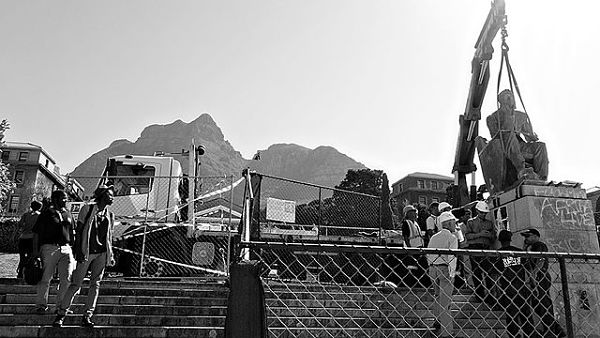
The decolonization debate in African universities raises critical issues about the relationship between power, knowledge and learning, argues Ahmed Essop. It also provides an opportunity to rethink the role of universities in social and economic development and in fashioning a common nation.

Researchers decided to conduct behavioral testing on competition and the process of peer review. What they learned offers some prescriptions for improving peer review going forward.
Many academics still operate under the flawed logic that good writing must be complex writing (or vice versa).
As Ian McBride has commented in The Guardian, one of the strange features of Britain’s EU referendum is the resignation with which […]

As well as beginning the long and painful divorce with the European Union, Dominic Abrams and Giovanni A. Travaglino say about Brexit, the United Kingdom is also entering a social space with very different, and very worrying, future dominated by what they term ‘rivalrous cohesion.’

The more brazen the willingness to commit academic fraud, the harder it becomes to prevent, suggests Ian Freckelton. So while there is a role for codes of conduct or even criminal courts, finding ways to push temptation to deceive even further out of mind will likeley prove even more successful.


Jürgen Habermas, a globally known social theorist whose explorations of democracy, validity and communication have gained new prominence in the current moment, […] People often see science as a world apart: cool, rational and untouched by persuasion or performance. In this view, scientists simply discover […] “Research impact” means different things to different people. Some refer broadly to how science changes behaviors, beliefs, or practices outside academic institutions. […] David Canter considers informal places where people socialize, suggesting they’re an arena ChatGPT and other LLMs can’no’t replicate. As someone who lives […] It’s become cliche since Clive Humbly coined it in 2006, but data is indeed the new oil. It’s a mantra repeated by […] In September 2025, The Guardian reported about a lawyer in Australia having faced sanctions due to false citations. These citations were not […]
EXPLORE
Impact

Jürgen Habermas, 1929-2026: Exponent of the Public Sphere
READ MORE

Scientists Should Keep in Mind It’s Called the ‘Marketplace of Ideas’ for a Reason
READ MORE

Survey Finds Social Scientists Feel Unsupported in Seeking Societal Impact
READ MORE
Innovation

Reaching Parts to Which AI Has No Access
READ MORE

Andrea Medina-Smith on Making Research Data More FAIR
READ MORE

A Status Check on Hallucinated Case Law Incidents
READ MORE