
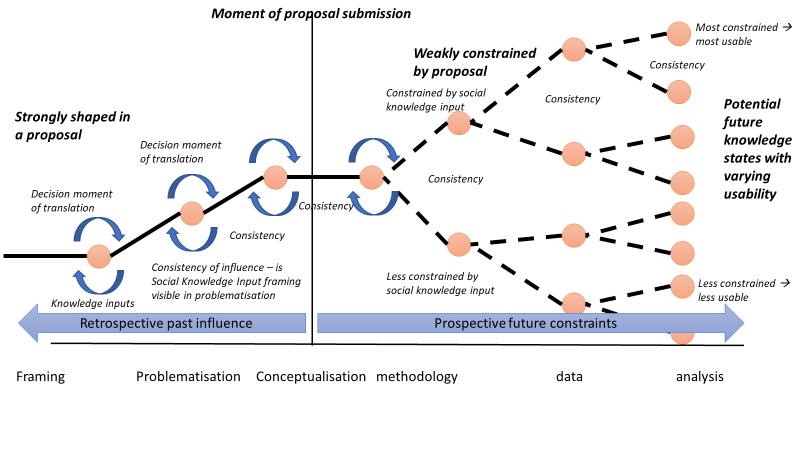


Could Distributed Peer Review Better Decide Grant Funding?
The landscape of academic grant funding is notoriously competitive and plagued by lengthy, bureaucratic processes, exacerbated by difficulties in finding willing reviewers. Distributed […]

The National Academy of Medicine has launched the Healthy Longevity Global Competition, a multiyear, multimillion-dollar international competition seeking breakthrough innovations to extend human health and function later in life.

Funders from private industry — which represent two-thirds of funding in medical research, for example — can go great lengths to suppress the publication of findings which appear unfavorable. How can academic freedom be protected with this monumental funding shift?
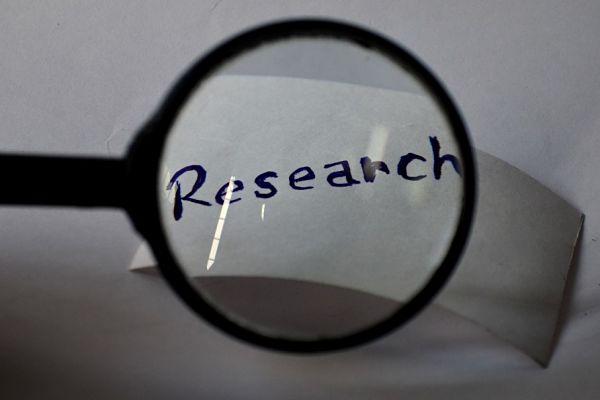
With the advent of the new Research on Research Institute, our Robert Dingwall notes that while research on research fills a gap in the world of knowledge. However, it is important not to confuse it with the research enterprise itself or to assume that this will benefit from being made so planned, rational and evidence-based that the result is to squeeze innovation out of the system.

Sorry, but academic publications in themselves are less likely to merit impact, though; if researchers want to reach beyond the ivy tower of academia, there are certain steps they can take. Why not consider a campaign? Toby Green discusses the imperative to ensure that researchers are seeking and finding proper audiences if they intend to cause impact. Researchers who do so will be more visible, and they’re more likely to win grants.
UPDATED: The U.S. Senate committee that oversees funding for the National Science Foundation, and with that most of the federal money spent on basic social and behavioral science research, today approved a 2020 budget that increases NSF spending by $242 million compared to the current fiscal year. The bill must still pass the full Senate, and be reconciled with a more generous House version.

Showing impact is a question of timescales as well as metrics. If you invest in research you are likely to see success in high-quality research outputs such as publications, as the UK has demonstrated in the past couple of decades. But it’s harder to demonstrate innovation and it takes longer.
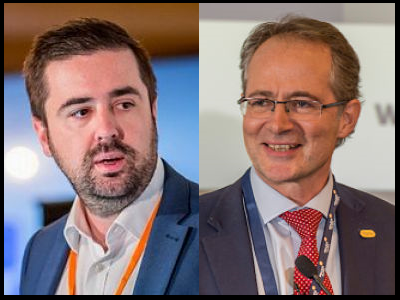
For this fifth article in the series of measuring impact, Louis Coiffait spoke to two leading UK experts who also know other countries; Dr Hamish McAlpine, head of knowledge exchange data and evidence at Research England, and Sean Fielding, director of innovation, impact and business at the University of Exeter, and also the chair of the UK national knowledge exchange association, PraxisAuril.
As details emerged on March 11 about the president’s fiscal year 2020 budget, it became increasingly clear that science funding would once again be targeted for significant spending cuts. But a new target also emerged – federal spending on education.


Jürgen Habermas, a globally known social theorist whose explorations of democracy, validity and communication have gained new prominence in the current moment, […] People often see science as a world apart: cool, rational and untouched by persuasion or performance. In this view, scientists simply discover […] “Research impact” means different things to different people. Some refer broadly to how science changes behaviors, beliefs, or practices outside academic institutions. […] David Canter considers informal places where people socialize, suggesting they’re an arena ChatGPT and other LLMs can’no’t replicate. As someone who lives […] It’s become cliche since Clive Humbly coined it in 2006, but data is indeed the new oil. It’s a mantra repeated by […] In September 2025, The Guardian reported about a lawyer in Australia having faced sanctions due to false citations. These citations were not […]
EXPLORE
Impact

Jürgen Habermas, 1929-2026: Exponent of the Public Sphere
READ MORE

Scientists Should Keep in Mind It’s Called the ‘Marketplace of Ideas’ for a Reason
READ MORE

Survey Finds Social Scientists Feel Unsupported in Seeking Societal Impact
READ MORE
Innovation

Reaching Parts to Which AI Has No Access
READ MORE

Andrea Medina-Smith on Making Research Data More FAIR
READ MORE

A Status Check on Hallucinated Case Law Incidents
READ MORE