


Could Distributed Peer Review Better Decide Grant Funding?
The landscape of academic grant funding is notoriously competitive and plagued by lengthy, bureaucratic processes, exacerbated by difficulties in finding willing reviewers. Distributed […]

Research shows people generally prefer being green to being greedy, but even if people are motivated, they don’t always know how to reduce energy use or, if they make a behavioral change, whether the change helped them reach their energy saving goals.

The last two UK governments have invested heavily in social science research. But we still do not know how to use the results in order to start improving society. This has to change, and soon.
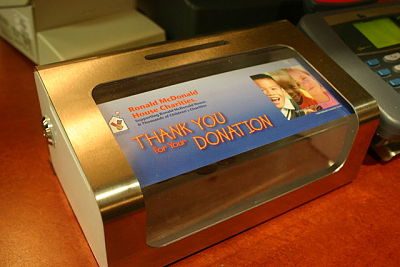
You donate your money to charity, your blood to other and your time to special causes. So why not give of your data for science research?
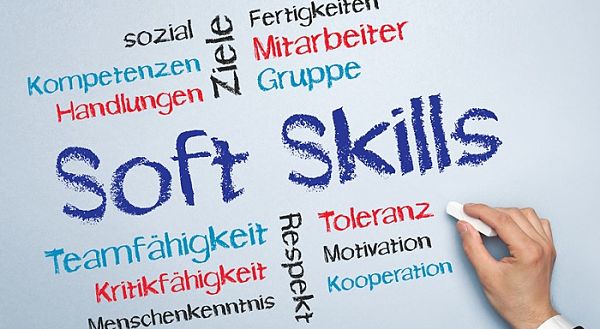
Discrimination becomes easier when its wrapped in the amorphous blanket of an applicant lacking certain ‘soft skills,’ suggests a news paper in the journal Policy Insights from the Behavioral and Brain Sciences.
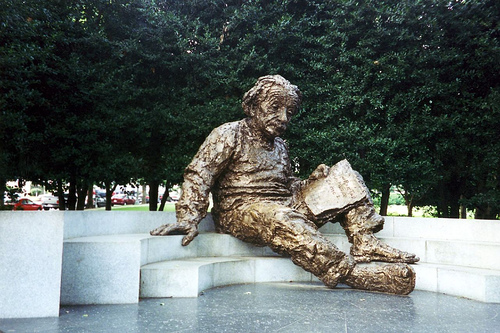
A roundtable sponsored by the U.S. National Research Council will examine applications of social and behavioral science.
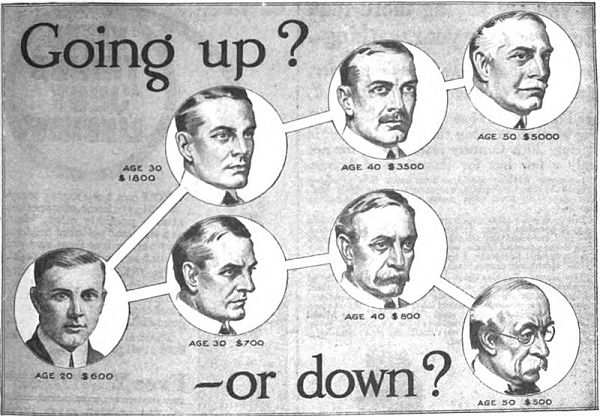
Despite its obsession with the concept of equal opportunity, the United States hasn’t actively monitored its residents’ social mobility for more than four decades. Now a group of social scientists have proposed an efficient way using existing tools to chart mobility.

Reporting on panel looking at the UK’s Research Excellence Framework, Liz Morrish looks at whether the assessment tools created by government have extended their reach and left academics exposed.

Not all eyes will be glued to the release of the UK’s Research Excellence Framework on Thursday. Some of the people who built the REF are evaluating the current lessons to improve the next version.


Jürgen Habermas, a globally known social theorist whose explorations of democracy, validity and communication have gained new prominence in the current moment, […] People often see science as a world apart: cool, rational and untouched by persuasion or performance. In this view, scientists simply discover […] “Research impact” means different things to different people. Some refer broadly to how science changes behaviors, beliefs, or practices outside academic institutions. […] David Canter considers informal places where people socialize, suggesting they’re an arena ChatGPT and other LLMs can’no’t replicate. As someone who lives […] It’s become cliche since Clive Humbly coined it in 2006, but data is indeed the new oil. It’s a mantra repeated by […] In September 2025, The Guardian reported about a lawyer in Australia having faced sanctions due to false citations. These citations were not […]
EXPLORE
Impact

Jürgen Habermas, 1929-2026: Exponent of the Public Sphere
READ MORE

Scientists Should Keep in Mind It’s Called the ‘Marketplace of Ideas’ for a Reason
READ MORE

Survey Finds Social Scientists Feel Unsupported in Seeking Societal Impact
READ MORE
Innovation

Reaching Parts to Which AI Has No Access
READ MORE

Andrea Medina-Smith on Making Research Data More FAIR
READ MORE

A Status Check on Hallucinated Case Law Incidents
READ MORE