



Could Distributed Peer Review Better Decide Grant Funding?
The landscape of academic grant funding is notoriously competitive and plagued by lengthy, bureaucratic processes, exacerbated by difficulties in finding willing reviewers. Distributed […]

While Tomas Piketty’s focus on inequality is seen as finally getting the discussion of inequality on the front pages, it may be his his data collection that really cements his reputation.

Social scientists don’t always study subjects whose actions please the authorities. Is the freedom to associate with these people for research purposes under attack? Should researchers have their own ‘shield law’?

African governance guru Robert Rotberg is visiting South Africa and Zimbabwe, suggesting a prescription for leadership that tries to recapture some of the benefits of the fading Mandela moment.
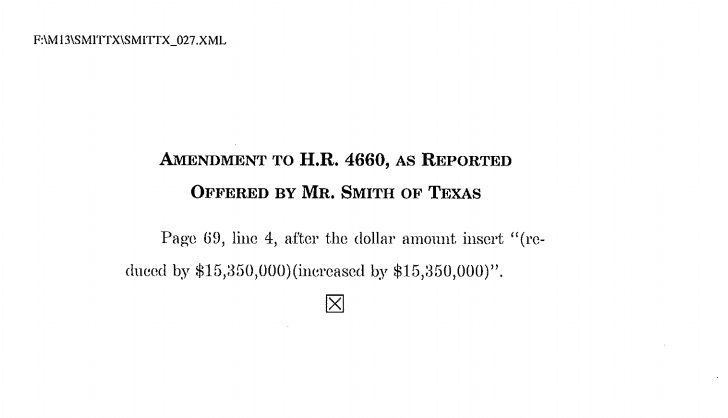
Calling it only the “first step,” two prominent Republican congressmen called for freezing federal funding for social science research paid for by the National Science Foundation.

The possible retraction of a high profile paper in the medical sciences offers a teachable moment about replication, peer review, cognitive bias and the beauty and beastliness that can be science.

Social science and humanities spending by government is seen as a luxury by many. While there’s politics involved, some of that view likely follows from the yardsticks used to measure research value.

Many social scientists find themselves members of a cult of quantification, argues Robert Dingwall, in love with numbers for their own sake even when those numbers produce no useful knowledge.

When Tony Abbott took office as Australia’s prime minister and didn’t name a science minister, he asked that his government be judged by action, not titles.

The Royal Swedish Academy of Sciences has awarded this year’s Nobel Prize in Economic Sciences to the American economists Robert E. Hall […] Four Americans working in the social and behavioral sciences are among the 20 people named MacArthur Fellows this year. Recipients may be […] Euan Adie, the founder of Altmetric and later of Overton, discusses the reasons the led to Overton’s focus on showing researchers how […] The following is an adapted extract from The Cultural Industries, fifth edition, by David Hesmondhalgh. The increasing presence of information technology (IT) […] Developers of AI data centers have a public trust problem. According to multiple surveys, a majority of Americans say they would oppose […] I was adding some final flourishes on the topic of ‘iatrocracy’ to my forthcoming book with Natewindé Sawadogo – Sickness and Social […]
EXPLORE
Impact

Economic Peaks, Troughs and This Year’s Nobelists in Economics
READ MORE

Four From Social Science World Receive 2026 MacArthur Fellowships
READ MORE
Quick Insight: Euan Adie on Getting Academics Credit for Their Impact
READ MORE
Innovation
IT Giants and Their Operations: Should We Be Concerned?
READ MORE

What We Miss When We Study Public Trust with Surveys Alone
READ MORE

AI and ‘Iatrocracy’ – A Cautionary Tale
READ MORE