


Could Distributed Peer Review Better Decide Grant Funding?
The landscape of academic grant funding is notoriously competitive and plagued by lengthy, bureaucratic processes, exacerbated by difficulties in finding willing reviewers. Distributed […]

The natural sciences present easy-to-follow prescriptions for addressing climate change. Unfortunately, getting human beings to sign on requires navigating a maze of psychological, domestic, social, economic, political and cultural forces.

Two important American social scientists died over the new year, Philip Converse and Martin Anderson. But their similarities ended there, argues Howard Silver.
The Campaign for Social Science, Britain’s pre-eminent champion for promoting the social sciences before the government and the public, has named Ziyad […]

The rich and diverse ways in which students and scholars of diverse national and cultural origins collaborate at British universities, argues Daniel Nehring, belie the economic reductionism currently fashionable in public debates about higher education.

Research shows people generally prefer being green to being greedy, but even if people are motivated, they don’t always know how to reduce energy use or, if they make a behavioral change, whether the change helped them reach their energy saving goals.

The last two UK governments have invested heavily in social science research. But we still do not know how to use the results in order to start improving society. This has to change, and soon.
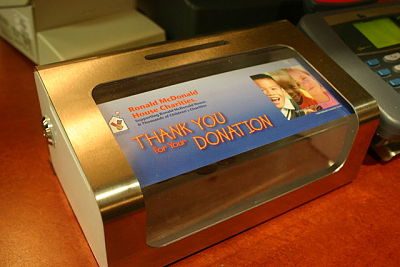
You donate your money to charity, your blood to other and your time to special causes. So why not give of your data for science research?
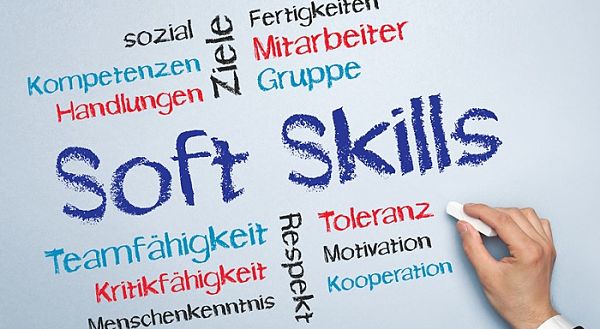
Discrimination becomes easier when its wrapped in the amorphous blanket of an applicant lacking certain ‘soft skills,’ suggests a news paper in the journal Policy Insights from the Behavioral and Brain Sciences.

The Royal Swedish Academy of Sciences has awarded this year’s Nobel Prize in Economic Sciences to the American economists Robert E. Hall […] Four Americans working in the social and behavioral sciences are among the 20 people named MacArthur Fellows this year. Recipients may be […] Euan Adie, the founder of Altmetric and later of Overton, discusses the reasons the led to Overton’s focus on showing researchers how […] The following is an adapted extract from The Cultural Industries, fifth edition, by David Hesmondhalgh. The increasing presence of information technology (IT) […] Developers of AI data centers have a public trust problem. According to multiple surveys, a majority of Americans say they would oppose […] I was adding some final flourishes on the topic of ‘iatrocracy’ to my forthcoming book with Natewindé Sawadogo – Sickness and Social […]
EXPLORE
Impact
Economic Peaks, Troughs and This Year’s Nobelists in Economics
READ MORE

Four From Social Science World Receive 2026 MacArthur Fellowships
READ MORE

Quick Insight: Euan Adie on Getting Academics Credit for Their Impact
READ MORE
Innovation

IT Giants and Their Operations: Should We Be Concerned?
READ MORE

What We Miss When We Study Public Trust with Surveys Alone
READ MORE

AI and ‘Iatrocracy’ – A Cautionary Tale
READ MORE












































































