


Could Distributed Peer Review Better Decide Grant Funding?
The landscape of academic grant funding is notoriously competitive and plagued by lengthy, bureaucratic processes, exacerbated by difficulties in finding willing reviewers. Distributed […]
The British-based nonprofit that helps the public understand the barrage of research data encountered routinely is starting a similar effort in the United States.
Academics already tend to have a bone to pick with the Myers Briggs Type Indicator as anything other than a parlor game. Nonetheless, while the personality test has a hold on the popular imagination it shouldn’t enter the workplace.

No one favors domestic violence. But in strengthening protections to counter it, asks Sofia Graça, is adding new laws automatically the best way forward?
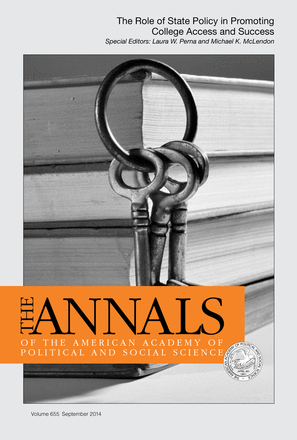
Given the rise of policies that try to link state appropriations for public universities to the student outcomes for those institutions, the natural question must be: do these funding policies correlate with higher student achievement? The answers may surprise …
As various canvasses and opinion polls attempt to predict the outcome of the Scottish independence plebiscite, it’s worth taking a look at how more methodologically sound inputs lead to more accurate forecasts.
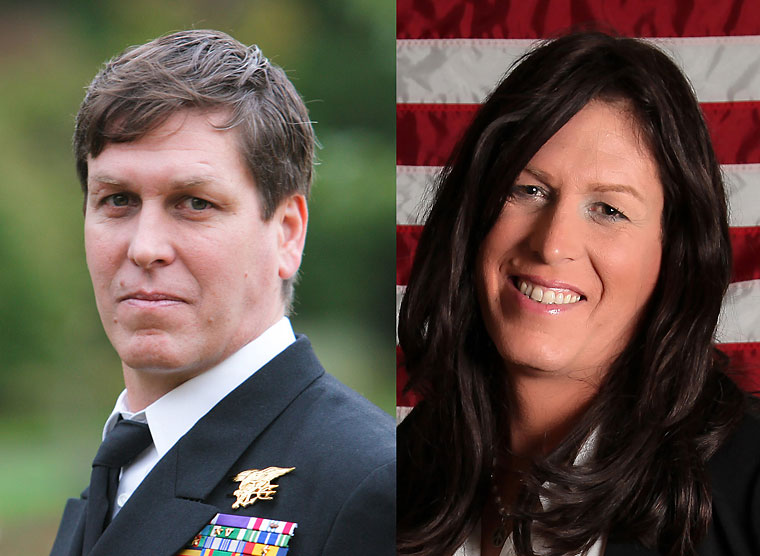
UPDATE: In a 2014 article, a former U.S. surgeon general and four co-authors argue that the U.S. military’s medically based ban on transgender troops in place then failed on the facts and on the precedents of other populations in uniform.

One black city council member is not nearly enough. In a study of city councils, only one place in America had a greater representational disparity than Ferguson, Missouri.
Unintended consequences and little practical improvement could result from England’s plan to give poor students priority in school placement, especially if schools can decide to opt in or out, argue Stephen Gorard and Rebecca Morris.


Jürgen Habermas, a globally known social theorist whose explorations of democracy, validity and communication have gained new prominence in the current moment, […] People often see science as a world apart: cool, rational and untouched by persuasion or performance. In this view, scientists simply discover […] “Research impact” means different things to different people. Some refer broadly to how science changes behaviors, beliefs, or practices outside academic institutions. […] David Canter considers informal places where people socialize, suggesting they’re an arena ChatGPT and other LLMs can’no’t replicate. As someone who lives […] It’s become cliche since Clive Humbly coined it in 2006, but data is indeed the new oil. It’s a mantra repeated by […] In September 2025, The Guardian reported about a lawyer in Australia having faced sanctions due to false citations. These citations were not […]
EXPLORE
Impact

Jürgen Habermas, 1929-2026: Exponent of the Public Sphere
READ MORE

Scientists Should Keep in Mind It’s Called the ‘Marketplace of Ideas’ for a Reason
READ MORE

Survey Finds Social Scientists Feel Unsupported in Seeking Societal Impact
READ MORE
Innovation

Reaching Parts to Which AI Has No Access
READ MORE

Andrea Medina-Smith on Making Research Data More FAIR
READ MORE

A Status Check on Hallucinated Case Law Incidents
READ MORE