



Could Distributed Peer Review Better Decide Grant Funding?
The landscape of academic grant funding is notoriously competitive and plagued by lengthy, bureaucratic processes, exacerbated by difficulties in finding willing reviewers. Distributed […]
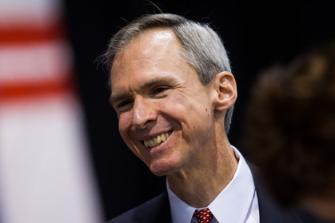
How concerned should the social science community be about the still substantial chunk of money missing from federal social science support in a hotly contested National Science Foundation reauthorization bill? According to Daniel Lipinski, the very conservative Democratic congressman whose amendment backfilled $50 million that even more conservative Republicans wanted to take away, a lot and a little.
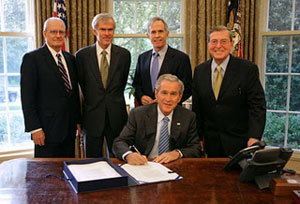
A survey of White House advisers from three administrations reveals that what they want from researchers is less options than opinions, and less journal citations than citations by journalists.
The social and behavioral component of the National Science Foundation’s budget is a small part of the total but of paramount importance to the discipline’s researchers, a relationship brought home as Congress gets ready to discuss funding.
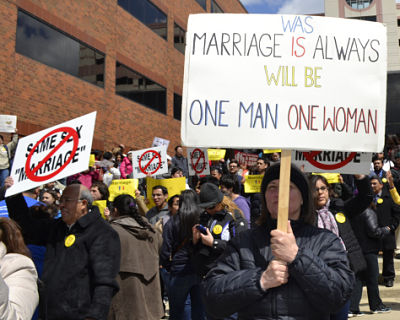
A friend of the court brief just filed by the American Sociological Association in defense of legalizing gay marriage offers a perch for observing how scholarly organizations sometimes weigh in when matters of public policy reach the courtroom.

Whether it’s the DREAM Act in the United States or the crackdown sought by the UK Visas and Immigration in Britain, universities are becoming a flashpoint of immigration policy.
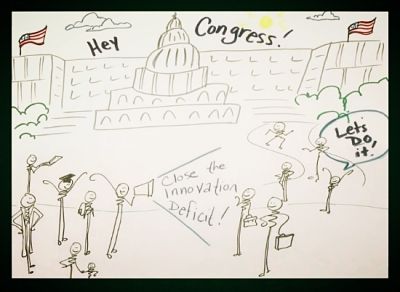
With a little more wiggle room in the U.S. budget this year, proponents of strong federal support for R&D and higher education are trying to get their message out about America’s lagging innovation. Social science and the STEM fields are making common cause in the campaign.

Two pieces of upcoming legislation, the Frontiers in Research, Science, and Technology bill and American COMPETES, could include some unwelcome news for social and behavioral science if certain key legislators get their way.
Where should we draw the line between normal data gathering about university students–with the intent of helping them, of course–and outright intrusiveness?
Jürgen Habermas, a globally known social theorist whose explorations of democracy, validity and communication have gained new prominence in the current moment, […] People often see science as a world apart: cool, rational and untouched by persuasion or performance. In this view, scientists simply discover […] “Research impact” means different things to different people. Some refer broadly to how science changes behaviors, beliefs, or practices outside academic institutions. […] David Canter considers informal places where people socialize, suggesting they’re an arena ChatGPT and other LLMs can’no’t replicate. As someone who lives […] It’s become cliche since Clive Humbly coined it in 2006, but data is indeed the new oil. It’s a mantra repeated by […] In September 2025, The Guardian reported about a lawyer in Australia having faced sanctions due to false citations. These citations were not […]
EXPLORE
Impact

Jürgen Habermas, 1929-2026: Exponent of the Public Sphere
READ MORE

Scientists Should Keep in Mind It’s Called the ‘Marketplace of Ideas’ for a Reason
READ MORE

Survey Finds Social Scientists Feel Unsupported in Seeking Societal Impact
READ MORE
Innovation

Reaching Parts to Which AI Has No Access
READ MORE

Andrea Medina-Smith on Making Research Data More FAIR
READ MORE

A Status Check on Hallucinated Case Law Incidents
READ MORE