



Could Distributed Peer Review Better Decide Grant Funding?
The landscape of academic grant funding is notoriously competitive and plagued by lengthy, bureaucratic processes, exacerbated by difficulties in finding willing reviewers. Distributed […]

The author’s team is developing ways to connect policymakers with university-based researchers – and studying what happens when these academics become the trusted sources, rather than those with special interests who stand to gain financially from various initiatives.

With research-based evidence increasingly being seen in policy, we should acknowledge that there are risks that the research or ‘evidence’ used isn’t suitable or can be accidentally misused for a variety of reasons.

Inspired by ‘design sprints’ a Google where projects could create a prototype in five days, the authors started doing ‘research sprints’ in 2015.
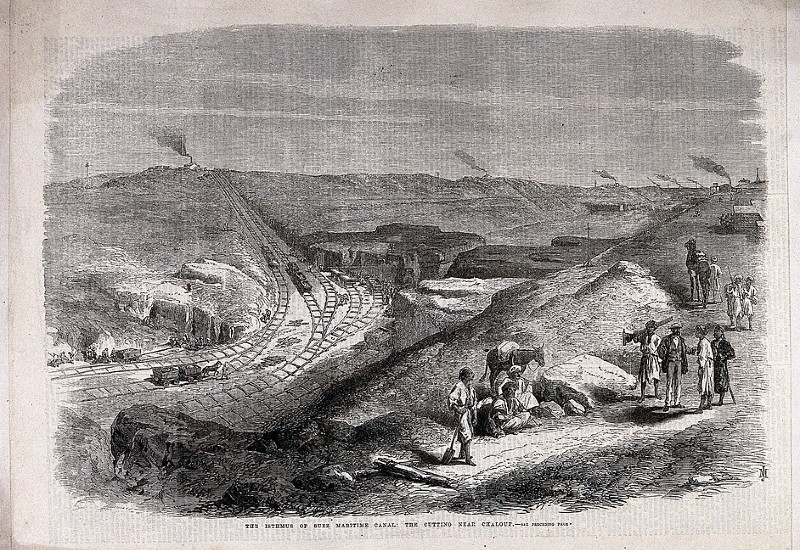
This article by Bent Flyvbjerg examines the misconceptions and strategic misrepresentations that routinely result in the implementation of projects for which there is inadequate justification, absorbing funds that could have been better spent elsewhere.

Over a 10-year period Carol Tenopir of DataONE and her team conducted a global survey of scientists, managers and government workers involved in broad environmental science activities about their willingness to share data and their opinion of the resources available to do so (Tenopir et al., 2011, 2015, 2018, 2020). Comparing the responses over that time shows a general increase in the willingness to share data (and thus engage in Open Science).

The double-blind review process, adopted by many publishers and funding agencies, plays a vital role in maintaining fairness and unbiasedness by concealing the identities of authors and reviewers. However, in the era of artificial intelligence (AI) and big data, a pressing question arises: can an author’s identity be deduced even from an anonymized paper (in cases where the authors do not advertise their submitted article on social media)?

Recent experiences have not been very positive. The vast majority of proposals seem to conflate impact with research dissemination (a heroic leap of faith – changing the world one seminar at a time), or to outsource impact to partners such as NGOs and thinktanks.
The Covid-19 pandemic seems to be subsiding into a low-level endemic respiratory infection – although the associated pandemics of fear and action […]

The Royal Swedish Academy of Sciences has awarded this year’s Nobel Prize in Economic Sciences to the American economists Robert E. Hall […] Four Americans working in the social and behavioral sciences are among the 20 people named MacArthur Fellows this year. Recipients may be […] Euan Adie, the founder of Altmetric and later of Overton, discusses the reasons the led to Overton’s focus on showing researchers how […] The following is an adapted extract from The Cultural Industries, fifth edition, by David Hesmondhalgh. The increasing presence of information technology (IT) […] Developers of AI data centers have a public trust problem. According to multiple surveys, a majority of Americans say they would oppose […] I was adding some final flourishes on the topic of ‘iatrocracy’ to my forthcoming book with Natewindé Sawadogo – Sickness and Social […]
EXPLORE
Impact

Economic Peaks, Troughs and This Year’s Nobelists in Economics
READ MORE
Four From Social Science World Receive 2026 MacArthur Fellowships
READ MORE
Quick Insight: Euan Adie on Getting Academics Credit for Their Impact
READ MORE
Innovation
IT Giants and Their Operations: Should We Be Concerned?
READ MORE

What We Miss When We Study Public Trust with Surveys Alone
READ MORE

AI and ‘Iatrocracy’ – A Cautionary Tale
READ MORE