
Could Distributed Peer Review Better Decide Grant Funding?
The landscape of academic grant funding is notoriously competitive and plagued by lengthy, bureaucratic processes, exacerbated by difficulties in finding willing reviewers. Distributed […]

Editor’s note: We are pleased to welcome Dan R. Dalton and Herman Aguinis, both of Indiana University, whose article “Measurement Malaise in […]

Recent publications have encouraged me not to keep quiet about this any longer. Now is the time to explain why I find the term ‘profiling’ so problematic yet get stuck with using it.

This is not a body of work that instructs us what to think – it invites us to ask the question that an ethnographer would ask: confronted with this scene, what is going on here?

How an equation cooked up by Mussolini’s numbers guy came to define how we think about inequality—from Occupy Wall Street to the World Bank to the billionaires at Davos—and why it’s time to find a new way of looking at the numbers.

In our study we were interested in examining differences between religious groups and the dominant religious faith within nations in the likelihood that residents would engage in premarital or extramarital sex.

Study finds boredom is a key experience in daily life in secure care and young people deal with their boredom through the generation of risk-taking action.
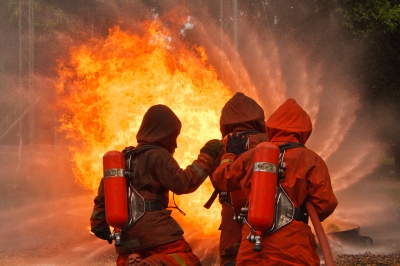
Research, and especially qualitative research, is fairly new to fire and rescue services. Historically, quantitative analysis has been prioritised, however qualitative research can help understand why fires occur, and social services are finally starting to notice.

With the exponential expansion even over the last few months of Web 2.0 it is important for social scientists to get a grip on the wide-reaching implications of these developments.
People often see science as a world apart: cool, rational and untouched by persuasion or performance. In this view, scientists simply discover […] “Research impact” means different things to different people. Some refer broadly to how science changes behaviors, beliefs, or practices outside academic institutions. […] One researcher studies how war affects children, another took a literal worm’s eye view to examine rural development, while two others scrutinized […] David Canter considers informal places where people socialize, suggesting they’re an arena ChatGPT and other LLMs can’no’t replicate. As someone who lives […] It’s become cliche since Clive Humbly coined it in 2006, but data is indeed the new oil. It’s a mantra repeated by […] In September 2025, The Guardian reported about a lawyer in Australia having faced sanctions due to false citations. These citations were not […]
EXPLORE
Impact

Scientists Should Keep in Mind It’s Called the ‘Marketplace of Ideas’ for a Reason
READ MORE

Survey Finds Social Scientists Feel Unsupported in Seeking Societal Impact
READ MORE

Canada’s SSHRC Names 2025 Impact Winners
READ MORE
Innovation

Reaching Parts to Which AI Has No Access
READ MORE

Andrea Medina-Smith on Making Research Data More FAIR
READ MORE

A Status Check on Hallucinated Case Law Incidents
READ MORE