



Could Distributed Peer Review Better Decide Grant Funding?
The landscape of academic grant funding is notoriously competitive and plagued by lengthy, bureaucratic processes, exacerbated by difficulties in finding willing reviewers. Distributed […]

An article in the journal Psychological Science, “The New Statistics: Why and How” by La Trobe University’s Geoff Cumming, has proved remarkably popular in the years since and is the third-most cited paper published in a Sage journal in 2013.

The idea of an autonomous vehicle – i.e., a self-driving car – isn’t particularly new. Leonardo da Vinci had some ideas he […]

The paper “The Nature and Organization of Individual Differences in Executive Functions: Four General Conclusions,” published in Current Directions in Psychological Science in 2012, is a recipient of Sage’s fourth annual 10-Year Impact Awards. The paper has been cited 2,172 times.
The paper “What Makes Online Content Viral,” published in the Journal of Marketing Research in 2012, is a recipient of Sage’s fourth annual 10-Year Impact Awards. The paper has been cited 1,333 times.
The paper “What We Know and Don’t Know About Corporate Social Responsibility: A Review and Research Agenda,” published in the Journal of Management in 2012, is a recipient of Sage’s fourth annual 10-Year Impact Awards. The paper has been cited 1,970 times.
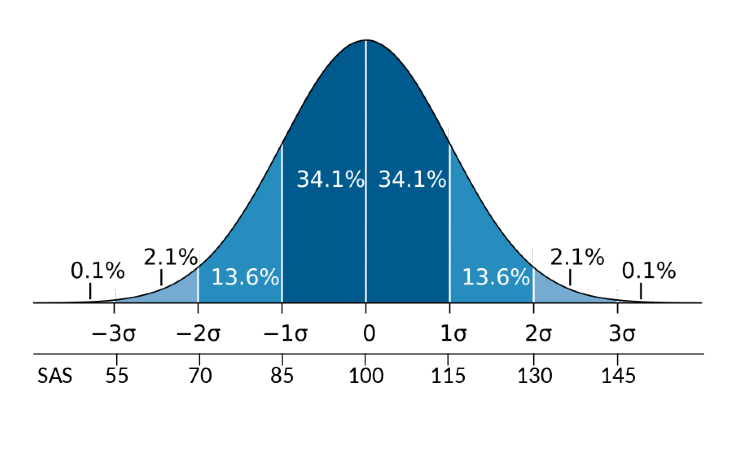
An academic paper that asserts you can present nearly any research finding as significant would be widely read and cited has received more that 4,000 citations since it was published in 2011.
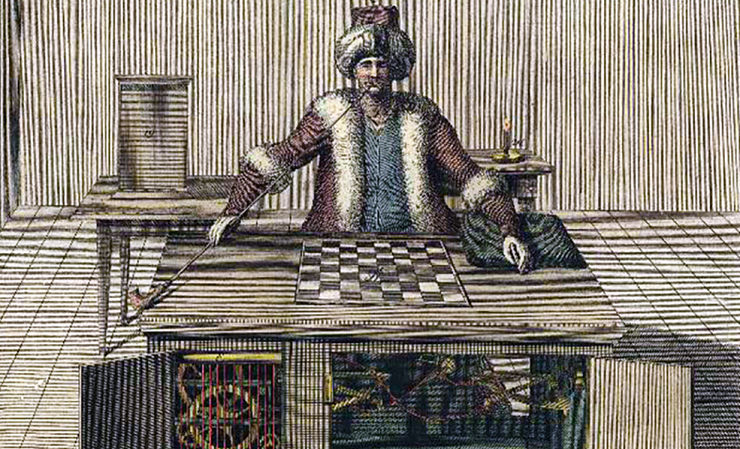
A 2011 paper on Amazon’s then-new and innovative Mechanical Turk, which among other things crowdsources prospective participants for social and behavioral research via an online marketplace, has garnered 7,500 citations in the subsequent decade.

A paper looking at the Danish National Patient Register has proved one of the most cited papers published by SAGE in 2011.

The Royal Swedish Academy of Sciences has awarded this year’s Nobel Prize in Economic Sciences to the American economists Robert E. Hall […] Four Americans working in the social and behavioral sciences are among the 20 people named MacArthur Fellows this year. Recipients may be […] Euan Adie, the founder of Altmetric and later of Overton, discusses the reasons the led to Overton’s focus on showing researchers how […] The following is an adapted extract from The Cultural Industries, fifth edition, by David Hesmondhalgh. The increasing presence of information technology (IT) […] Developers of AI data centers have a public trust problem. According to multiple surveys, a majority of Americans say they would oppose […] I was adding some final flourishes on the topic of ‘iatrocracy’ to my forthcoming book with Natewindé Sawadogo – Sickness and Social […]
EXPLORE
Impact

Economic Peaks, Troughs and This Year’s Nobelists in Economics
READ MORE

Four From Social Science World Receive 2026 MacArthur Fellowships
READ MORE

Quick Insight: Euan Adie on Getting Academics Credit for Their Impact
READ MORE
Innovation

IT Giants and Their Operations: Should We Be Concerned?
READ MORE

What We Miss When We Study Public Trust with Surveys Alone
READ MORE

AI and ‘Iatrocracy’ – A Cautionary Tale
READ MORE