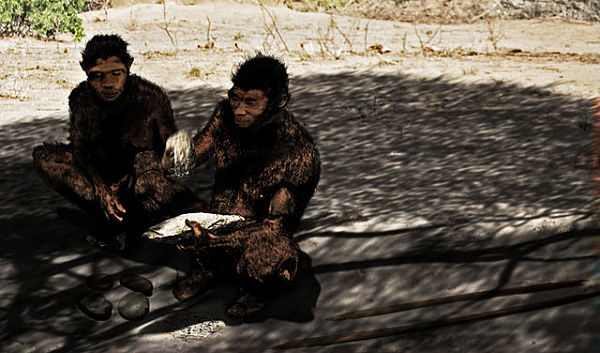

Could Distributed Peer Review Better Decide Grant Funding?
The landscape of academic grant funding is notoriously competitive and plagued by lengthy, bureaucratic processes, exacerbated by difficulties in finding willing reviewers. Distributed […]
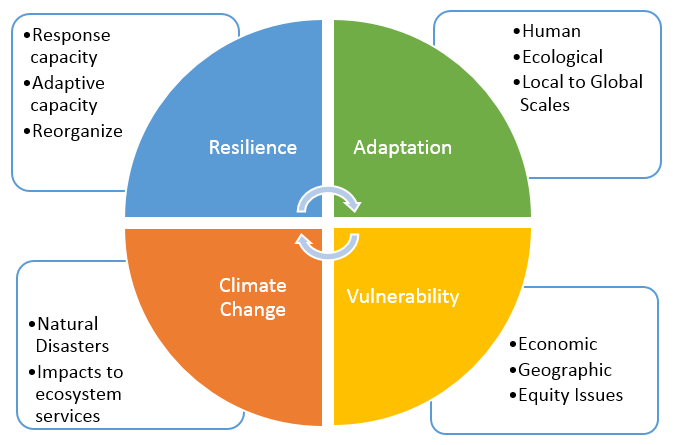
As we are often reminded, we urgently and drastically need to limit our use of one shared resource – fossil fuels – and its effect on another – the climate. But how realistic is this goal, both for national leaders and for us? Well, psychology may hold some answers.
In the final installment of the 10 top essays submitted to the ESRC reflecting on how a social science-influenced world will look in 2015, we present Ian Quigg’s ruminations on what capitalism will look like after another half century’s buffeting by the ‘perennial gale of creative destruction.’
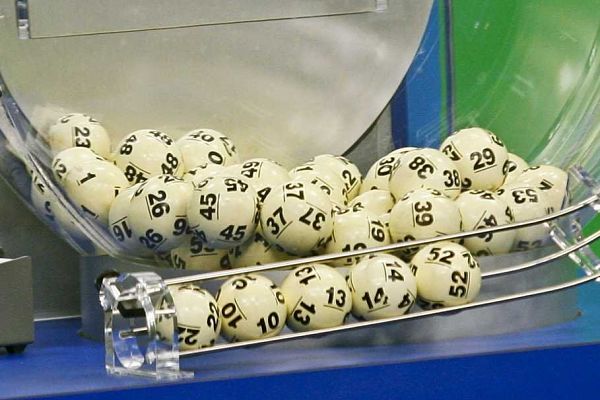
The answer sadly, is ruin. But if you’ve already beaten the odds once, maybe you can do so again …
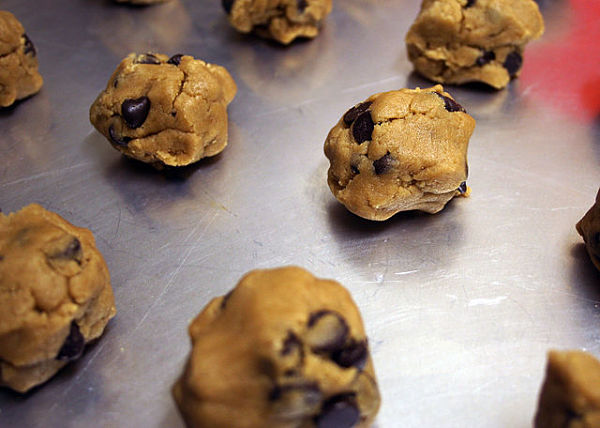
A sense of crisis is developing in economics after two Federal Reserve economists came to the alarming conclusion that economics research is usually not replicable.

You can now submit electronically to The American Economist through SAGE Track! As an official publication of Omicron Delta Epsilon, The International […]
The Third Globalization: Can Wealthy Nations Stay Rich in the Twenty-First Century? Edited by Dan Breznitz, John Zysman . Oxford, UK and […]
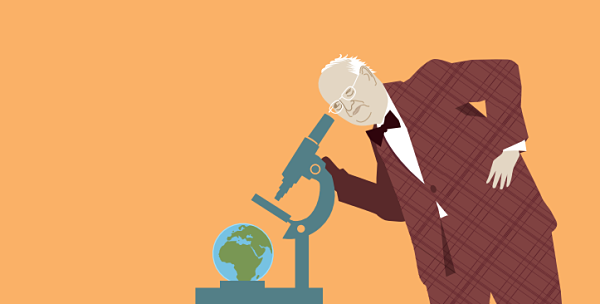
The Nobel committee has awarded Princeton’s Angus Deaton ‘for his analysis of consumption, poverty, and welfare.’ But in fact, he was awarded for building bridges – between disciplines, between theory and reality, between people.
From general stores to department stores and superstores, retailing has undergone significant changes in the past two centuries. In their article “The […]
Jürgen Habermas, a globally known social theorist whose explorations of democracy, validity and communication have gained new prominence in the current moment, […] People often see science as a world apart: cool, rational and untouched by persuasion or performance. In this view, scientists simply discover […] “Research impact” means different things to different people. Some refer broadly to how science changes behaviors, beliefs, or practices outside academic institutions. […] David Canter considers informal places where people socialize, suggesting they’re an arena ChatGPT and other LLMs can’no’t replicate. As someone who lives […] It’s become cliche since Clive Humbly coined it in 2006, but data is indeed the new oil. It’s a mantra repeated by […] In September 2025, The Guardian reported about a lawyer in Australia having faced sanctions due to false citations. These citations were not […]
EXPLORE
Impact

Jürgen Habermas, 1929-2026: Exponent of the Public Sphere
READ MORE

Scientists Should Keep in Mind It’s Called the ‘Marketplace of Ideas’ for a Reason
READ MORE

Survey Finds Social Scientists Feel Unsupported in Seeking Societal Impact
READ MORE
Innovation

Reaching Parts to Which AI Has No Access
READ MORE

Andrea Medina-Smith on Making Research Data More FAIR
READ MORE

A Status Check on Hallucinated Case Law Incidents
READ MORE