




Could Distributed Peer Review Better Decide Grant Funding?
The landscape of academic grant funding is notoriously competitive and plagued by lengthy, bureaucratic processes, exacerbated by difficulties in finding willing reviewers. Distributed […]
Two economists whose work on how auctions work shone a much broader light on how people value and price goods and service have received the 2020 Nobel Prize in economics.

Remembering the Italian economist who once wrote, “Racial animosity in the US makes redistribution to the poor, who are disproportionately black, unappealing to many voters. American political institutions limited the growth of a socialist party, and more generally limited the political power of the poor.”

Economist Anne Case didn’t believe her eyes when she first identified the trend of what came to be called ‘deaths of despair’: looking at figures from the 1990s to the most recent data available from 2018, mortality among middle-aged, non-college-educated white Americans rose, stalled, then rose again.

William Nordhaus, the Nobel Prize-winning economist who was the first macroeconomist to seriously consider how climate can be influenced by human behavior and that human action and economic policy can influence climate, will receive the 2020 Daniel Patrick Moynihan Prize.

Over the last three decades randomized trials have become an increasingly popular way of testing interventions designed to address developmental challenges. But do RCTs generate reliable results – or even retard progress?
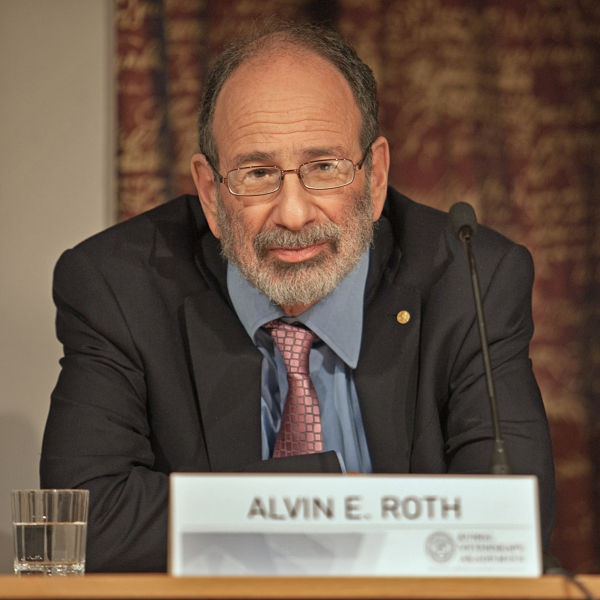
“Many people die without getting a transplant because there aren’t enough organs for the people who need them, living donor organs included. Sometimes, you might love someone enough to give him a kidney but you can’t give a kidney to the person you love, because kidneys have to be very well-matched. Kidney exchange is a way of getting some transplants done, even when patients and their donors are not well matched.”
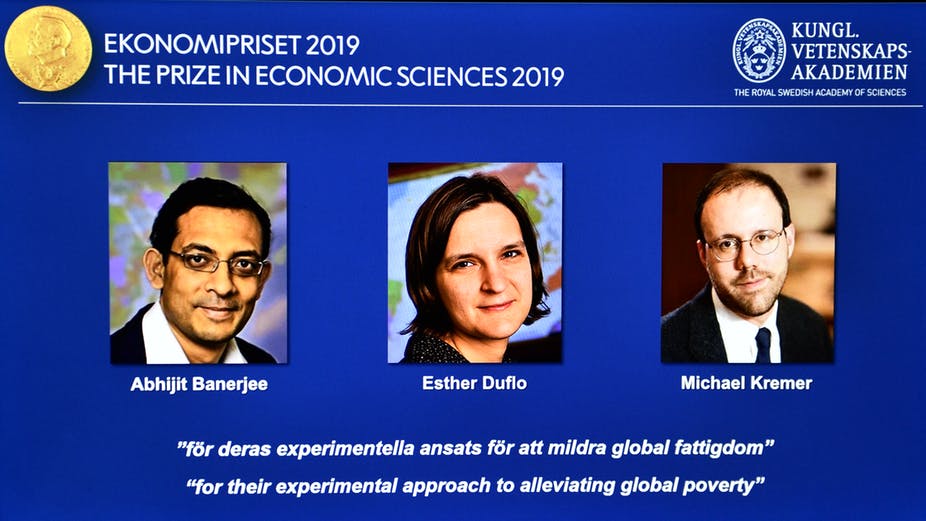
The Sveriges Riksbank Prize in Economic Sciences in Memory of Alfred Nobel 2019 (commonly known as the Nobel Prize for Economics) has been awarded to Abhijit Banerjee, Esther Duflo and Michael Kremer “for their experimental approach to alleviating global poverty.” Through the award, the Nobel committee recognized both the significance of development economics in the world today and the innovative approaches developed by these three economists.
Current mainstream economic theory needs an overhaul. Modern advanced economies are complex, evolving systems, which cannot continue to be understood only through aggregate quantity. Sergio Focardi discusses the explanatory power of qualitative (in addition to quantitative) understandings of the market.

The Royal Swedish Academy of Sciences has awarded this year’s Nobel Prize in Economic Sciences to the American economists Robert E. Hall […] Four Americans working in the social and behavioral sciences are among the 20 people named MacArthur Fellows this year. Recipients may be […] Euan Adie, the founder of Altmetric and later of Overton, discusses the reasons the led to Overton’s focus on showing researchers how […] The following is an adapted extract from The Cultural Industries, fifth edition, by David Hesmondhalgh. The increasing presence of information technology (IT) […] Developers of AI data centers have a public trust problem. According to multiple surveys, a majority of Americans say they would oppose […] I was adding some final flourishes on the topic of ‘iatrocracy’ to my forthcoming book with Natewindé Sawadogo – Sickness and Social […]
EXPLORE
Impact

Economic Peaks, Troughs and This Year’s Nobelists in Economics
READ MORE

Four From Social Science World Receive 2026 MacArthur Fellowships
READ MORE

Quick Insight: Euan Adie on Getting Academics Credit for Their Impact
READ MORE
Innovation

IT Giants and Their Operations: Should We Be Concerned?
READ MORE

What We Miss When We Study Public Trust with Surveys Alone
READ MORE

AI and ‘Iatrocracy’ – A Cautionary Tale
READ MORE












































































