


Could Distributed Peer Review Better Decide Grant Funding?
The landscape of academic grant funding is notoriously competitive and plagued by lengthy, bureaucratic processes, exacerbated by difficulties in finding willing reviewers. Distributed […]

When Robert Dingwall was younger, sociology departments routinely taught a course on ‘industry,’, ‘work’ or ‘economic life.’ “Most of this turf has now been abandoned to business schools in the form of organization studies, where it increasingly struggles to resist the expansion of finance and accounting studies,” he says, and to our detriment.
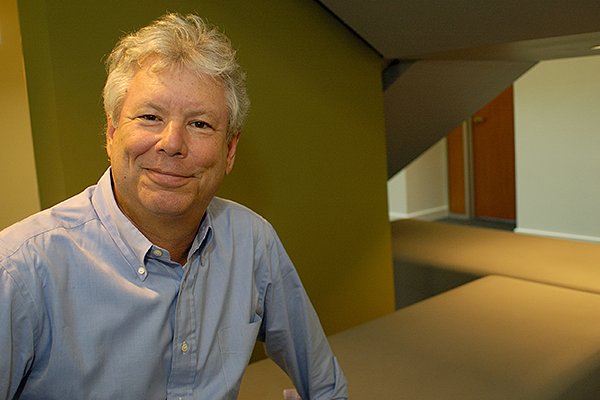
Richard H. Thaler, the University of Chicago economist whose contributions linking psychology to the ‘dismal science’ caught the public’s eye in his co-authored bestselling book Nudge, has received this year’s Nobel Prize in economic sciences.
By one estimate of U.S. universities, there are about 300,000 fewer women students in the field of economics than there should be if sexism were not so rampant.

So if markets are truly good for English higher education, as many seem to think, should we follow that train of thought to its logical conclusions?
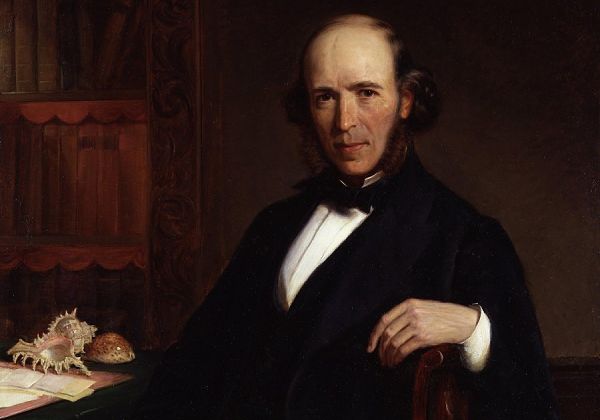
How well do sociology departments in the UK teach sociology that originated in the UK? Asking that surprisingly hard question may produce usable insights for academic Britain, argues our Robert Dingwall.

Alan B. Krueger, presently the Bendheim Professor of Economics and Public Policy at Princeton and formerly chairman of President Barack Obama’s Council […]

The value in economics lies not in some magical ability to divine the future. Tell that to the policymakers who expect their fortunes told.

People tend to herd together, whether it’s following the crowd or determining what news to accept. UCL economist Michelle Baddeley has studied this behavior and discusses what she’s learned in this latest Social Science Bites podcast.

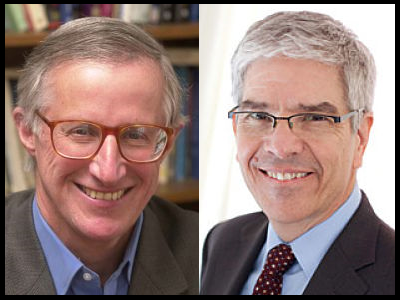
The Royal Swedish Academy of Sciences has awarded this year’s Nobel Prize in Economic Sciences to the American economists Robert E. Hall […] Four Americans working in the social and behavioral sciences are among the 20 people named MacArthur Fellows this year. Recipients may be […] Euan Adie, the founder of Altmetric and later of Overton, discusses the reasons the led to Overton’s focus on showing researchers how […] The following is an adapted extract from The Cultural Industries, fifth edition, by David Hesmondhalgh. The increasing presence of information technology (IT) […] Developers of AI data centers have a public trust problem. According to multiple surveys, a majority of Americans say they would oppose […] I was adding some final flourishes on the topic of ‘iatrocracy’ to my forthcoming book with Natewindé Sawadogo – Sickness and Social […]
EXPLORE
Impact
Economic Peaks, Troughs and This Year’s Nobelists in Economics
READ MORE

Four From Social Science World Receive 2026 MacArthur Fellowships
READ MORE

Quick Insight: Euan Adie on Getting Academics Credit for Their Impact
READ MORE
Innovation
IT Giants and Their Operations: Should We Be Concerned?
READ MORE

What We Miss When We Study Public Trust with Surveys Alone
READ MORE

AI and ‘Iatrocracy’ – A Cautionary Tale
READ MORE












































































