
Could Distributed Peer Review Better Decide Grant Funding?
The landscape of academic grant funding is notoriously competitive and plagued by lengthy, bureaucratic processes, exacerbated by difficulties in finding willing reviewers. Distributed […]
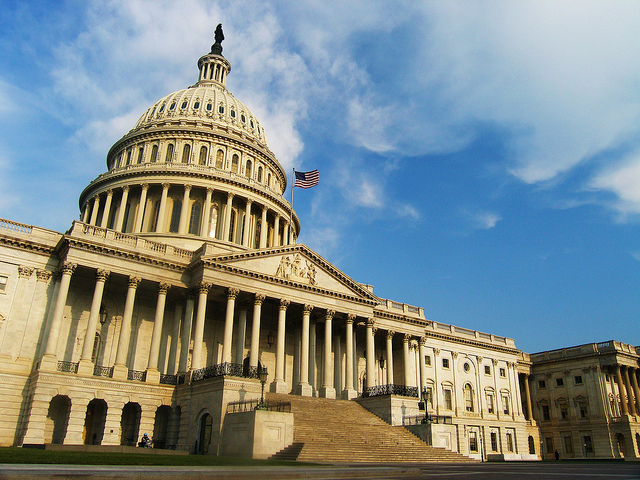
Starting this month Social Science Space will begin offering monthly updates on U.S. government actions that affect the social and behavioral sciences. In this first edition, we look at reauthorization of funding for the National Science Foundation, the effect of an Obamacare repeal on social science, and concerns for the American Community Survey and GIS data on housing.
Our Howard Silver looks over some of the personnel changes and rhetoric coming from the White House to see what lies down the road for U.S. government support of social and behavioral science and data collection.
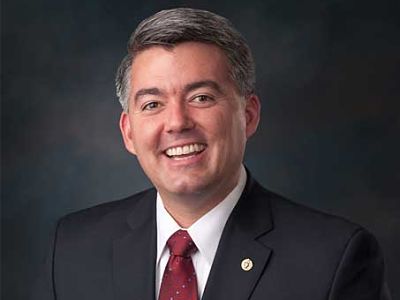
UPDATED WITH HOUSE PASSAGE: A bill that was the latest version of the beloved America COMPETES — but which no longer authorizes funding for key federal science research agencies — looks likely to land on the president’s desk. The new version has lost a particularly toxic aspect of earlier versions.

Erich Bloch was the first non-academic to serve as director of the NSF. Although a computer engineer by background, he recognized the value of the social and behavioral sciences.
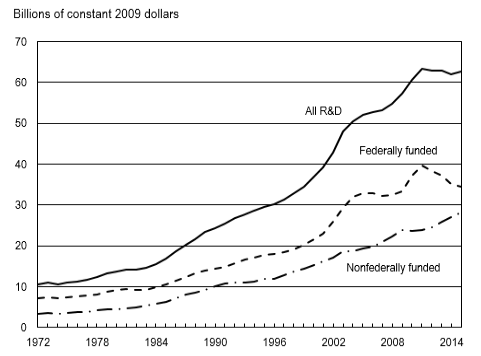
For the fourth straight year, federal funding for research and development at institutions of higher education decreased in absolute terms, according to a new brief on the 2015 fiscal year the National Science Foundation released last week. Despite that overall fall, research and development funding for psychology and for fields identified as social science increased from 2014 to 2015.
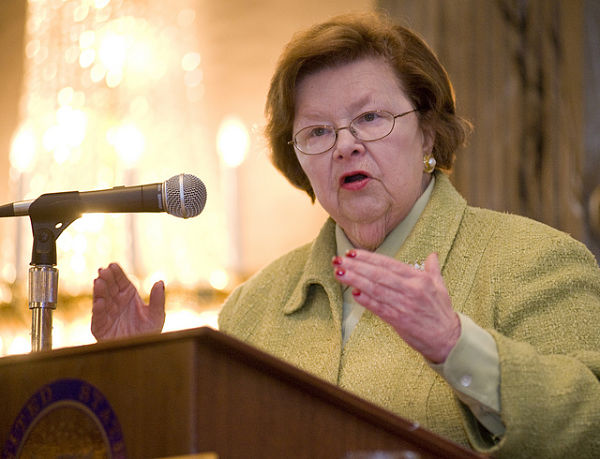
In a hearing before a U.S. Senate subcommittee on science spending Tuesday, the National Science Foundation’s budget was listed as $7.51 billion — $46 million above the same figure for the current fiscal year, but lower than what President Obama had asked for.

Legislation that requires that future grants made by the National Science Foundation meet a test for being in the ‘national interest’ passed the House of Representatives on Wednesday.
UPDATED with COSSA analysis: Social and behavioral science funded by the U.S. government appears to have received an early Christmas present as leaders in the House of Representatives unveiled a $1.1 trillion spending bill to keep the federal enterprise funded in 2016.

Four Americans working in the social and behavioral sciences are among the 20 people named MacArthur Fellows this year. Recipients may be […] Euan Adie, the founder of Altmetric and later of Overton, discusses the reasons the led to Overton’s focus on showing researchers how […] Here’s a couple of quick questions for you. What is the smallest of the eight discipline-based directorates at the United States’ National […] I was adding some final flourishes on the topic of ‘iatrocracy’ to my forthcoming book with Natewindé Sawadogo – Sickness and Social […] How is AI changing the shape and space of higher education? Critical thinking continues to rank highly among key skills and attributes […] My colleagues and I recently spoke with a group of talented, interesting students who just completed their first year of college about […]
EXPLORE
Impact
Four From Social Science World Receive 2026 MacArthur Fellowships
READ MORE
Quick Insight: Euan Adie on Getting Academics Credit for Their Impact
READ MORE

NSF’s Embattled SBE Directorate Shown as Agency’s Policy Heavyweight
READ MORE
Innovation

AI and ‘Iatrocracy’ – A Cautionary Tale
READ MORE

The Critical Student: How GenAI Reshapes Critical Skills and Higher Education’s Role Preparing Students For It
READ MORE

AI Doesn’t Drive Student Cheating. It Just Hitches a Ride
READ MORE