

Could Distributed Peer Review Better Decide Grant Funding?
The landscape of academic grant funding is notoriously competitive and plagued by lengthy, bureaucratic processes, exacerbated by difficulties in finding willing reviewers. Distributed […]
Canada’s Social Science and Humanities Research Council, now in its 40th year, handed out five Impact Prizes earlier this month to honor those showing the potential and applicability of government-funded research and exploration.

Valeria Izzi asks, when it comes to research for development, can we really have it all? Or are we setting the bar so high that researchers will be discouraged from even trying – instead embellishing their proposals with enough impact, partnership, and co-production jargon to win funding, before getting on with research as usual?

“The most important thing in the Olympic Games is not winning but taking part.” So goes the famous saying. But does the same apply for competitive research grants? Charles Ayoubi, Michele Pezzoni and Fabiana Visentin report on their study which finds that simply taking part in an application process has a positive effect on researchers.

In the latest of its monthly series of interdisciplinary microsites addressing important public issues, SAGE Publishing is offering free access to a suite academic articles that focus on artificial intelligence.
The president of the Social Science Research Council argues that that proliferation of data, data sharing and collaboration across private, government, and academic sectors requires a stewardship that social science can, at least in part, provide.

Some scholars claim that replication, in the humanities, is not possible. The reasoning is that the humanities search for cultural meaning that can yield multiple valid answers since research objects are people and interactive entities. This may be true but it does not automatically follow that replication is not possible. Its a desirable feature for studies in the humanities to be replicable.
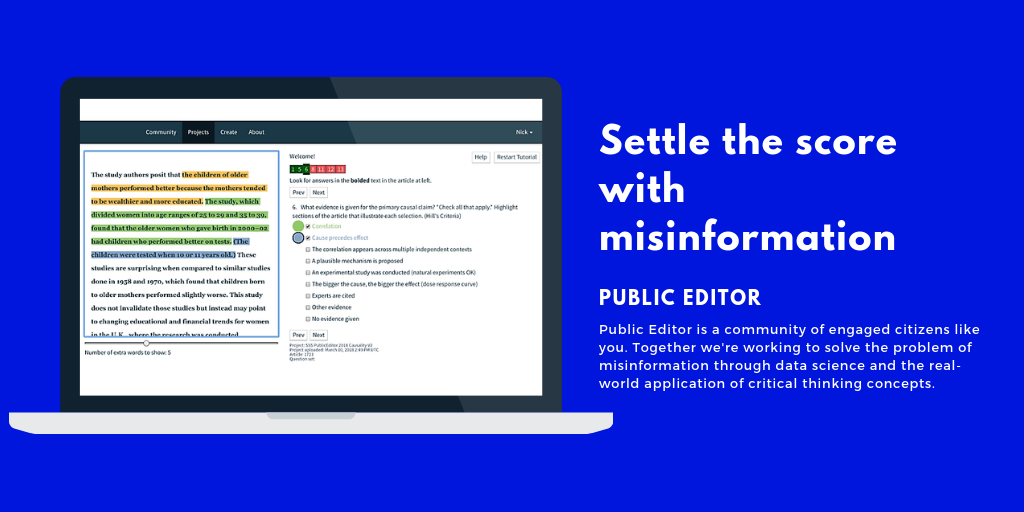
Sociologist Nick Adams’ TagWorks methodology is being used to rate — and in turn improve — the most shared news stories of the day via a new tool called PublicEditor.
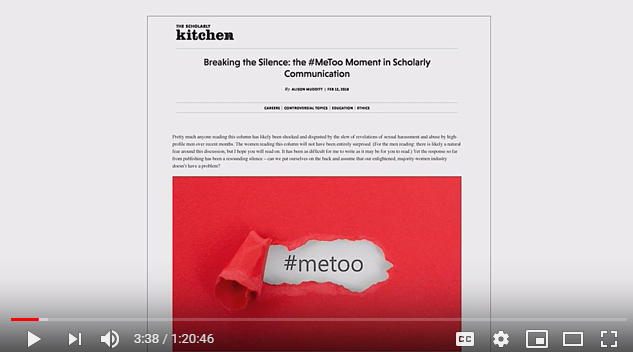
The #MeToo movement has slowly spread across to other sectors as people begin to come forward with their own stories of sexual harassment and bullying. In academic publishing, this conversation was in part started in February by Alison’s Mudditt’s powerful post on The Scholarly Kitchen. Muddit chaired a recent panel looking at sexual harassment, and ways to combat it, at the annual ALPSP conference.
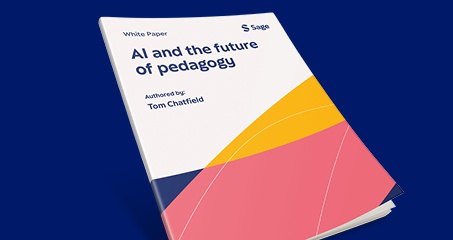
People often see science as a world apart: cool, rational and untouched by persuasion or performance. In this view, scientists simply discover […] “Research impact” means different things to different people. Some refer broadly to how science changes behaviors, beliefs, or practices outside academic institutions. […] One researcher studies how war affects children, another took a literal worm’s eye view to examine rural development, while two others scrutinized […] David Canter considers informal places where people socialize, suggesting they’re an arena ChatGPT and other LLMs can’no’t replicate. As someone who lives […] It’s become cliche since Clive Humbly coined it in 2006, but data is indeed the new oil. It’s a mantra repeated by […] In September 2025, The Guardian reported about a lawyer in Australia having faced sanctions due to false citations. These citations were not […]
EXPLORE
Impact

Scientists Should Keep in Mind It’s Called the ‘Marketplace of Ideas’ for a Reason
READ MORE

Survey Finds Social Scientists Feel Unsupported in Seeking Societal Impact
READ MORE
Canada’s SSHRC Names 2025 Impact Winners
READ MORE
Innovation

Reaching Parts to Which AI Has No Access
READ MORE

Andrea Medina-Smith on Making Research Data More FAIR
READ MORE

A Status Check on Hallucinated Case Law Incidents
READ MORE