
Could Distributed Peer Review Better Decide Grant Funding?
The landscape of academic grant funding is notoriously competitive and plagued by lengthy, bureaucratic processes, exacerbated by difficulties in finding willing reviewers. Distributed […]

Valeria Izzi asks, when it comes to research for development, can we really have it all? Or are we setting the bar so high that researchers will be discouraged from even trying – instead embellishing their proposals with enough impact, partnership, and co-production jargon to win funding, before getting on with research as usual?

“The most important thing in the Olympic Games is not winning but taking part.” So goes the famous saying. But does the same apply for competitive research grants? Charles Ayoubi, Michele Pezzoni and Fabiana Visentin report on their study which finds that simply taking part in an application process has a positive effect on researchers.

In the latest of its monthly series of interdisciplinary microsites addressing important public issues, SAGE Publishing is offering free access to a suite academic articles that focus on artificial intelligence.

The president of the Social Science Research Council argues that that proliferation of data, data sharing and collaboration across private, government, and academic sectors requires a stewardship that social science can, at least in part, provide.

Some scholars claim that replication, in the humanities, is not possible. The reasoning is that the humanities search for cultural meaning that can yield multiple valid answers since research objects are people and interactive entities. This may be true but it does not automatically follow that replication is not possible. Its a desirable feature for studies in the humanities to be replicable.
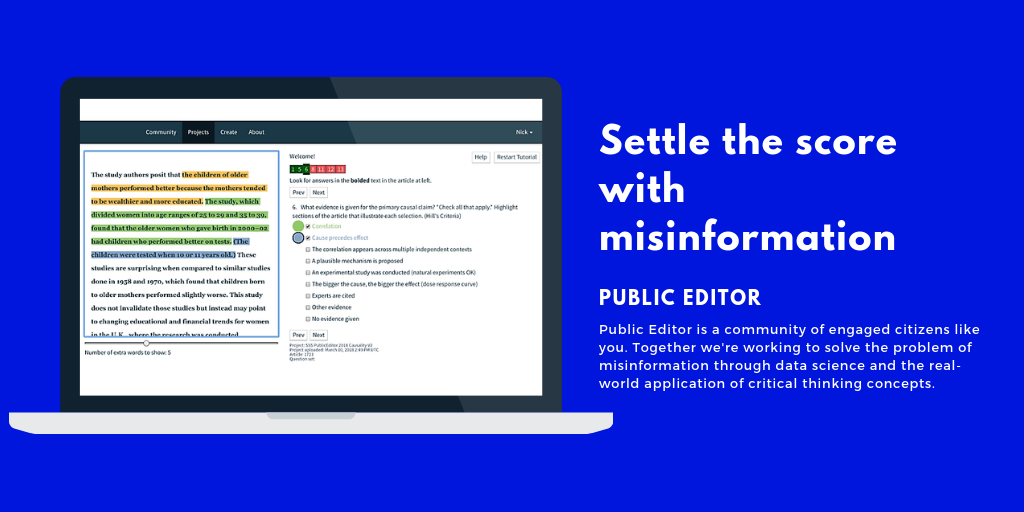
Sociologist Nick Adams’ TagWorks methodology is being used to rate — and in turn improve — the most shared news stories of the day via a new tool called PublicEditor.
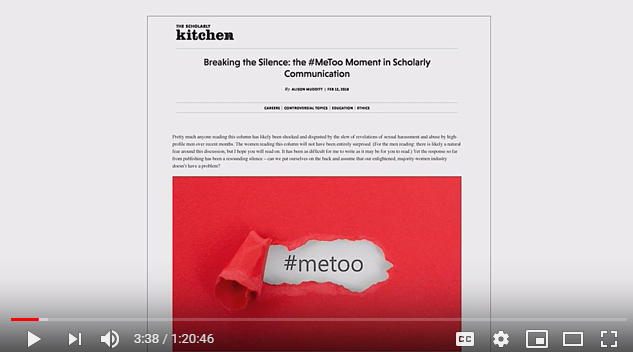
The #MeToo movement has slowly spread across to other sectors as people begin to come forward with their own stories of sexual harassment and bullying. In academic publishing, this conversation was in part started in February by Alison’s Mudditt’s powerful post on The Scholarly Kitchen. Muddit chaired a recent panel looking at sexual harassment, and ways to combat it, at the annual ALPSP conference.
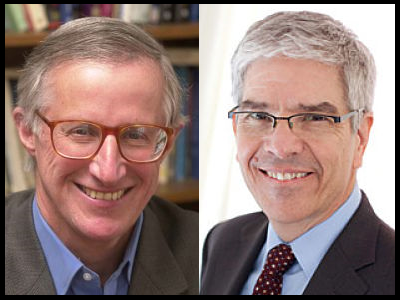
Two academics who have integrated what might have once seemed like non-economic externalities into economic models have been awarded the 2018 Nobel Prize in economics. The winners are William D. Nordhaus of Yale University, cited for integrating climate change into macroeconomic analysis, and Paul M. Romer of New York University’s Stern School of Business, cited doing the same with technological innovations.

Euan Adie, the founder of Altmetric and later of Overton, discusses the reasons the led to Overton’s focus on showing researchers how […] Here’s a couple of quick questions for you. What is the smallest of the eight discipline-based directorates at the United States’ National […] Sage’s 10-Year Impact Awards recognize academic papers appearing in Sage-published journals that have achieved lasting impact. The winning papers are the most […] I was adding some final flourishes on the topic of ‘iatrocracy’ to my forthcoming book with Natewindé Sawadogo – Sickness and Social […] How is AI changing the shape and space of higher education? Critical thinking continues to rank highly among key skills and attributes […] My colleagues and I recently spoke with a group of talented, interesting students who just completed their first year of college about […]
EXPLORE
Impact

Quick Insight: Euan Adie on Getting Academics Credit for Their Impact
READ MORE

NSF’s Embattled SBE Directorate Shown as Agency’s Policy Heavyweight
READ MORE

Sage’s 10-Year Impact Awards Capture Longer-Term Significance
READ MORE
Innovation

AI and ‘Iatrocracy’ – A Cautionary Tale
READ MORE

The Critical Student: How GenAI Reshapes Critical Skills and Higher Education’s Role Preparing Students For It
READ MORE

AI Doesn’t Drive Student Cheating. It Just Hitches a Ride
READ MORE