


Could Distributed Peer Review Better Decide Grant Funding?
The landscape of academic grant funding is notoriously competitive and plagued by lengthy, bureaucratic processes, exacerbated by difficulties in finding willing reviewers. Distributed […]

Storify is dead The service, which let you take social media content like Twitter and Facebook posts and aggregate them together into stories, announced that they’ll be shutting down and deleting all content as of March 16th, 2018. It’s not as bad as some platform shutdowns – there is notice and at least you can export your own content (one story at a time) – but it’s still a reminder of how vulnerable user-generated content can be online.

A connection can be made in between Ursula Le Guin’s fiction and her father’s groundbreaking work in anthropology. His ideas – which had a profound influence on his daughter’s writing – stemmed from an important development in the discipline of anthropology, one that viewed human culture as something that wasn’t ingrained, and had to be taught and learned.
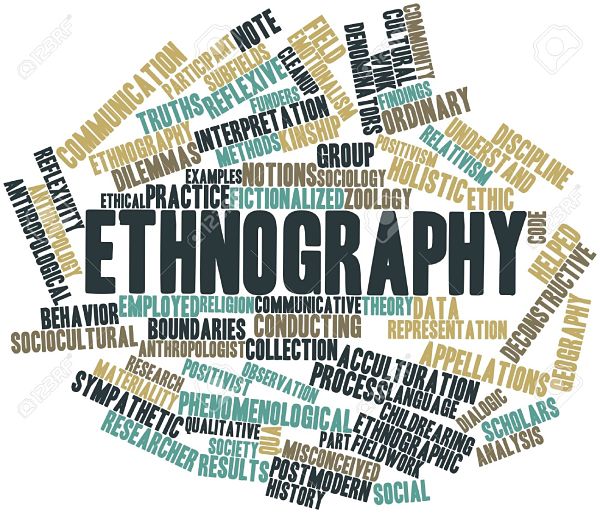
A recent critique of Alice Goffman’s influential 2014 book, “On the Run,” has, in effect, put ethnography conducted in the United states on trial. Here, our Robert Dingwall argues a case for the defense.

Peer review has become a major editorial challenge for publishers worldwide, but options do exist to help tackle fraudulent peer reviewers. In this post from the Publons blog, some options for what publishers can do are examined.
The Trump administration has requested that the upcoming decennial census include a “citizenship” question that asks respondents to identify whether or not they are U.S. citizens. Organizations like the Census Project have argued that asking questions about citizenship and immigration could — by deterring many immigrants (legal or illegal) from responding — hurt the response rate (and thus, accuracy) of the 2020 Census and this America’s ability to know our true population numbers.

Combining sociology and genetics, Melinda Mills and her collaborators abandon the nature v. nurture controversy for empirical research on family formation, inequality, child-rearing and other real-life concerns. In this Social Science Bites podcast, she discusses this new field of ‘sociogenomics.’
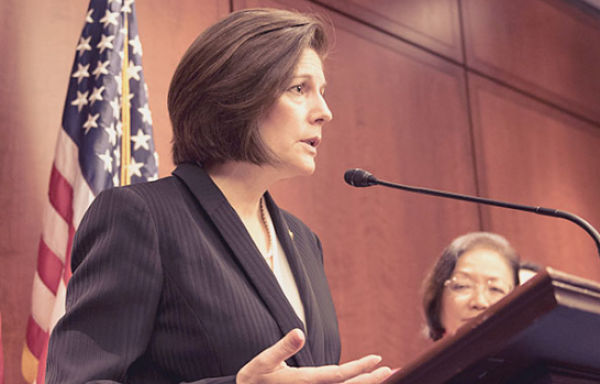
The focus was more on ‘competition’ than on ‘innovation’ Tuesday as the Senate Committee on Commerce, Science, and Transportation convened a hearing looking at the American Innovation and Competitiveness Act a year after its passage.

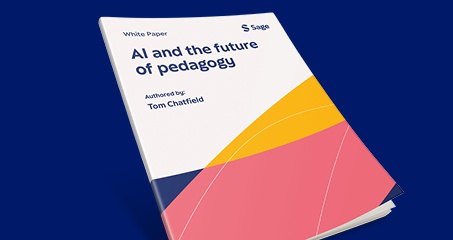
Tom Chatfield, author of the new SAGE Publishing book Critical Thinking, and Mark Kingwell, the University of Toronto, held a lively conversation on the import of technology on how we think and act ‘critically.’ Chatfield, described as a ‘tech philosopher,’ and Kingwell, a more traditional professor of philosophy, traded perspectives, insights into the digital, and purportedly post-truth, era in this one-hour webinar.
People often see science as a world apart: cool, rational and untouched by persuasion or performance. In this view, scientists simply discover […] “Research impact” means different things to different people. Some refer broadly to how science changes behaviors, beliefs, or practices outside academic institutions. […] One researcher studies how war affects children, another took a literal worm’s eye view to examine rural development, while two others scrutinized […] David Canter considers informal places where people socialize, suggesting they’re an arena ChatGPT and other LLMs can’no’t replicate. As someone who lives […] It’s become cliche since Clive Humbly coined it in 2006, but data is indeed the new oil. It’s a mantra repeated by […] In September 2025, The Guardian reported about a lawyer in Australia having faced sanctions due to false citations. These citations were not […]
EXPLORE
Impact

Scientists Should Keep in Mind It’s Called the ‘Marketplace of Ideas’ for a Reason
READ MORE

Survey Finds Social Scientists Feel Unsupported in Seeking Societal Impact
READ MORE
Canada’s SSHRC Names 2025 Impact Winners
READ MORE
Innovation

Reaching Parts to Which AI Has No Access
READ MORE

Andrea Medina-Smith on Making Research Data More FAIR
READ MORE

A Status Check on Hallucinated Case Law Incidents
READ MORE