



Could Distributed Peer Review Better Decide Grant Funding?
The landscape of academic grant funding is notoriously competitive and plagued by lengthy, bureaucratic processes, exacerbated by difficulties in finding willing reviewers. Distributed […]

This stark contrast between the internet’s light and dark sides has become a defining characteristic of the digital age, writes Timo Hannay founder SchoolDash, but is not an inevitable consequence of the mostly innocuous technologies on which it’s built. Rather, it is the product of their bewilderingly diverse and eccentric user base – otherwise known as humanity.

We spoke with social-science ethicists about how well Facebook’s initiative appears to protect users’ privacy. They’re skeptical, but still eager to see Facebook data studied.

Effective communication is fundamental to increasing public understanding and for building the bridge between the public and the sciences. Suzi Spitzer outlines five principles of holistic science communication that can facilitate collaborative learning between scientists and the public.

A post on the blog Political Violence at a Glance that gives a host of tips on how academics can be very political and yet not violence was judged to be the best in the international studies blogosphere last year. Erica Chenoweth’s “When Engaged Scholarship Means Resistance” was named Best Blog Post in the annual Duckies awards handed out on April 6 at the International Studies Association’s annual meeting.

What is one’s legacy after a half century as an academic? Although it’s not his only legacy, our David Canter considers the ‘archive’ of surveys, old journals, letters and other reputed ‘data’ that makes up a paper simulacrum of the real David Canter.

Current debates in higher education policy have drawn attention to the significant impacts of marketization, metrics, and performance management on the sector. Ben Williamson argues that a restructuring of the data infrastructure is shaping these HE trends.
A group of professional organizations, universities, businesses, and scientific societies are thanking Congress for this year’s 4 percent increase in funding for the National Science Foundation — and wondering if they might double that next year.
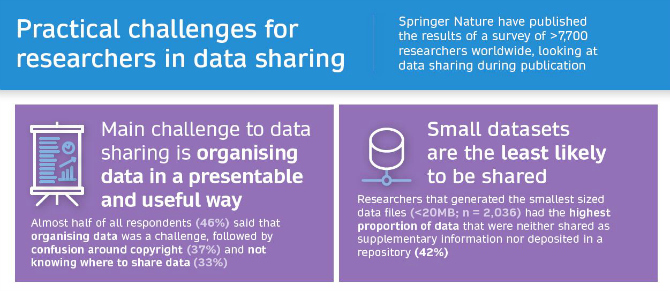
Making data available for other researchers to find, use, reuse, ultimately makes research more efficient and effective. Yet despite policies that encourage and require data sharing, researchers in the UK and US report lower percentages of data sharing than average. Grace Baynes suggests researchers be given incentives, expert support, and training to make it easy to share data.

Euan Adie, the founder of Altmetric and later of Overton, discusses the reasons the led to Overton’s focus on showing researchers how […] Here’s a couple of quick questions for you. What is the smallest of the eight discipline-based directorates at the United States’ National […] Sage’s 10-Year Impact Awards recognize academic papers appearing in Sage-published journals that have achieved lasting impact. The winning papers are the most […] I was adding some final flourishes on the topic of ‘iatrocracy’ to my forthcoming book with Natewindé Sawadogo – Sickness and Social […] How is AI changing the shape and space of higher education? Critical thinking continues to rank highly among key skills and attributes […] My colleagues and I recently spoke with a group of talented, interesting students who just completed their first year of college about […]
EXPLORE
Impact

Quick Insight: Euan Adie on Getting Academics Credit for Their Impact
READ MORE

NSF’s Embattled SBE Directorate Shown as Agency’s Policy Heavyweight
READ MORE

Sage’s 10-Year Impact Awards Capture Longer-Term Significance
READ MORE
Innovation

AI and ‘Iatrocracy’ – A Cautionary Tale
READ MORE

The Critical Student: How GenAI Reshapes Critical Skills and Higher Education’s Role Preparing Students For It
READ MORE

AI Doesn’t Drive Student Cheating. It Just Hitches a Ride
READ MORE