
Could Distributed Peer Review Better Decide Grant Funding?
The landscape of academic grant funding is notoriously competitive and plagued by lengthy, bureaucratic processes, exacerbated by difficulties in finding willing reviewers. Distributed […]
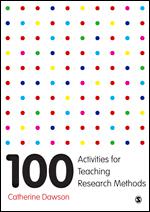
Reviewer Sarah Lewthwaite finds that in ‘100 Activities for Teaching Research Methods,’ Catherine Dawson offers an important and welcome addition to the emerging literature on the practical aspects of teaching research methods.
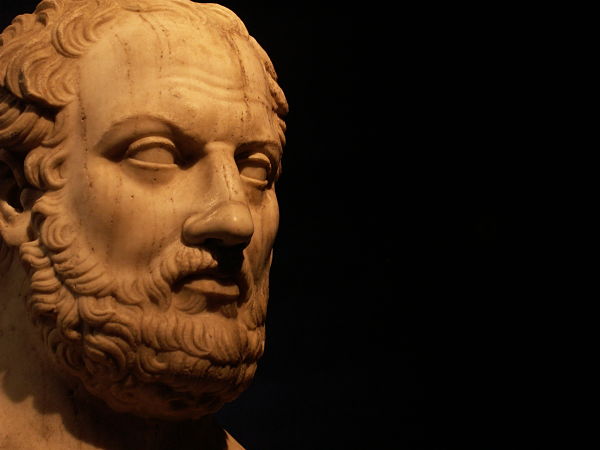
The claim that Thucydides’ account of the past is useful is often extended to historiography in general, rather than just to his specific – and idiosyncratic – approach. And that, suggests Neville Morley, may be the real trap of Thucydides.
UPDATED WITH HOUSE PASSAGE: A bill that was the latest version of the beloved America COMPETES — but which no longer authorizes funding for key federal science research agencies — looks likely to land on the president’s desk. The new version has lost a particularly toxic aspect of earlier versions.

T.S. Eliot said “April is the cruelest month.” This November has been pretty harsh, too, says blogger Howard J. Silver, who wonders what the new U.S. president will mean for a number of issues, including research funding.
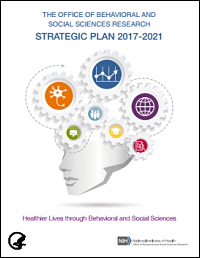
The Office of Behavioral and Social Sciences Research at the U.S. National institutes of Health has released a new strategic plan to exploit the synergies between behavior and health.

Erich Bloch was the first non-academic to serve as director of the NSF. Although a computer engineer by background, he recognized the value of the social and behavioral sciences.
How will social science research and teaching evolve to meet the challenges and opportunities big data creates? How can we bring down barriers to make this new computational social science accessible for all social researchers? That was the subject of a panel discussion at last month’s ESRC Festival of Social Sciences 2016.

In this Social Science Bites podcast, Harvard’s Jennifer Hochschild explains to interviewer David Edmonds some of the pertinent data points from her years of using quantitative and qualitative analysis to map the racial, ethnic and class cleavages in America’s demography.
People often see science as a world apart: cool, rational and untouched by persuasion or performance. In this view, scientists simply discover […] “Research impact” means different things to different people. Some refer broadly to how science changes behaviors, beliefs, or practices outside academic institutions. […] One researcher studies how war affects children, another took a literal worm’s eye view to examine rural development, while two others scrutinized […] David Canter considers informal places where people socialize, suggesting they’re an arena ChatGPT and other LLMs can’no’t replicate. As someone who lives […] It’s become cliche since Clive Humbly coined it in 2006, but data is indeed the new oil. It’s a mantra repeated by […] In September 2025, The Guardian reported about a lawyer in Australia having faced sanctions due to false citations. These citations were not […]
EXPLORE
Impact

Scientists Should Keep in Mind It’s Called the ‘Marketplace of Ideas’ for a Reason
READ MORE

Survey Finds Social Scientists Feel Unsupported in Seeking Societal Impact
READ MORE
Canada’s SSHRC Names 2025 Impact Winners
READ MORE
Innovation

Reaching Parts to Which AI Has No Access
READ MORE

Andrea Medina-Smith on Making Research Data More FAIR
READ MORE

A Status Check on Hallucinated Case Law Incidents
READ MORE