

Could Distributed Peer Review Better Decide Grant Funding?
The landscape of academic grant funding is notoriously competitive and plagued by lengthy, bureaucratic processes, exacerbated by difficulties in finding willing reviewers. Distributed […]

Recently named by Thomson Reuters as one of the scholars predicted to be 2014 Nobel Laureate, William J. Baumol has led an […]
In the shadow of the 25 year anniversary of the Tiananmen square crackdown, the recent Hong Kong protests have generated interest in how […]

As announced earlier in the year, sociologist Jane Elliott took the reins of Britain’s Economic and Social Research Council on October 1. […]
Work doesn’t stop when we’re under the weather. But how does feeling bad affect how we perform our jobs? To address this […]

‘Neo-emotivism’ is a concept Kip Jones describes as intentionally using emotional responses for academic ends in large part by drawing from nontraditional source like art and literature for inspiration and even vocabulary.
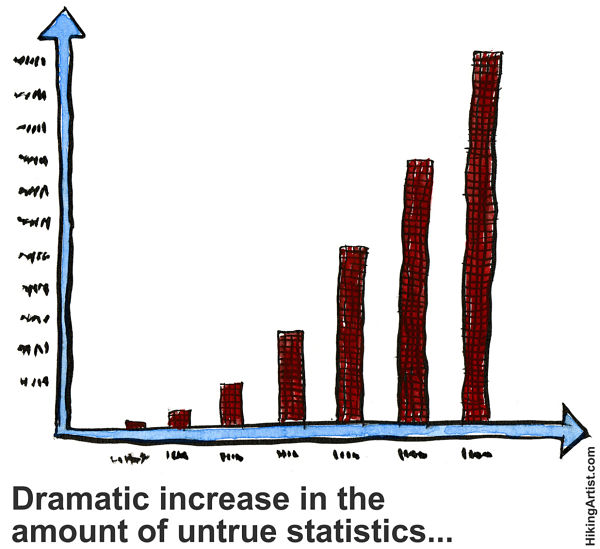
We want decisions to be based on data and evidence and not ideology or gut feelings. But being presented with research results only starts the process of understanding what to draw from it.
Stewart Clegg, widely acknowledged as one of the most significant contemporary theorists of power relations, recently collaborated with Miguel Pina e Cunha, […]

Discussions around the REF have tended to be negative, but what exactly is viewed poorly varies by interest group[. Two academics who conducted an analysis of the media’s covefage of the framework argue there is much that can be learned for future assessment exercises and it is ever-more important that we get it right when thinking about ‘impact’ in research and the pressures academics face.
People often see science as a world apart: cool, rational and untouched by persuasion or performance. In this view, scientists simply discover […] “Research impact” means different things to different people. Some refer broadly to how science changes behaviors, beliefs, or practices outside academic institutions. […] One researcher studies how war affects children, another took a literal worm’s eye view to examine rural development, while two others scrutinized […] David Canter considers informal places where people socialize, suggesting they’re an arena ChatGPT and other LLMs can’no’t replicate. As someone who lives […] It’s become cliche since Clive Humbly coined it in 2006, but data is indeed the new oil. It’s a mantra repeated by […] In September 2025, The Guardian reported about a lawyer in Australia having faced sanctions due to false citations. These citations were not […]
EXPLORE
Impact

Scientists Should Keep in Mind It’s Called the ‘Marketplace of Ideas’ for a Reason
READ MORE

Survey Finds Social Scientists Feel Unsupported in Seeking Societal Impact
READ MORE

Canada’s SSHRC Names 2025 Impact Winners
READ MORE
Innovation

Reaching Parts to Which AI Has No Access
READ MORE

Andrea Medina-Smith on Making Research Data More FAIR
READ MORE

A Status Check on Hallucinated Case Law Incidents
READ MORE