
Could Distributed Peer Review Better Decide Grant Funding?
The landscape of academic grant funding is notoriously competitive and plagued by lengthy, bureaucratic processes, exacerbated by difficulties in finding willing reviewers. Distributed […]

Torsten Bell, chief executive officer of the Resolution Foundation, delivered the 2022 Campaign for Social Science Annual SAGE Lecture, on November 22. […]
In the Ithaka S+R report “Fostering Data Literacy: Teaching with Quantitative Data in the Social Sciences,” authored by Dylan Ruediger and Danielle Miriam Cooper, examined the use and teaching of data analysis in the social sciences. Ithaka S+R is the research arm of the ITHAKA not-for-profit which aims to help “the academic community use digital technologies to preserve the scholarly record and to advance research and teaching in sustainable ways.
Universities do a great job of enabling their students to gain in-depth knowledge in core degree disciplines. An academic degree also demonstrates a student’s ability to learn to potential employers. This is an increasingly important attribute in an ever-changing world where job, careers and whole industries may come and go over the course of a lifetime.
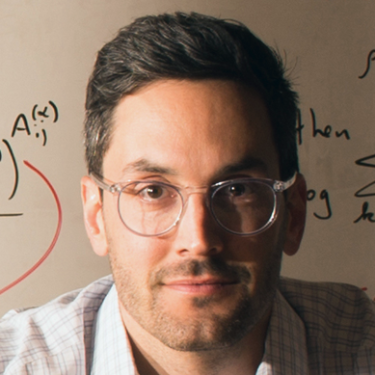
The 2022 Alan T. Waterman Award, the nation’s highest honor for early career scientists and engineers bestowed by the U.S. National Science Foundation., was awarded to Daniel Larremore of the University of Colorado. Larremore is is an assistant professor in the Department of Computer Science and the BioFrontiers Institute.
A lack of public understanding, the decline of collegiality and poor framing of the underlying issues will all make the success of planned UK university strikes unlikely, argues Daniel Nehring.
The National Academies’ Board on Science Education announced a committee for a new consensus study focused on understanding and addressing misinformation about science. The study aims to “will identify solutions to limit its spread and provide guidance on interventions, policies, and research toward reducing harms caused from misinformation.”
In a video interview hosted by Social Science Space sister site Methodspace, Stu Shulman, a social media researcher and the founder and CEO of Textifter, joined interviewer Janet Salmons to discuss the future of academic Twitter.

The fate of Twitter has been a pressing issue in the past weeks. Here, Andy Tattersall argues that whilst individual academics could quite easily leave the platform, the centrality of Twitter to academic institutions makes a wholesale departure unlikely.
People often see science as a world apart: cool, rational and untouched by persuasion or performance. In this view, scientists simply discover […] “Research impact” means different things to different people. Some refer broadly to how science changes behaviors, beliefs, or practices outside academic institutions. […] One researcher studies how war affects children, another took a literal worm’s eye view to examine rural development, while two others scrutinized […] David Canter considers informal places where people socialize, suggesting they’re an arena ChatGPT and other LLMs can’no’t replicate. As someone who lives […] It’s become cliche since Clive Humbly coined it in 2006, but data is indeed the new oil. It’s a mantra repeated by […] In September 2025, The Guardian reported about a lawyer in Australia having faced sanctions due to false citations. These citations were not […]
EXPLORE
Impact

Scientists Should Keep in Mind It’s Called the ‘Marketplace of Ideas’ for a Reason
READ MORE

Survey Finds Social Scientists Feel Unsupported in Seeking Societal Impact
READ MORE
Canada’s SSHRC Names 2025 Impact Winners
READ MORE
Innovation

Reaching Parts to Which AI Has No Access
READ MORE

Andrea Medina-Smith on Making Research Data More FAIR
READ MORE

A Status Check on Hallucinated Case Law Incidents
READ MORE